Proper grading and drainage Orange County protects properties by directing surface water away from foundations and preventing soil erosion. Effective site work and professional drainage solutions mitigate risks like standing water or hillside instability; therefore, they ensure the long term structural integrity of residential and commercial developments.
Many Orange County homeowners treat drainage as an afterthought until the first seasonal downpour reveals pooling water against the foundation or visible erosion on a coastal hillside. In our region, where high end real estate often sits on complex terrain, improper site work is more than a minor nuisance; it is a direct threat to your property's structural integrity and long term value. Whether you are dealing with negative grading that directs runoff toward your home or managing the specific challenges of a sloped lot, understanding the mechanics of water movement is essential. This guide explores the critical fundamentals of professional grading and drainage. We will examine how to identify warning signs early, discuss advanced solutions for hillside erosion, and navigate the complex landscape of Orange County grading permits. By the end, you will understand how expert site work serves as the foundational investment for any inland or coastal estate.
Why Professional Grading and Drainage Matters in Orange County
Orange County is widely recognized for its consistent sunshine and Mediterranean climate, but the region’s diverse geography presents significant challenges for property owners. From the steep, erosion-prone coastal hills of Laguna Beach and San Clemente to the expansive, flat basins of Santa Ana and Anaheim, the land requires precise management to remain stable and functional. While the dry season often leads to a false sense of security, the arrival of sudden atmospheric river events can transform a peaceful backyard into a flood zone within hours. These heavy rains cause flash flooding and soil saturation that quickly compromise building foundations and high-end landscaping.
Professional grading and drainage Orange County solutions serve as the invisible foundation of every successful construction or landscaping project. If the ground is not sculpted correctly from the start, even the most expensive renovations can be ruined by water intrusion or soil movement. Orange County Site Work Services has operated as a local specialist since 2004, bringing over two decades of field experience to every job site. Our team understands how local soil compositions, often heavy with clay or prone to shifting, react to California’s volatile weather patterns.
Engaging in expert excavation and grading ensures that water is steered away from vulnerable structures and toward appropriate runoff points. Without this initial site work, properties are left vulnerable to hydrostatic pressure and long-term structural damage. We focus on establishing the correct elevations the first time, providing a dependable base for whatever you plan to build above the surface.
The Fundamentals of Site Grading and Surface Drainage
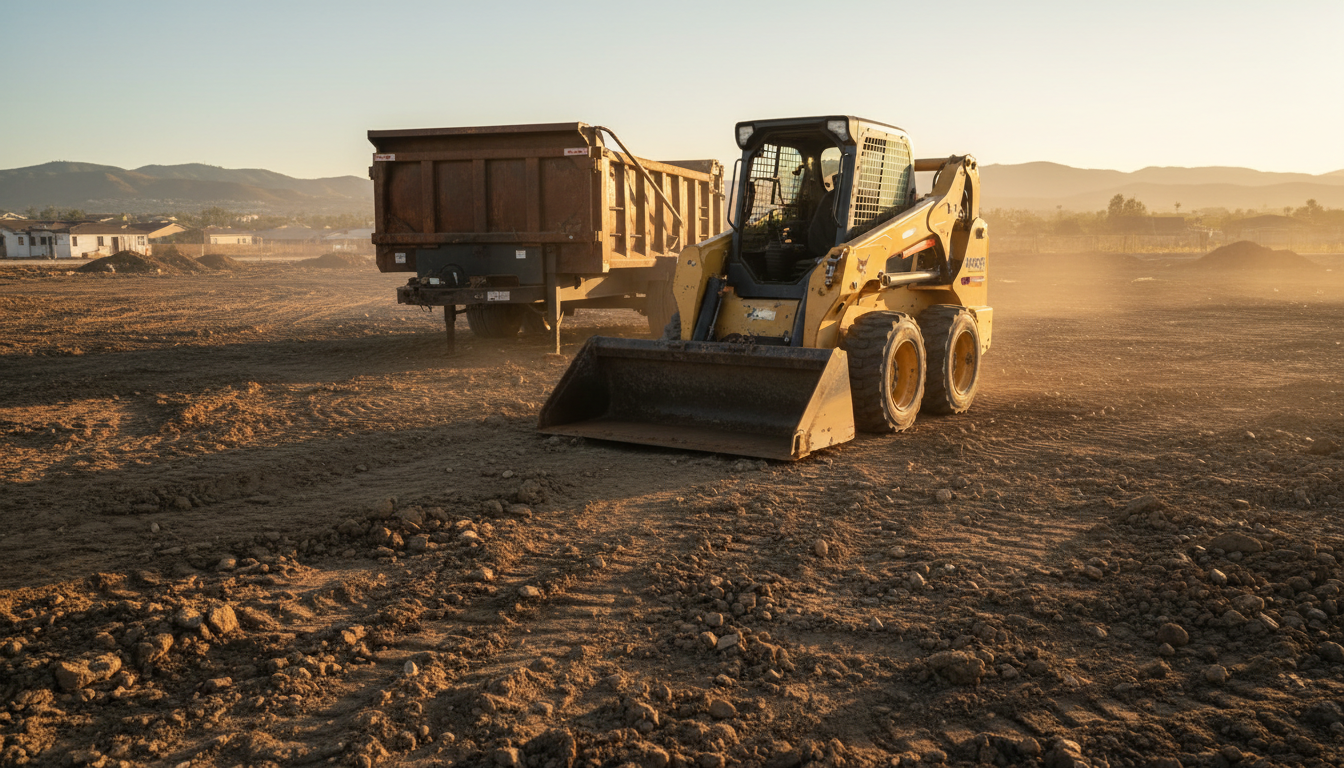
Land grading is the engineered manipulation of the ground surface to create specific elevations and slopes. Surface drainage is the intentional management of water runoff across that surface to ensure it flows toward a safe discharge point. Together, these elements form the primary defense for any structure. The core objective of professional grading and drainage Orange County is to prevent foundation saturation. When water is allowed to pool against a foundation, it creates hydrostatic pressure that can lead to slab cracks, soil expansion, and interior moisture problems.
To ensure effective runoff, industry standards require a specific pitch. The ground should slope away from the building at a minimum of 1/4 inch per foot for at least the first 10 feet. This 2% grade ensures that gravity pulls water away from the structure before it has the chance to permeate the soil near the footings. Achieving this precision requires a two-step approach:
Rough Grading: This involves the heavy movement of earth to establish the basic shape and subgrade of the site. During this phase, we remove debris and adjust the land to match the master drainage plan.
Fine Grading: This is the precision work of smoothing the top layer of soil within an inch of the final design. It prepares the site for finish materials like sod, concrete, or pavers, ensuring no localized low spots remain.
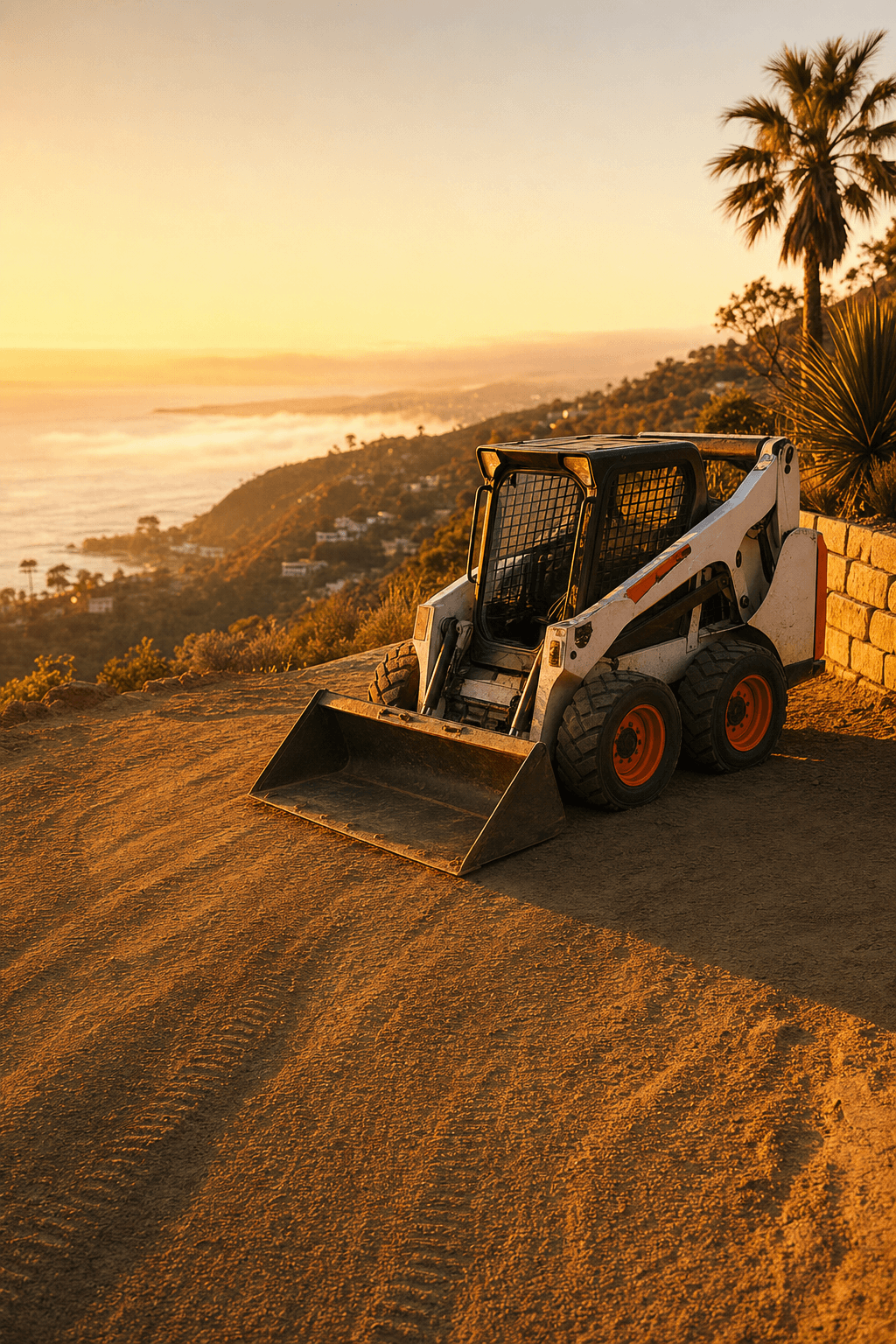
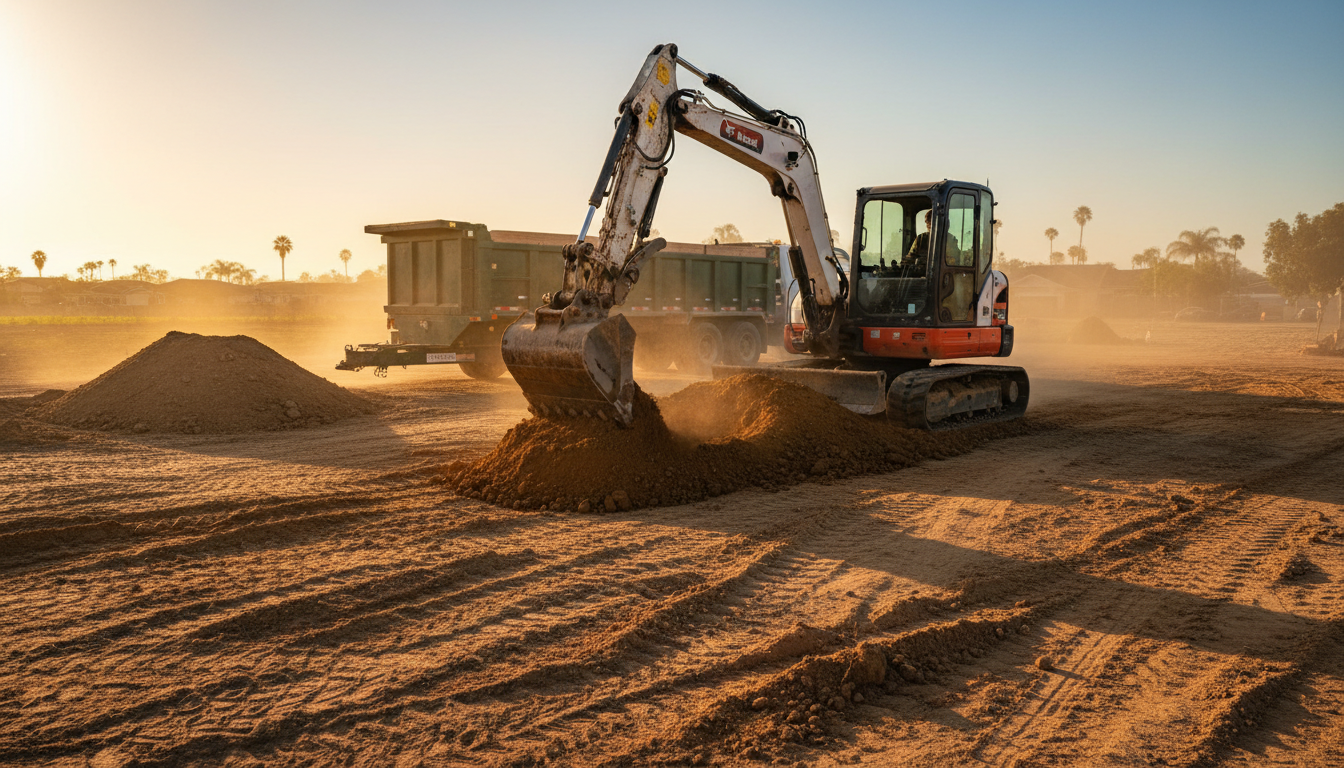
As a dedicated site grading contractor Orange County, we utilize specialized equipment such as Bobcats and dump trailers to execute these tasks. Bobcats provide the maneuverability needed for tight residential lots in Anaheim or Huntington Beach, while dump trailers allow for the efficient export of unsuitable soil and the import of engineered fill. Executing these fundamentals during comprehensive site work services establishes the correct finish elevations required for long-term property stability.
Warning Signs Your Orange County Property Has Drainage Issues
Recognizing when established elevations have failed or were never properly set is the first step in protecting your investment. Many homeowners ask why their yards pool water long after the rain stops. This usually occurs because the site has lost its original pitch or the soil has become so compacted that it can no longer absorb moisture. Homeowners should stay alert for specific red flags that indicate a failure in the grading and drainage Orange County properties need to remain stable.
Key warning signs include: - Standing water that remains for more than 24 hours after a storm or heavy irrigation cycle. - Spongy, saturated turf that feels soft underfoot even during dry spells. - Musty odors or visible dampness in crawl spaces and basements. - Soil erosion or small gullies forming on slopes, particularly in hillside communities. - Salt deposits or white staining (efflorescence) on the base of exterior walls.
It is essential to differentiate between surface issues and subsurface complications. Surface issues, such as localized puddles, are typically caused by low spots in the fine grading that trap water. Subsurface issues are often more concerning, involving the heavy clay soils common across the county. These soils have poor permeability, meaning they hold moisture like a sponge instead of allowing it to percolate. This creates a high water table that puts constant pressure on your foundation.
Neighbor runoff is another factor that can lead to significant structural headaches. If an adjacent property is at a higher elevation or has redirected its downspouts toward your property line, the sheer volume of water can overwhelm your yard. Without a clear drainage plan at the property boundary, this shared runoff can lead to disputes and property damage. If you notice these symptoms, you can contact our team to evaluate the site before minor puddling turns into a major foundation failure.
The Dangers of Negative Grading for Your Foundation
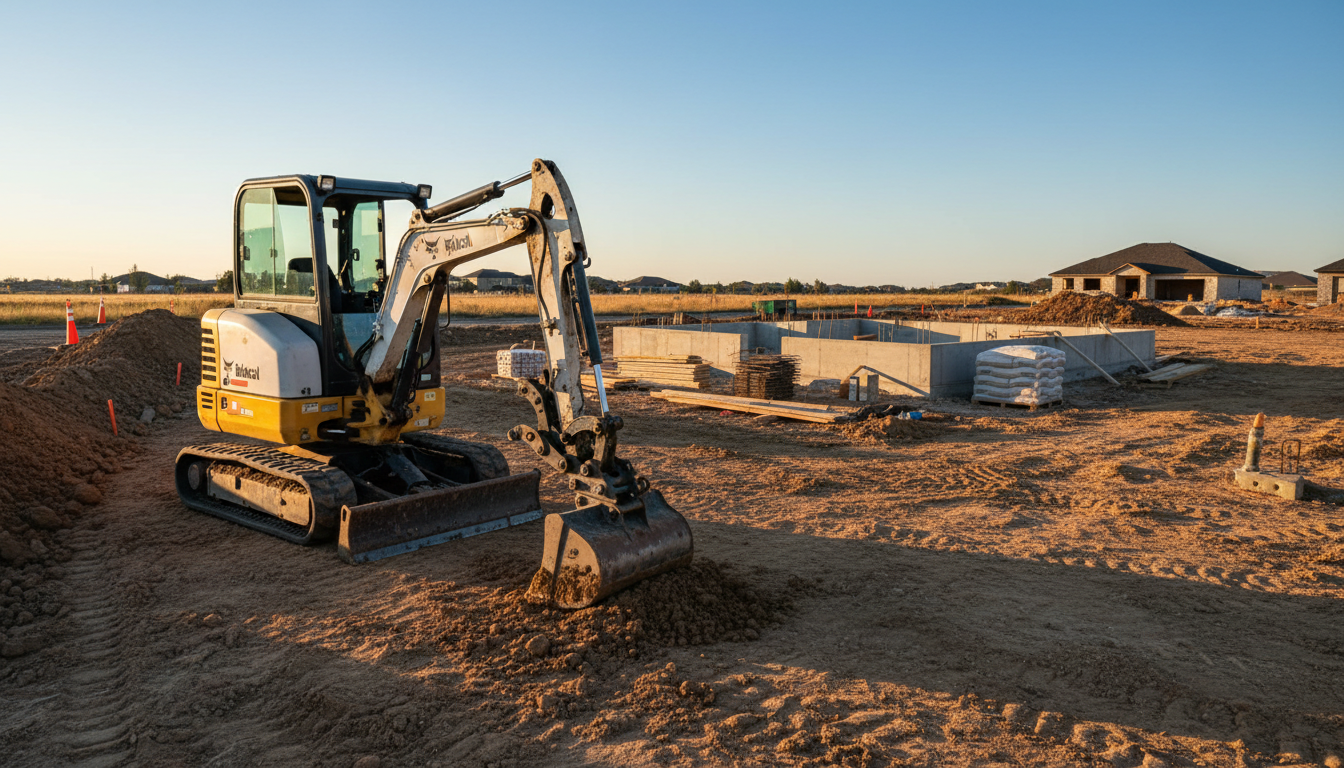
Negative grading occurs when the elevation of the soil at the perimeter of a structure is higher than the surrounding yard, causing the terrain to act as a funnel that directs runoff toward the foundation rather than away from it. This creates a dangerous reservoir of saturated soil that exerts significant hydrostatic pressure against the concrete. Over time, this weight forces moisture through the porous foundation, leading to hairline cracks, slab displacement, and persistent mold growth in crawl spaces. In Orange County, where expansive clay soils are common, the added weight of trapped water causes the ground to swell, putting even more physical stress on the structural integrity of the home.
A professional grading and drainage Orange County specialist identifies these hazardous slopes using precision tools like laser levels and transit surveys to map the site’s topography. Simply guessing at a slope is insufficient; even a slight one percent grade in the wrong direction can move hundreds of gallons of water toward your stem walls during a single atmospheric river event. Identifying these deviations early is the most effective way to protect a building from long term degradation.
To correct these issues, we perform expert excavation and grading to reshape the land, ensuring the first ten feet of soil consistently drops in elevation. By mechanical re-shaping of the subgrade and importing engineered fill where necessary, we redirect the flow of water before it has the chance to compromise the concrete. This proactive site work serves as a critical defense, helping property owners avoid the five figure costs typically associated with foundation underpinning and structural repairs.
Solving Hillside Drainage and Erosion Problems
Hillside properties in areas like Anaheim Hills or San Clemente face a unique set of hydraulic challenges. On a steep incline, water gains velocity quickly, turning a standard rain event into a destructive force that strips away topsoil and creates deep rills. This velocity is the primary enemy of slope stability. Uncontrolled runoff does more than ruin your landscaping; it saturates the subsurface layers of the hill, which can lead to catastrophic slope failure or mudslides during heavy California winters. Proper grading and drainage Orange County hillsides require is about breaking the momentum of the water before it can cause structural movement.
We implement several engineered slope drainage solutions to manage these risks effectively. Terrace grading involves creating a series of horizontal steps or benches in the hillside, which reduces the effective length of the slope and allows water to be collected at controlled intervals. V-ditches, often lined with concrete or stabilized earth, act as high capacity channels to whisk water safely across the face of the hill to a designated discharge point. Interceptor drains, also known as brow ditches, are installed at the top of slopes to catch off-site runoff from uphill neighbors before it ever reaches your property line.
Executing this level of precision on a gradient requires specialized equipment. Standard heavy machinery is often too cumbersome or unstable for the narrow access points and steep pitches found in residential coastal or canyon lots. Our team utilizes compact excavators and maneuverable Bobcats that provide the necessary power while maintaining a low center of gravity. This allows for expert excavation and grading in confined spaces without compromising safety or site integrity. With over two decades of field experience since our establishment in 2004, we have developed the technical expertise to stabilize these sensitive environments using dependable, time-tested methods.
Effective Yard Drainage Solutions: Beyond the French Drain
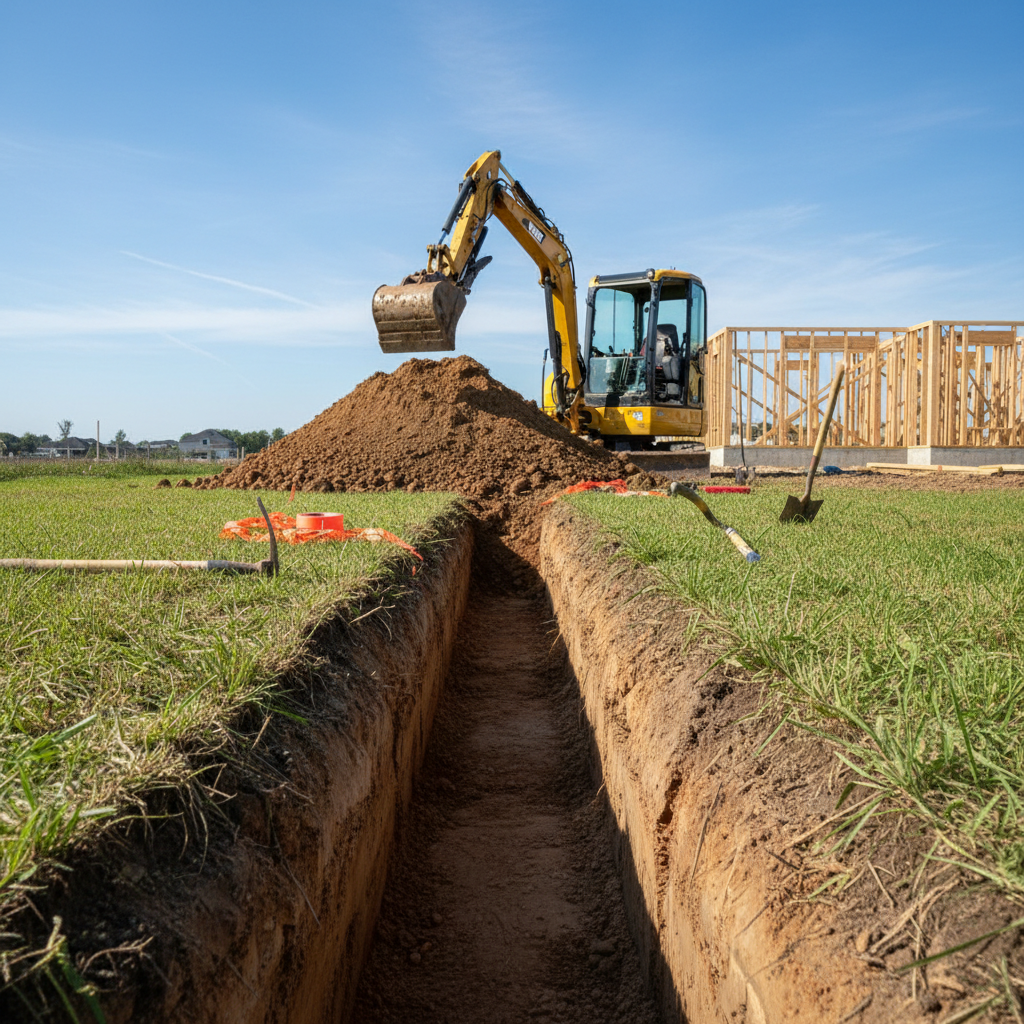
Managing water effectively requires a tailored approach because no single drain fits every scenario. While French drains are a popular choice, they are only one component of the comprehensive grading and drainage Orange County properties often require. Selecting the right system depends on whether you are fighting surface runoff, subsurface saturation, or pooling on hardscapes.
System | Primary Function | Best Application |
|---|---|---|
French Drain | Subsurface water management | Managing high water tables and soggy turf |
Swale | Surface water redirection | Moving large volumes of runoff through landscapes |
Catch Basin | Point-source collection | Capturing water in localized low spots |
Channel Drain | Linear interception | Protecting driveways, patios, and garage entries |
French drains use perforated pipes buried in gravel trenches to intercept groundwater before it reaches a foundation. These are distinct from swales, which are shallow, sloped channels built into the landscape to guide surface water toward a safe discharge point. For areas with specific low spots, catch basins provide a direct entry point for water to enter a solid pipe system. When dealing with hard surfaces like concrete driveways, channel drains act as a perimeter defense to stop water from sheet-flowing into a garage or crawl space.
A common DIY mistake involves digging a hole and filling it with gravel, often called a dry well, under the assumption the water will simply disappear. In many parts of Orange County, the soil is composed of heavy clay with very low permeability. In these conditions, a gravel pit without a discharge pipe acts like a bathtub, holding water against the soil rather than dispersing it. This can actually worsen foundation issues by keeping the ground saturated for longer periods. Proper expert excavation and grading ensures that these systems are engineered with the correct pitch and exit points. If your yard currently relies on makeshift solutions that are failing, you should contact our team to design a system that works with your specific soil type and topography.
The Site Work Process: From Evaluation to Verification
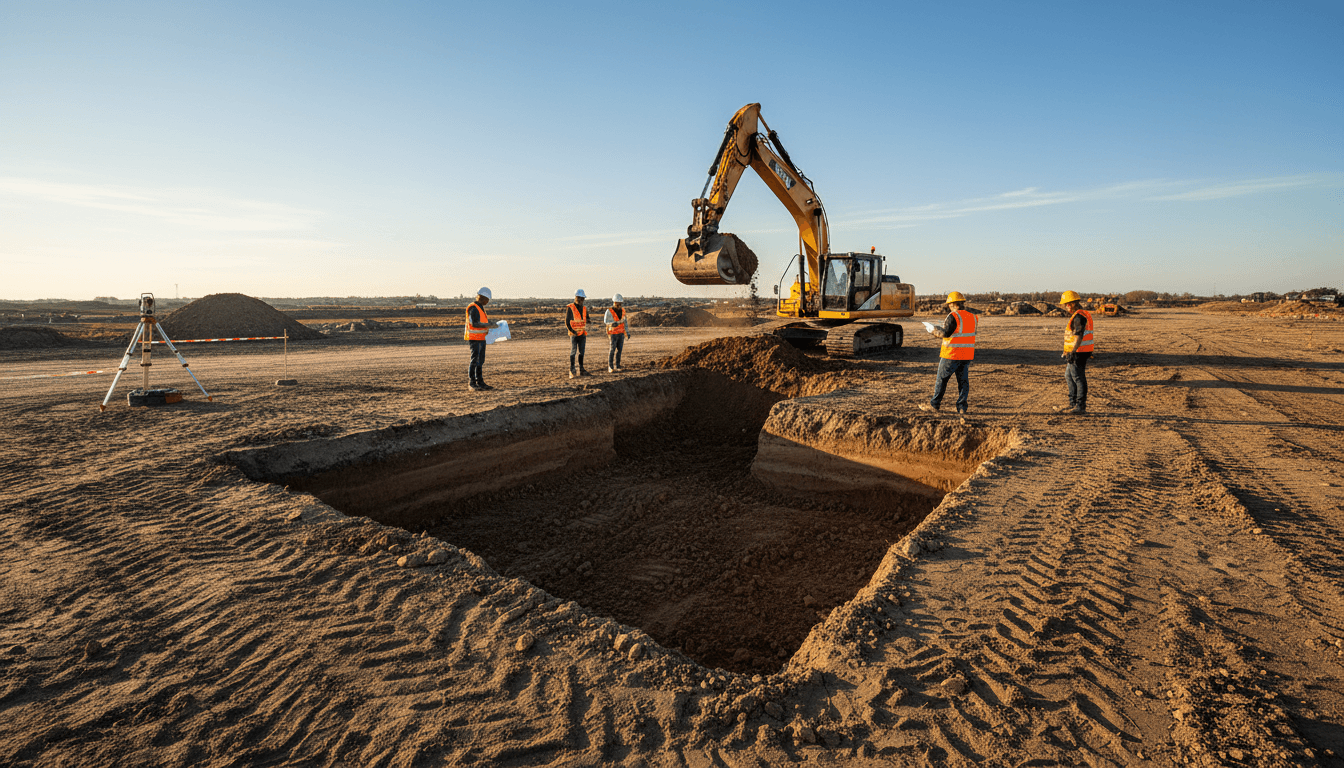
A successful project begins with a technical site evaluation and topographic survey. We use transit levels to identify the precise high and low points of the property, mapping out how water currently moves versus how it needs to be redirected. Once the plan is set, the next phase involves the demolition and clearing of old concrete, overgrown vegetation, or unsuitable fill material that could interfere with the new subgrade.
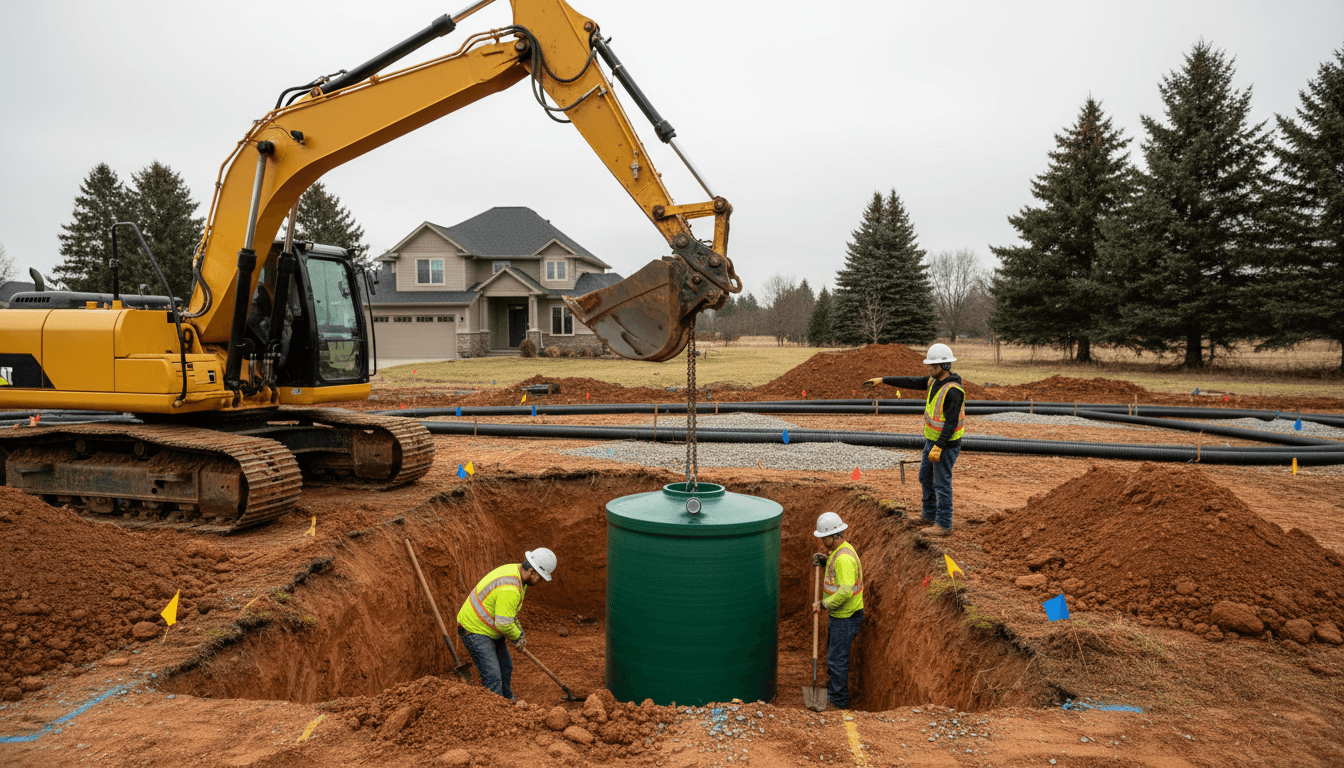
With a clean slate, we transition into rough grading using heavy equipment for expert excavation and grading. This is where the primary contours of the land are shaped to establish the structural foundation of the drainage plan. During this stage, we install the necessary infrastructure, including high density polyethylene (HDPE) pipes, catch basins, and channel drains. These components must be set at specific depths and slopes to ensure gravity does the work of moving water to the street or a designated discharge area.
Compaction is the most critical and frequently overlooked step in the site work process. Inexperienced contractors often skip thorough mechanical compaction, which leads to soil settling and the eventual failure of the drainage system. We utilize specialized rollers and plate compactors to ensure the soil is dense and stable before proceeding to fine grading. This final stage involves smoothing the surface with a Bobcat to within an inch of the design specifications, preparing the ground for landscaping or hardscape installation. Following this structured comprehensive site work services protocol ensures that your grading and drainage Orange County project remains effective for decades. If you are planning a new build or a landscape overhaul, you can contact our team to begin this evaluation process.
Navigating Orange County Grading Permits and Regulations
Compliance with local regulations is the final, essential step in any professional project. The primary reference for these standards is the OC Public Works Grading Manual, which outlines the technical requirements for soil stability and water management across the region. Most homeowners wonder if they need a permit for simple yard work. While minor landscaping adjustments generally do not require formal approval, significant changes to the established drainage plan or moving more than 50 cubic yards of earth typically trigger the need for a municipal grading permit.
This threshold is critical because improper earthwork can impact not just your land but also neighboring properties and the broader municipal storm drain systems. In cities such as Mission Viejo or Irvine, local inspectors look for specific compaction rates and erosion control measures to ensure the project meets safety codes. Attempting to bypass these regulations can lead to costly fines, stop-work orders, or significant legal hurdles when you eventually try to sell your home.
Properly managing grading and drainage Orange County projects requires navigating these complex municipal codes with precision. Working with a contractor who understands these nuances ensures that every expert excavation and grading project adheres to the specific requirements of your city. For guidance on your specific project needs and to ensure your site is code-compliant, you can contact our team to discuss our comprehensive site work services.
Ensuring your property has effective grading and drainage is the best way to prevent erosion and costly structural damage over time. While basic maintenance helps, achieving the right slope and flow requires a technical understanding of the local landscape. If you want expert help to secure your investment and ensure your site work meets professional standards, you can find out more about us and our commitment to quality. We focus on long-term solutions that provide peace of mind for every project.