
Professional concrete removal Orange County generally ranges from $1.50 to $8.00 per square foot, though most residential driveway and patio projects fall between $3 and $6 per square foot. Total project costs are influenced by the slab thickness and site accessibility; homeowners can expect to pay anywhere from $400 for small hauls to $15,000 for extensive demolitions.
A cracked, sunken driveway or an outdated patio can significantly detract from the value and safety of your Orange County property. Many homeowners and developers underestimate the complexities of concrete removal, viewing it as a simple task of brute force rather than a precise engineering requirement. In our local landscape, successful demolition involves navigating tight residential setbacks, specific soil conditions, and strict environmental disposal regulations. This guide provides an expert look into the professional removal process, covering everything from the machinery required for heavy demolition to the essential subgrade preparation that prevents future shifting. You will learn about current cost structures for concrete and asphalt, the logistical hurdles of South County landfills, and why the quality of your demolition dictates the lifespan of your next pour. Understanding these critical steps ensures your project begins with a clean slate and a solid foundation.
Understanding Concrete and Asphalt Removal Costs in Orange County
Estimating the budget for a demolition project in Southern California requires a look beyond national averages. While generic pricing guides suggest costs between $1 and $6 per square foot, homeowners and contractors should expect concrete removal Orange County rates to fall between $3 and $8 per square foot. This local premium is driven by significantly higher tipping fees at regional landfills and the competitive labor market specific to the coast. The total investment for your project hinges on several technical factors that dictate the time and equipment required on-site.
Slab thickness is the primary variable. A standard four inch walkway or patio is relatively straightforward to break up using a Bobcat with a breaker attachment. However, driveways or commercial pads are often six inches thick or more and frequently contain steel reinforcement. The presence of rebar or wire mesh adds substantial complexity to the job. These materials do not simply crack apart; they must be cut or pulled from the broken concrete, which increases labor hours and causes additional wear on specialized equipment. If your slab is reinforced, expect the price to lean toward the higher end of the local spectrum.
It is also vital to distinguish between demo-only and comprehensive demolition and hauling solutions. A demo-only quote covers the breaking of the material but leaves the debris on your property. Given that concrete and brick are significantly heavier than wood framing, hauling is often the largest cost factor. Most reputable providers, including Orange County Site Work Services, bundle these tasks to ensure the site is clear and ready for the next phase of construction. Disposal logistics involve coordinating heavy load trailers and navigating local landfill requirements for heavy debris. To get an accurate assessment of your specific site conditions and material weight, you should contact our team for a quote before starting your project.
Professional Driveway Demolition: Why Equipment Matters

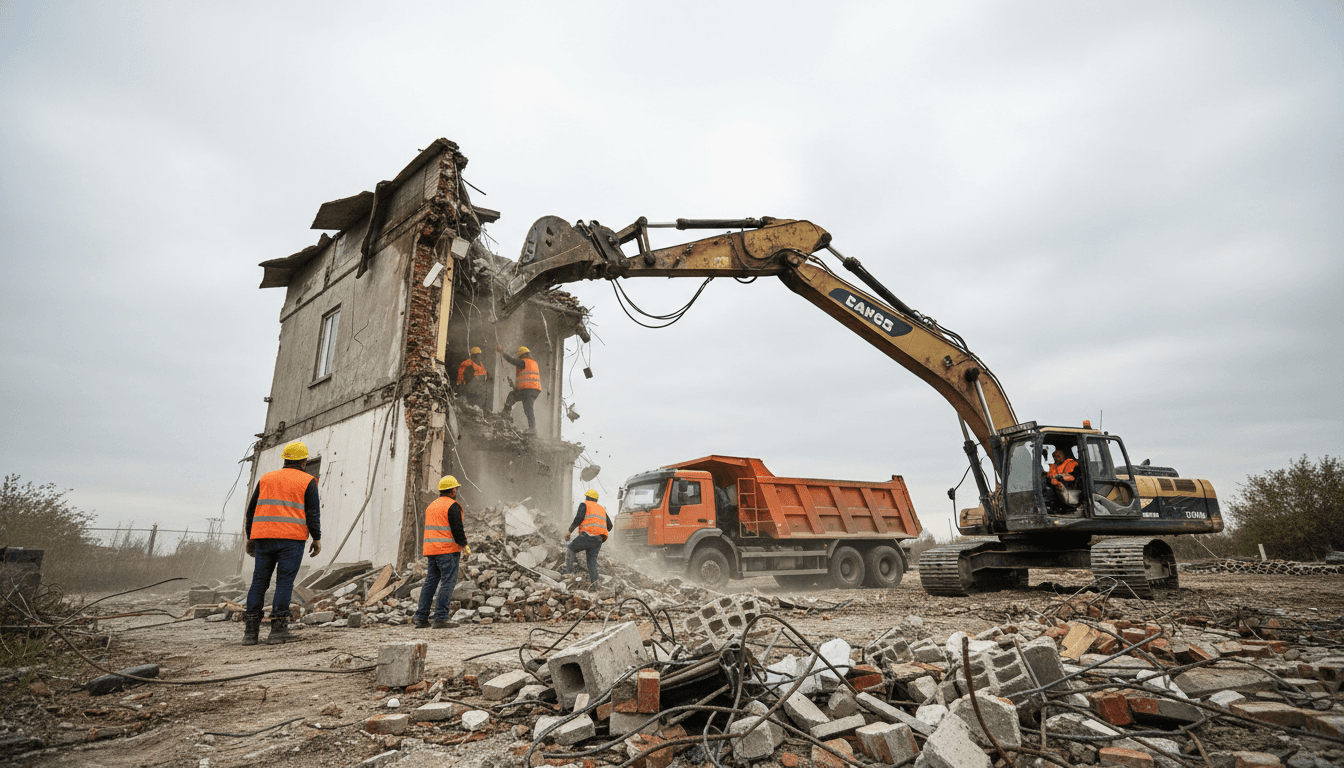
The mechanical process of breaking up old driveways relies on hydraulic power to overcome the tensile strength of the material. While a sledgehammer might work for a single stepping stone, a full driveway requires significant force. At Orange County Site Work Services, we utilize Bobcats equipped with specialized hydraulic breakers. These machines deliver rapid, high impact blows that shatter six inch concrete into manageable chunks far more efficiently than manual labor ever could. This mechanical approach is essential for concrete removal Orange County projects where time and site cleanliness are priorities.
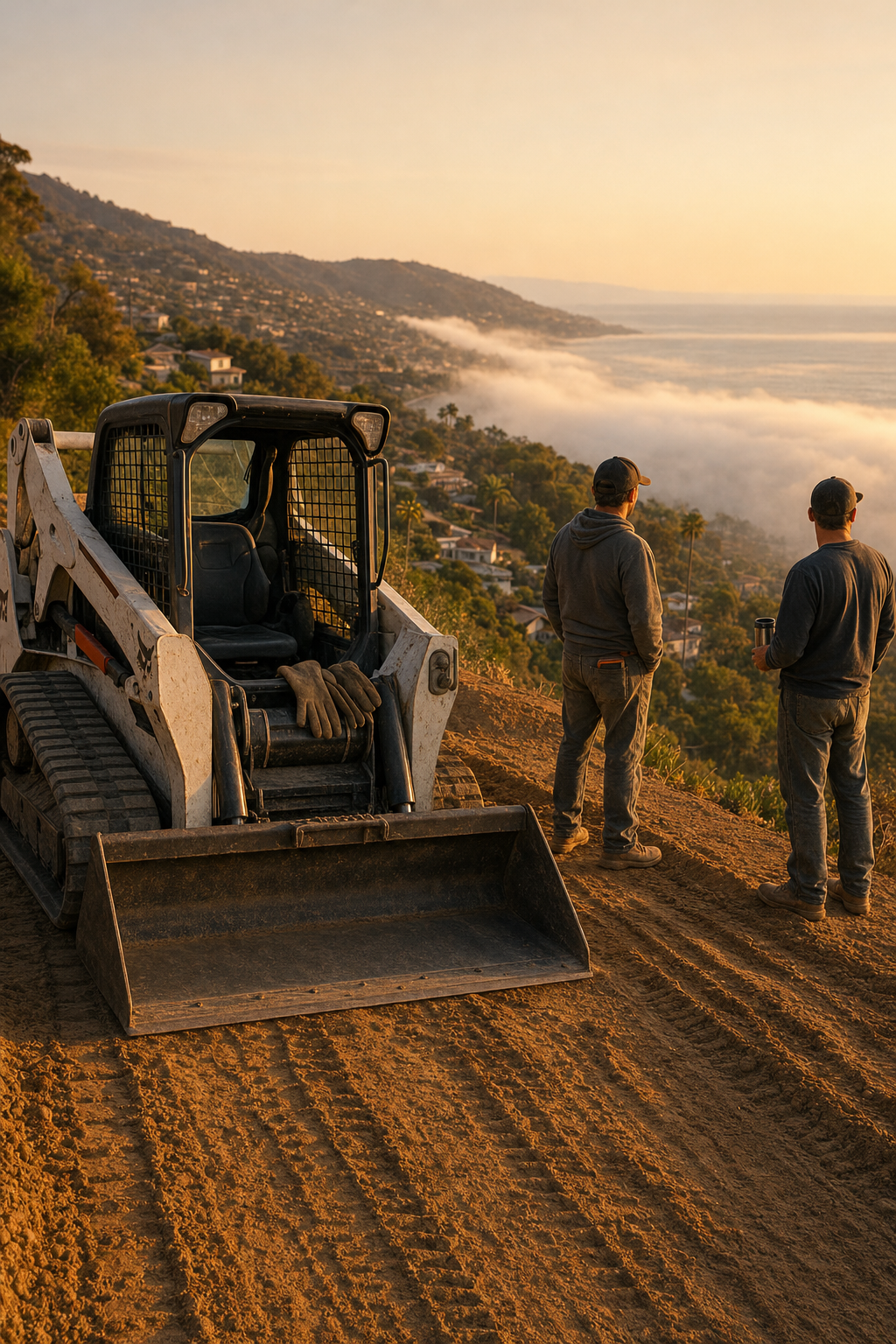
In South County communities like Laguna Beach, property layouts often present tight access challenges. Narrow easements, steep hillsides, and closely spaced homes mean that standard heavy machinery is often too large to maneuver. Our team focuses on using compact equipment that maintains high breakout force while fitting through standard gates or narrow side yards. This precision helps prevent collateral damage to your existing landscape, utility lines, or neighboring structures, which is a common risk when using oversized equipment in residential areas.
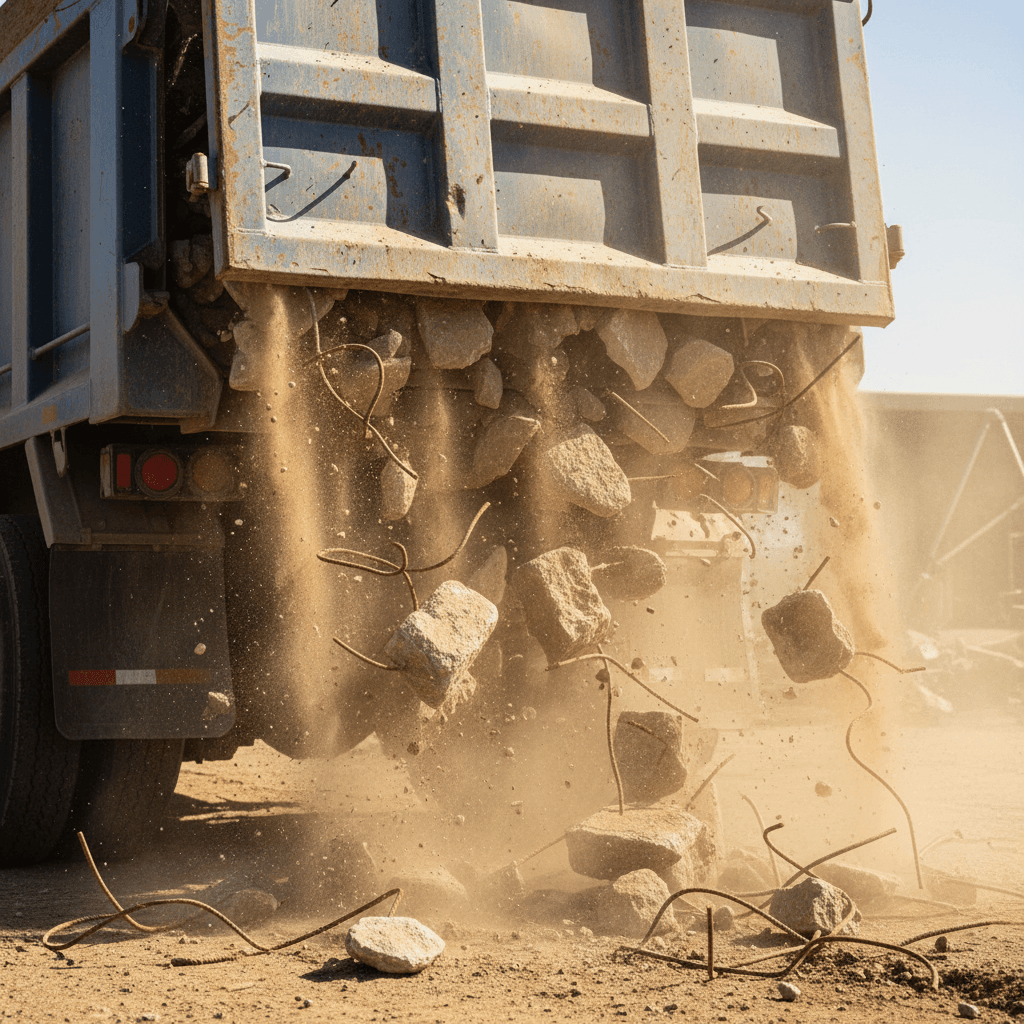
Efficiency also depends on the transition from breaking to loading. We coordinate our Bobcats with high capacity dump trailers to streamline the comprehensive demolition and hauling solutions we provide. Instead of leaving piles of debris on your lawn or street, we load the material directly into the trailers as the demolition progresses. This method keeps the job site clean and ensures that the heavy lifting is handled mechanically, protecting both our crew and your property. If you are dealing with a confined space or a reinforced slab, you should contact our team for a quote to see how our specialized fleet can expedite your project.
The Critical Step: Subgrade Preparation and Base Compaction
Once the concrete removal Orange County project moves past the demolition phase, many crews simply pack up and leave the debris site. However, the exposed earth is rarely ready for a new pour immediately. In Southern California, particularly in areas like Laguna Beach and Mission Viejo, we frequently encounter expansive clay soils. These soils are notorious for shifting as they absorb moisture and then shrinking during our dry seasons. Without proper subgrade preparation, a new driveway or patio will likely settle unevenly or crack within its first few years.
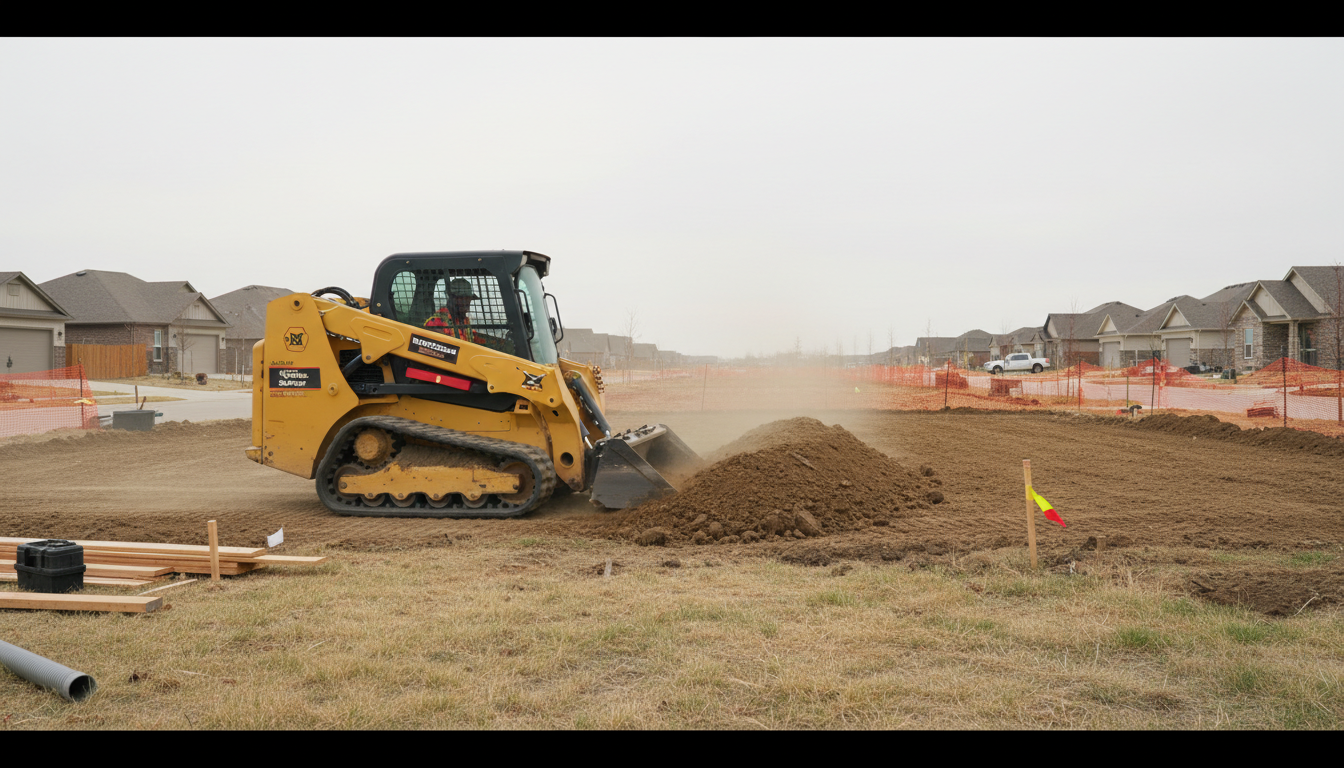
Achieving a stable foundation requires precise grading and mechanical compaction. At Orange County Site Work Services, we utilize our Bobcats and heavy duty plate compactors to ensure the soil reaches the density required to support structural loads. We focus on identifying and removing soft spots where organic matter or loose dirt may have accumulated under the old slab. By establishing a uniform, compacted subgrade, we provide the structural integrity necessary to prevent the new concrete from sinking under the weight of vehicles or heavy patio furniture.
This phase is also the ideal time to resolve long standing drainage issues. Poor water management is a leading cause of concrete failure. If water pools against a foundation or saturates the soil beneath a slab, it weakens the subgrade and leads to erosion. We grade the site with a slight slope to ensure water flows away from structures, often integrating trenching for drainage lines as part of our comprehensive demolition and hauling solutions.
In many South County projects, we also recommend a four inch layer of Crushed Miscellaneous Base (CMB). This layer acts as a bridge between the expansive clay and the concrete, further distributing the load and providing a level, non expansive surface for the new pour. If you are preparing for a major hardscape project, you should contact our team for a quote to ensure the site is professionally prepared from the ground up. Proper subgrade work is the only way to guarantee the longevity of your new installation.
Hauling and Disposal: Navigating Orange County Landfill Requirements
Managing the sheer volume of debris is the most logistically demanding part of any concrete removal Orange County project. A standard driveway can easily produce twenty to thirty tons of material. Transporting this weight requires more than just a truck; it necessitates heavy duty dump trailers and strategic route planning to local facilities like the Prima Deshecha or Olinda Alpha landfills. Because fuel prices and tipping fees for heavy debris continue to rise, comprehensive demolition and hauling solutions must account for the weight to volume ratio to remain cost effective.
In Southern California, most of this material does not actually end up in a landfill. Instead, it is diverted to specialized recycling plants where it is processed into Crushed Miscellaneous Base (CMB). This recycled product is essential for local infrastructure, often returning to job sites as the foundational layer for new roads or building pads. Choosing to recycle concrete is both an environmentally responsible choice and a practical one, as it often reduces the total disposal cost compared to standard landfill tipping fees.
Navigating local regulations is equally critical. For projects involving older structures or attached flatwork, we must adhere to South Coast Air Quality Management District (SCAQMD) Rule 1403. This mandate requires an asbestos survey before demolition begins on certain properties to ensure hazardous fibers are not released into the air. Overlooking this step can result in significant fines and project shutdowns. Orange County Site Work Services manages these compliance details to keep your project on track. To understand how these disposal and regulatory factors impact your budget, contact our team for a quote today.
Common Concrete Removal Challenges in South County
Beyond the disposal logistics, South County geography introduces specific structural risks. In Laguna Beach, hillside stability is a primary concern. Removing a reinforced slab on a steep grade can unintentionally trigger soil movement if not handled by a team that understands load bearing dynamics. We monitor these sites closely, using compact equipment to minimize vibration that could compromise adjacent retaining walls or slopes. Narrow canyon access also limits the size of machinery, making the maneuverability of our Bobcats essential for navigating tight residential easements where larger excavators cannot fit.
Operational constraints are equally significant in planned communities like Irvine and Newport Coast. Working within Homeowners Associations (HOAs) requires strict adherence to designated work hours and noise ordinances. To remain compliant, Orange County Site Work Services prioritizes modern, well maintained equipment that operates within city decibel limits. We also implement rigorous dust control measures, such as continuous wetting during the breaking process, to prevent silica particles from drifting toward neighboring properties. Managing these comprehensive demolition and hauling solutions requires a balance of mechanical power and neighborly discretion. If your property has difficult access or strict oversight, you should contact our team for a quote to discuss a site specific plan for your concrete removal Orange County project. Coordination with local authorities and property managers ensures the job proceeds without fines or stop work orders.
Frequently Asked Questions About Concrete Demolition
Navigating a concrete removal Orange County project often involves choosing between immediate savings and long term durability. One common question is if pouring a new layer of concrete over the old slab is a viable way to save money. While technically possible, this is almost always a mistake for residential driveways or patios. A new pour over an existing slab increases the total height, which often creates trip hazards at doorways and disrupts garage thresholds. More importantly, any structural cracks in the original slab will eventually migrate through the new layer; this is a process known as reflective cracking. Removing the old material allows Orange County Site Work Services to address the underlying subgrade issues that caused the initial failure.
Homeowners frequently ask about the timeline for a standard demolition project. For a typical 400 to 600 square foot two car driveway, the process generally takes one to two days. This schedule includes the mechanical breaking of the slab using a Bobcat, loading the debris into dump trailers, and the final site cleanup. While high access properties or slabs with heavy rebar reinforcement may extend the timeline slightly, most comprehensive demolition and hauling solutions are completed within this window to minimize disruption to your home.
Regarding the reuse of material, old concrete can technically be used as fill, but it must be processed correctly. Simply burying large chunks of broken concrete is risky because it creates underground air pockets that lead to future soil settling and slab failure. Instead, Southern California contractors prefer using Crushed Miscellaneous Base (CMB). This is concrete that has been professionally crushed and screened to a uniform size, providing a stable, compactable foundation for new pours. If you are unsure about the best approach for your specific property, contact our team for a quote to evaluate your site conditions and material needs.
Successfully clearing away old concrete is the foundation of any long lasting driveway or patio repour. By taking the time to handle demolition and site preparation correctly, you protect your investment and ensure a smooth surface for years to come. If you want expert help managing the heavy lifting and technical details, working with a local professional can simplify the process. You can learn more about our commitment to quality site work as you plan your next home improvement project.