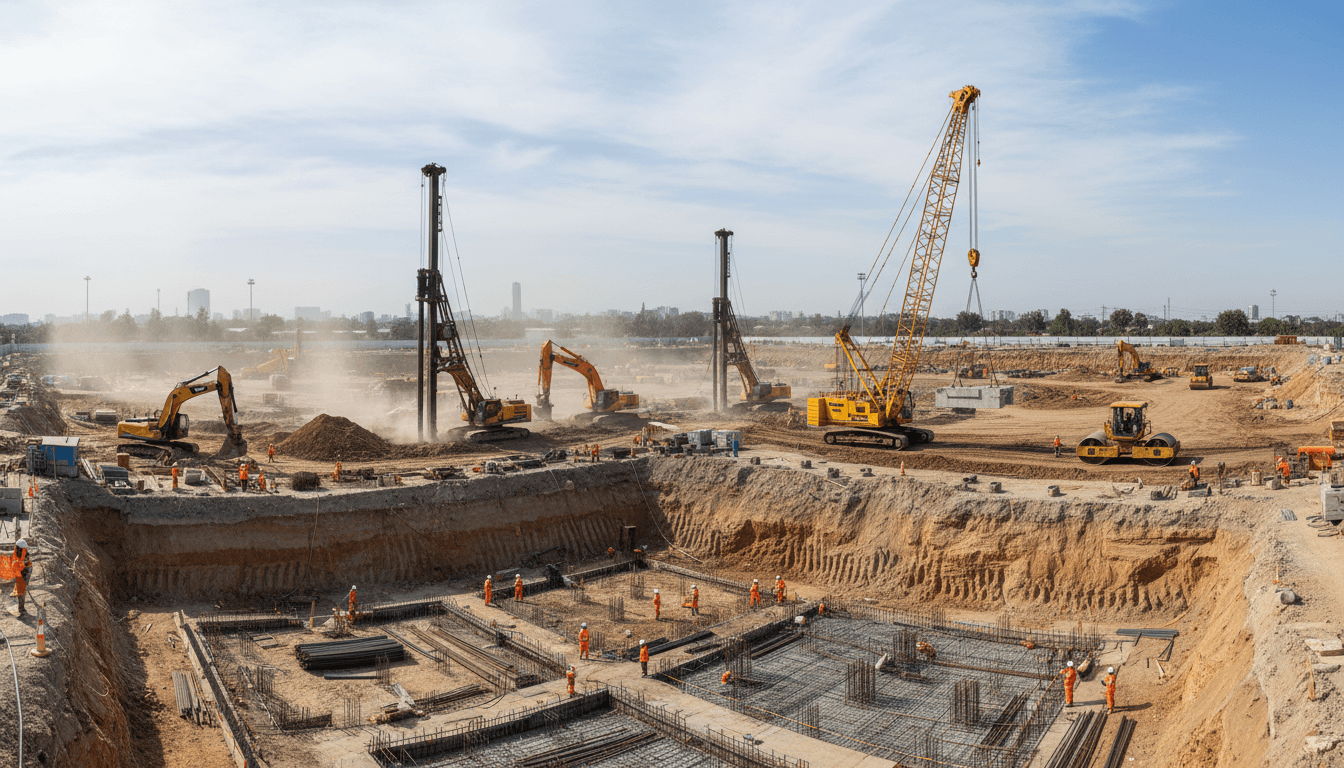
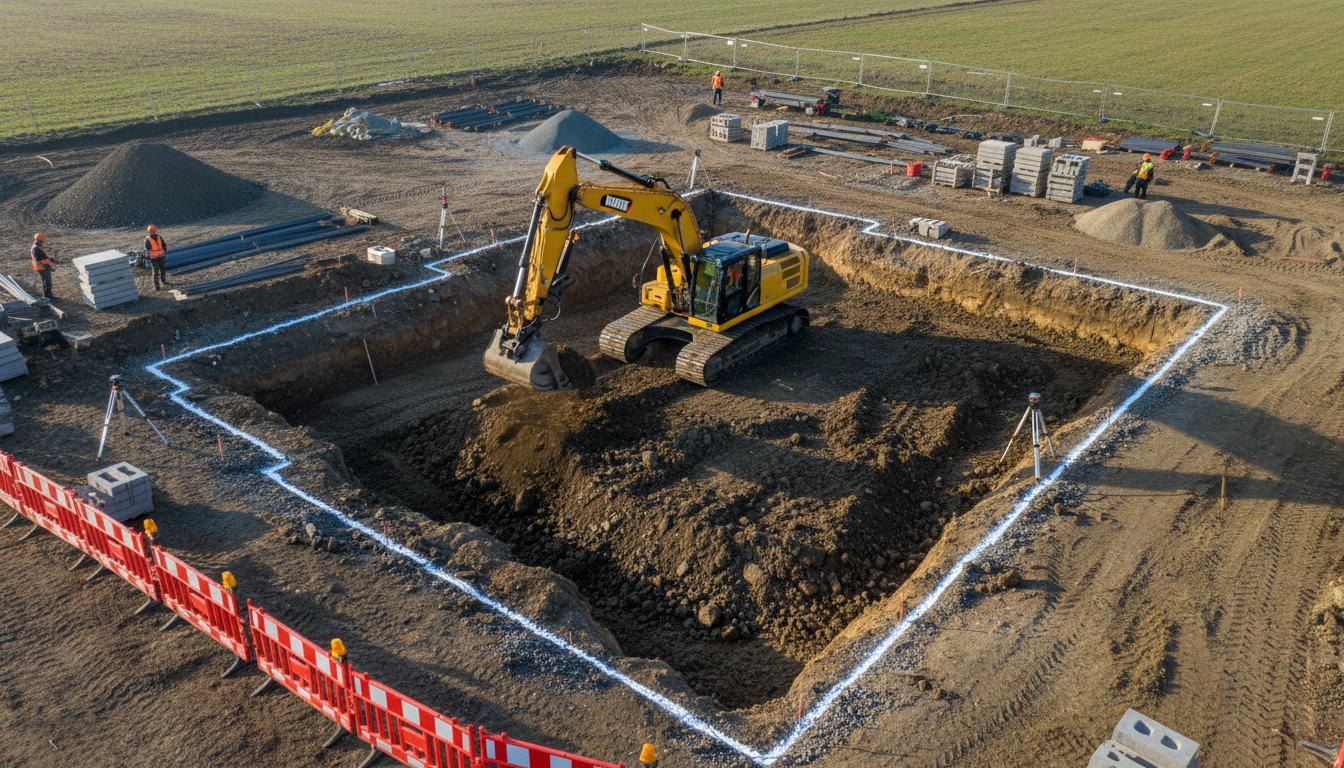
Foundation excavation Orange County involves clearing the building footprint, performing rough grading, and ensuring proper subgrade preparation to create a stable building pad. This process requires expert fill placement and compaction to prevent soil shifting and meet local building standards. Successful excavation provides the essential structural base needed for residential and commercial construction projects throughout the region.
Starting a construction project in Orange County often feels like a race against both the clock and the complex geological reality of the region. Many homeowners and developers face the frustrating realization that a simple hole in the ground is actually a high stakes engineering challenge. Whether you are battling the notorious expansive clay soils of South County or navigating the strict 90 percent compaction standards required by local building departments, precision is not optional. At Orange County Site Work Services, we know that the integrity of your entire structure rests on the quality of its pad. This guide explores the essential phases of site preparation, from initial clearing and grubbing to advanced drainage integration. You will learn how to manage soil stability; understand current excavation costs for 2025; and ensure your project meets every regulatory benchmark for long term success.
The Importance of Precision Site Preparation in Southern California
A residential or commercial structure is only as reliable as the earth beneath it. In Southern California, foundation excavation Orange County projects face a unique set of geological hurdles that require professional oversight from day one. Orange County Site Work Services brings over 20 years of experience to this critical first step, having established a reputation for dependable site work services since 2004.
The geography of our region varies significantly between the coast and the inland valleys. Hillside builds in Laguna Beach require expert stabilization and precise cuts to ensure long term integrity against the rugged terrain. Meanwhile, inland areas like Irvine and Yorba Linda are dominated by expansive clay soils. These soils can expand significantly when wet, which creates massive pressure against concrete slabs if the site is not prepared correctly.
Preparing a building pad is a multi-step engineering process rather than a simple task of moving dirt. It requires comprehensive earthwork and grading to manage drainage and soil stability. From clearing and grubbing the footprint to performing specialized excavation and trenching, every action must be calculated to prevent future settling or structural cracks. By treating the subgrade as an engineered platform, we ensure the foundation has the uniform support it needs to remain stable for decades.
Phase 1: Clearing, Grubbing, and Rough Grading
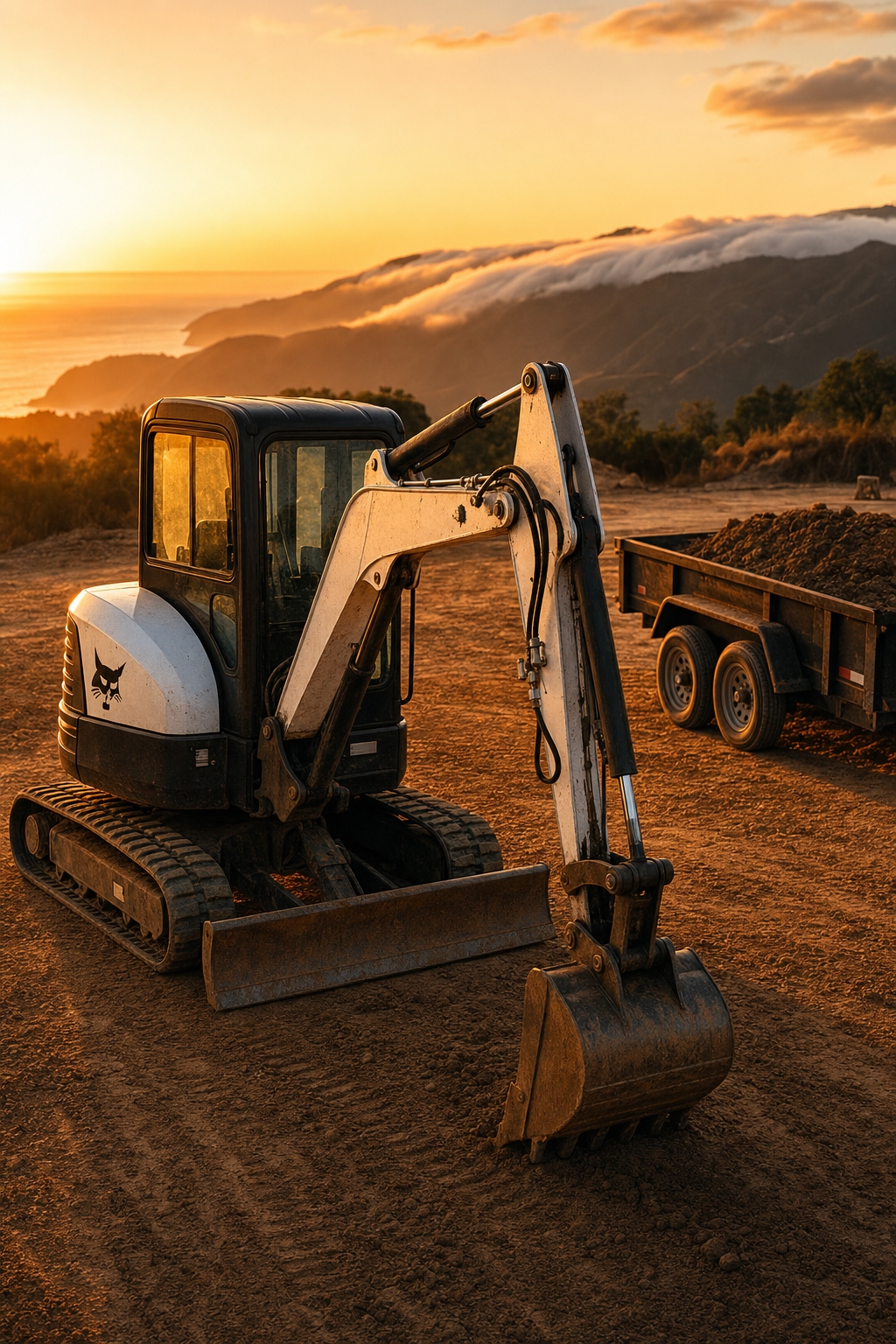
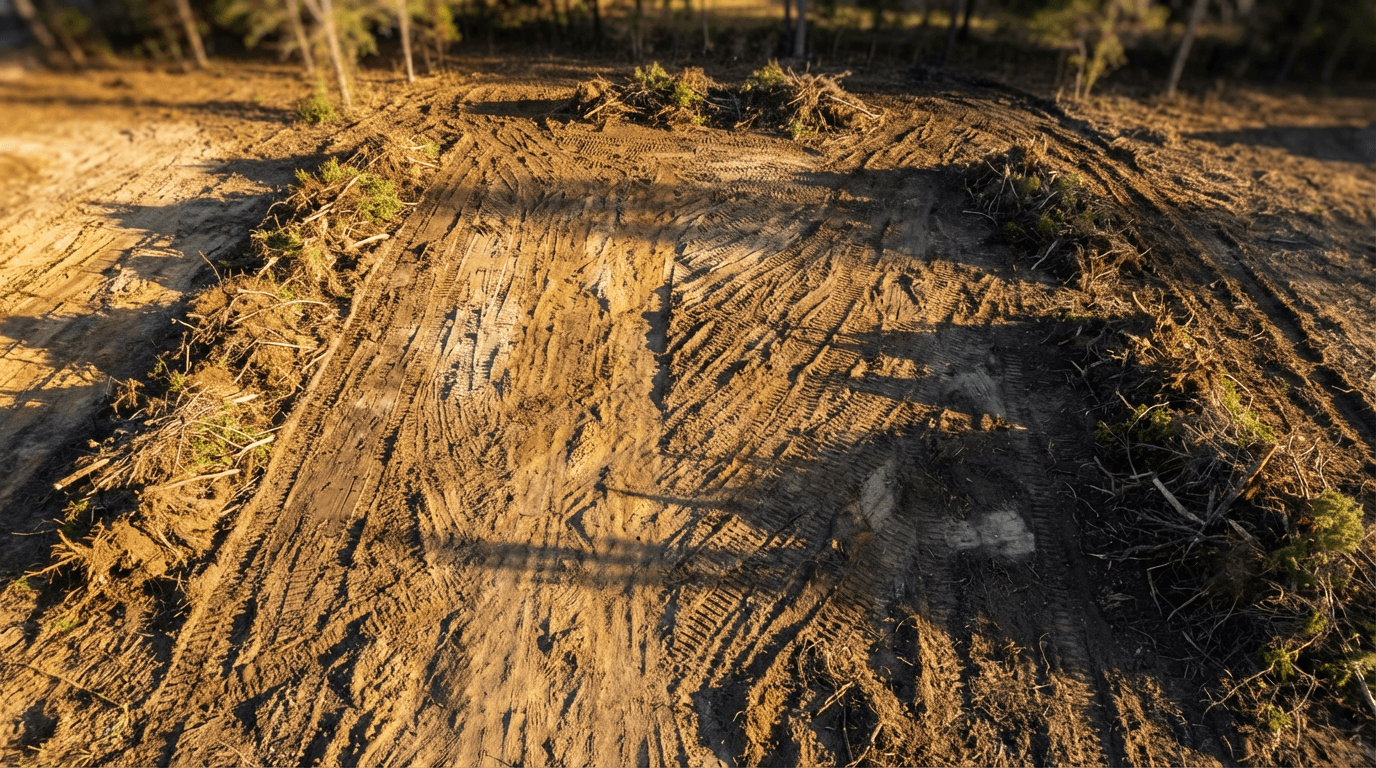
The transformation of a raw lot into a stable building site begins with clearing and grubbing. This phase involves the systematic removal of all surface vegetation, buried roots, stumps, and organic debris within the proposed footprint. Performing this step haphazardly leaves organic material in the soil, which eventually decomposes and creates underground voids. These voids are a primary catalyst for future foundation settling and cracked slabs. For our team, this process ensures we are working exclusively with clean, inorganic soil that can be properly engineered.
Once the debris is hauled away, we move into rough grading. This is where we establish the primary subgrade elevation. Getting the elevation correct at this early stage is vital because it dictates how water will flow across the property. In coastal Orange County, where lots are often on steep mid-slopes or confined by neighboring properties, precise comprehensive earthwork and grading prevents future flooding and erosion. We focus on cutting and filling the site to reach the rough grade specifications provided by the project surveyor or engineer.
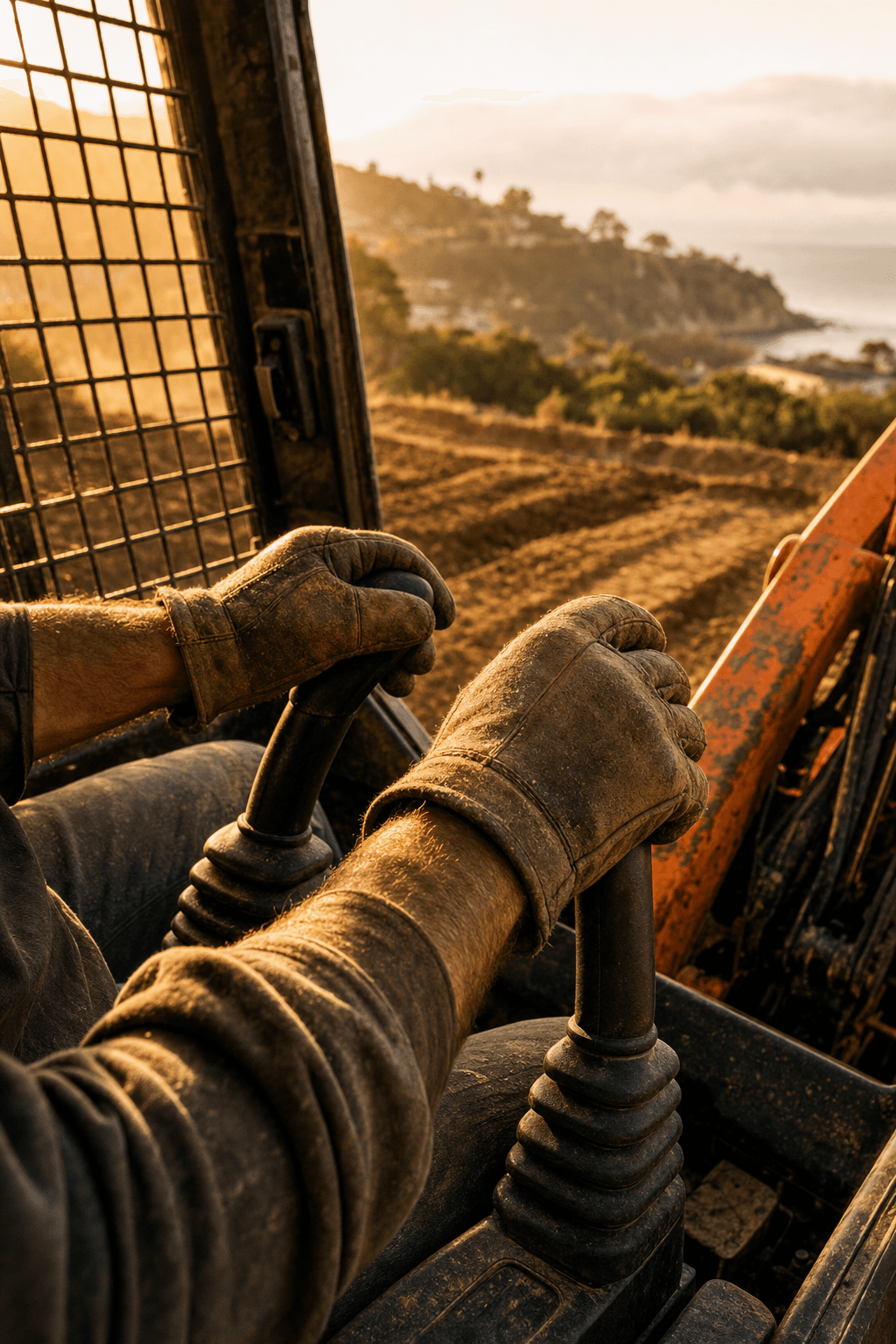
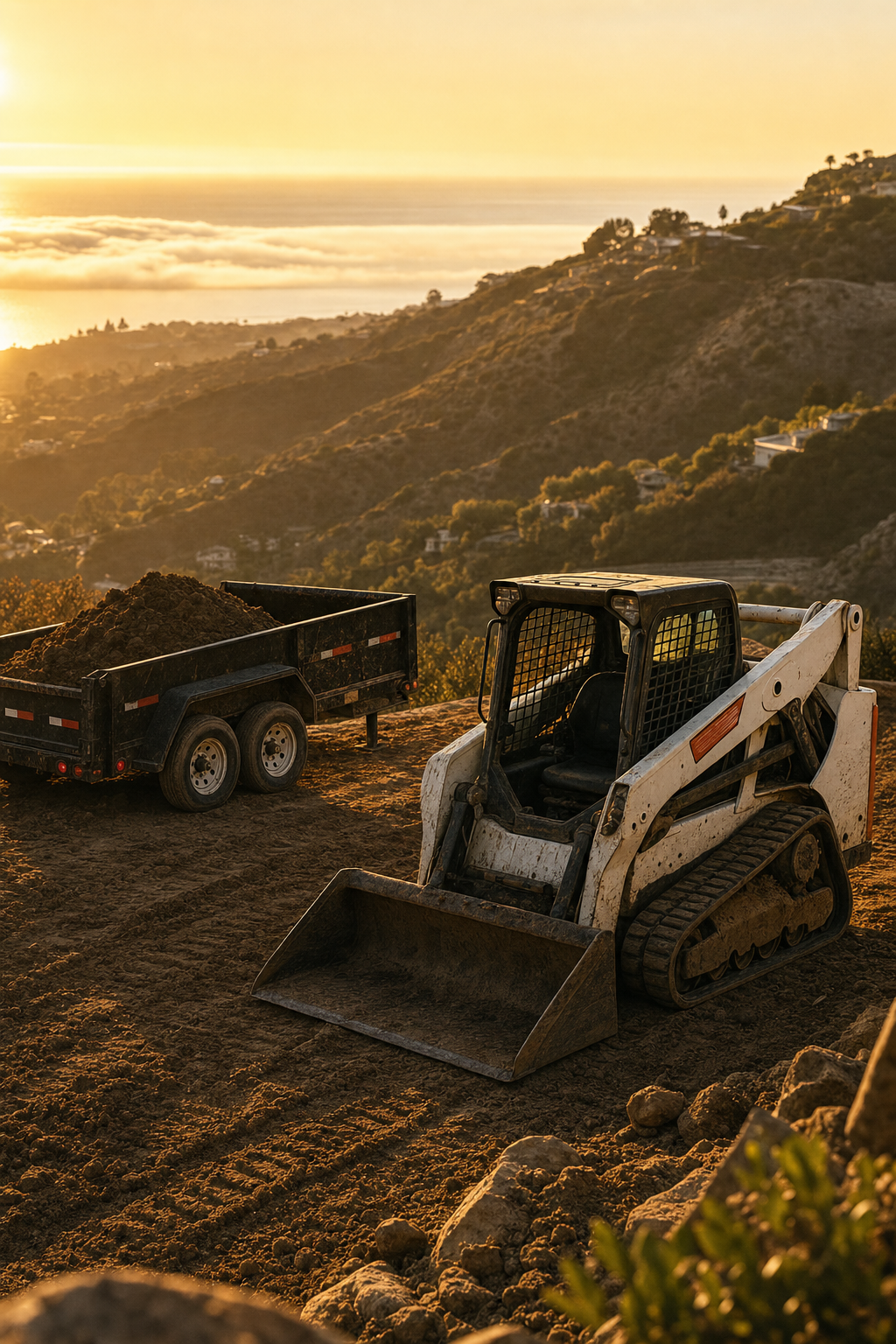
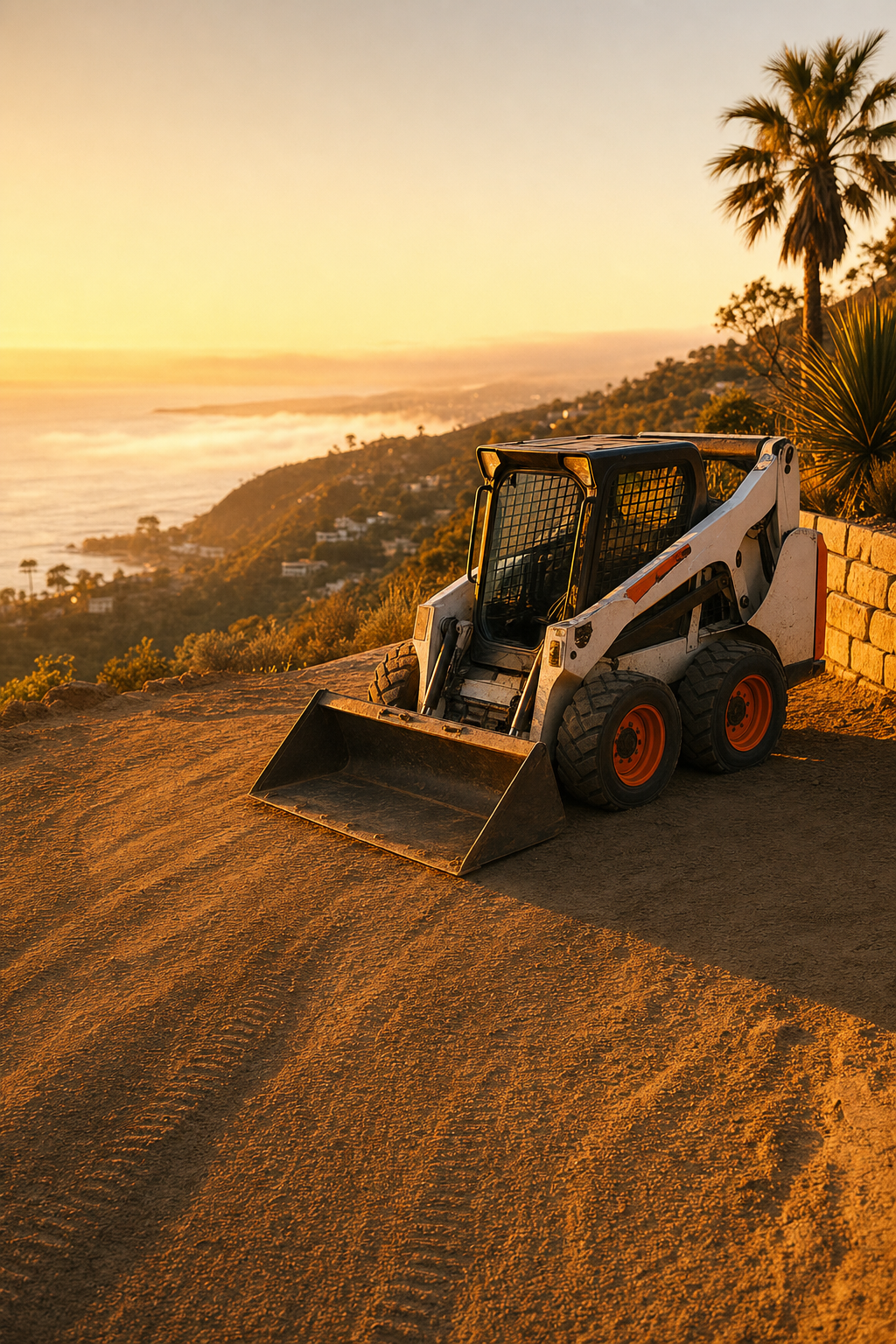
Navigating these residential sites requires specialized equipment. Coastal neighborhoods, particularly in areas like Laguna Beach or Corona del Mar, often feature narrow access points where standard machinery cannot fit. We utilize Bobcats and maneuverable dump trailers to perform specialized excavation and trenching in these tight spaces. This allows us to work efficiently between existing structures or on steep terrains without compromising the site's integrity. By establishing a clean, level, and correctly sloped surface during this initial phase, we set the stage for the rigorous soil stabilization requirements that come next.
Understanding Orange County Expansive Clay Soil
While rough grading sets the physical shape of the land, the chemical and physical composition of the soil determines if that shape remains stable over time. Much of Orange County, particularly inland basins and specific hillside areas, is comprised of highly expansive clay. This soil acts like a sponge; when it rains, the clay particles absorb water and swell, and during dry seasons, the soil loses moisture and shrinks.
Research indicates that these local clays can have an expansion rate of up to 10 percent. If a foundation is poured directly onto this material without treatment, the shifting volume exerts thousands of pounds of upward pressure against the concrete. This relentless cycle of heaving and settling is the primary cause of structural cracks and catastrophic foundation failure in Southern California. To mitigate this risk, foundation excavation Orange County projects often require a process known as over-excavation.
Over-excavation involves removing the native expansive clay within the building footprint to a depth specified by a geotechnical engineer, often two to five feet below the proposed slab. Once the reactive soil is hauled away, we perform comprehensive earthwork and grading by importing engineered fill. This is soil with a low expansion index, which is placed in controlled layers to create a stable, non-reactive platform.
In some specialized cases, we may use specialized excavation and trenching to integrate chemical stabilizers, such as lime, to neutralize the clay's reactive properties. Our team has provided dependable site work services since 2004, focusing on these precise soil stabilization techniques to protect local homeowners from the long term costs of soil movement. This phase ensures the structure sits on a predictable, engineered surface that will not shift when the weather changes.
Meeting the 90 Percent Compaction Requirement
Once the appropriate soil is selected or native material is stabilized, the focus shifts to mechanical density. In the world of foundation excavation Orange County, meeting the 90 percent relative compaction requirement is a non-negotiable engineering standard. This metric refers to the ASTM D-1557 standard, often called the Modified Proctor test, which determines the maximum dry density a soil sample can reach in a controlled laboratory setting. Most municipal building departments throughout the county require that the field soil reaches at least 90 to 95 percent of that laboratory density before any concrete is poured.
Achieving this level of density requires a methodical approach known as placing lifts. Instead of filling an entire excavation hole at once, we apply comprehensive earthwork and grading principles by spreading soil in thin, uniform layers, typically six to eight inches deep. Each lift is moisture-conditioned to its optimal level and then compressed using heavy machinery. For large open areas, we might use a vibratory roller; however, for the tight-access residential lots we often encounter in Laguna Beach or Newport Coast, we utilize Bobcats or specialized plate compactors to ensure uniform density in every corner.
This rigorous process eliminates the air pockets and loose voids that naturally occur in moved earth. If a contractor attempts to bypass this step or uses lifts that are too thick, the weight of the structure will eventually force the soil to consolidate on its own. This leads to differential settlement, where one part of the foundation sinks faster than another, resulting in severe structural cracks and compromised door frames. By providing dependable site work services since 2004, our team ensures that every layer of your building pad meets these rigorous specialized excavation and trenching standards, providing a rock-solid base that resists the pressure of the building above.
Subgrade Compaction: How Long Should You Let Dirt Settle?
Property owners often ask how long they must wait for dirt to settle before pouring concrete. Relying on natural settlement is a passive process that can take years as gravity and rainfall slowly consolidate the soil. This is not a viable strategy for professional foundation excavation Orange County projects. Instead, we use mechanical compaction to achieve immediate stability. By utilizing specialized excavation and trenching techniques, we compress the soil into dense lifts that meet the required 90 to 95 percent relative compaction standards instantly.
When a building pad is professionally engineered and compacted, there is no technical requirement to wait months for further settling. The mechanical force applied by our equipment does in minutes what nature takes a decade to accomplish. However, the timing of the pour is heavily dependent on moisture. Soil must reach its optimal moisture content to achieve maximum density. If the subgrade is too saturated from recent rains or over-irrigation during the grading process, it must be allowed to dry back to the engineer's specified range. At Orange County Site Work Services, we have provided dependable site work services since 2004, ensuring that comprehensive earthwork and grading results in a pad that is ready for concrete the moment the soil technician signs off on the density tests.
Foundation Excavation Costs in Orange County for 2025
Estimating the budget for a building pad requires balancing physical labor with local logistical realities. For 2025, foundation excavation Orange County projects for a typical residential footprint generally fall between $5,000 and $15,000. If the site requires complex grading, such as significant cut and fill or hillside stabilization, costs often range from $8,000 to $25,000.
Several variables influence these figures:
Project Component | Estimated Cost Range | Primary Factors |
|---|---|---|
Standard Excavation | $5,000 – $15,000 | Flat lots, easy access, minimal soil export |
Complex Grading | $8,000 – $25,000 | Hillside builds, tight access, high soil reactivity |
Soil Export & Fill | Variable | Tipping fees at local landfills, imported engineered fill |
Site accessibility is a primary driver. Narrow coastal lots in Laguna Beach often require smaller equipment and more labor hours than an open lot in Irvine. Furthermore, the depth of footings dictated by the structural engineer changes the volume of specialized excavation and trenching required. While an ADU footprint is smaller than a main residence, it still requires the same dependable site work services and comprehensive earthwork and grading to meet strict municipal codes. Managing these variables correctly at the start prevents expensive mid-project adjustments caused by poor soil management or drainage issues.
Drainage Integration During Building Pad Prep
This preventative management extends directly into the configuration of site runoff. A building pad is only truly prepared once it can shed water effectively. During the foundation excavation Orange County phase, we establish precise gradients that direct surface flow away from the future slab. Our crew integrates essential drainage components, including swales and subterranean pipes, during the comprehensive earthwork and grading process.
This early integration is vital for mitigating the hydrostatic pressure that builds up during intense weather events like a Super El Niño. By utilizing specialized excavation and trenching to manage water early, we provide the dependable site work services necessary to prevent saturated subgrades and foundation erosion. This proactive approach ensures that water never pools against the concrete, protecting the long term structural integrity of the project.