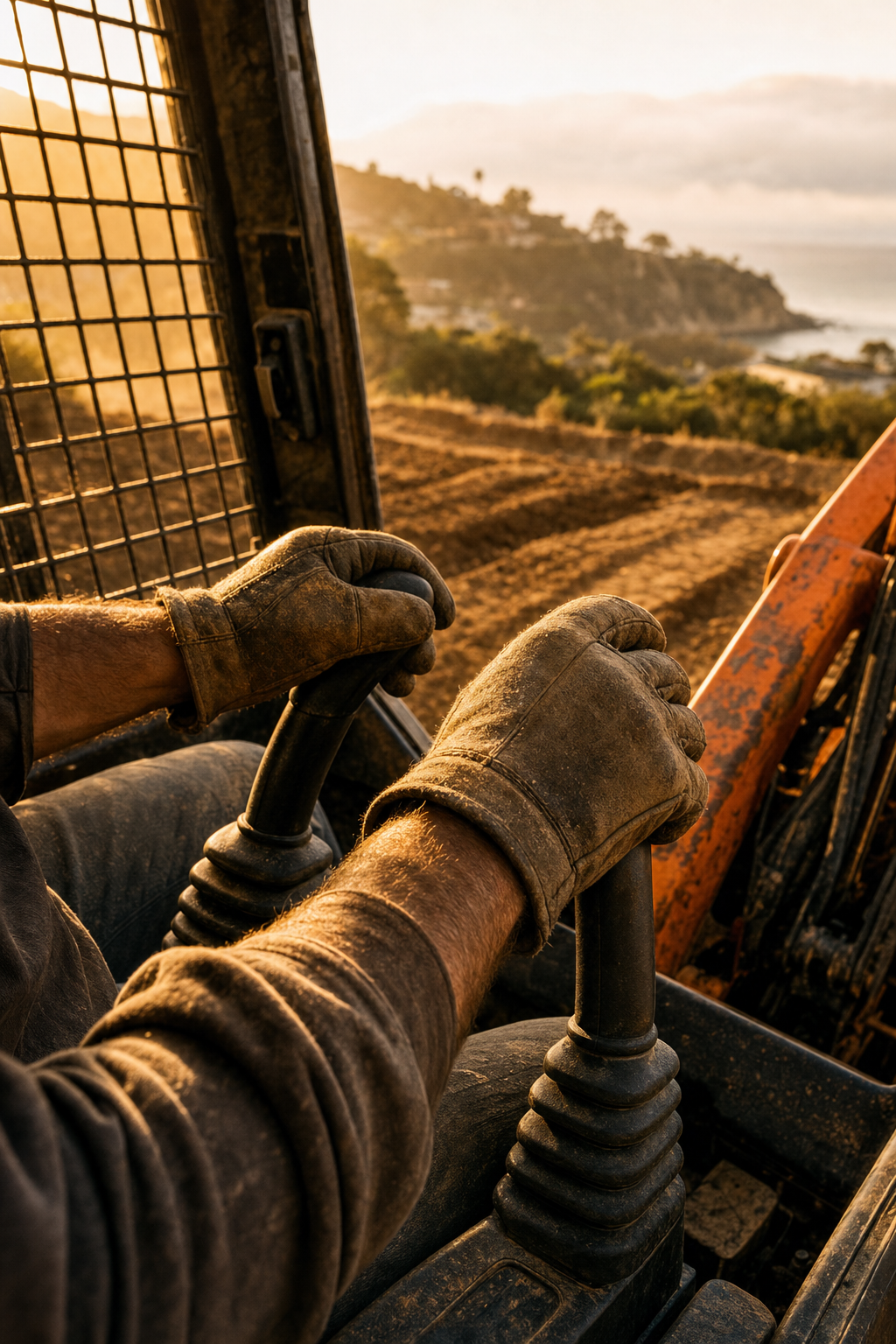
Proper structural fill compaction Orange County requires specialized grading techniques and moisture control to create a stable foundation on expansive clay soils. By using engineered fill dirt and layering it according to strict density specifications, builders can prevent the settling and shifting that often leads to structural failure. This systematic approach ensures that new developments remain durable despite the region's challenging soil conditions.
Building in Orange County presents a unique set of geological challenges; specifically the notorious expansive clay soil that threatens the structural integrity of foundations and retaining walls alike. When soil shifts or swells with seasonal moisture; it leads to costly cracking and foundation movement that can jeopardize an entire development. This is why structural fill compaction is not merely a preliminary task; it is the most critical phase of ensuring long-term site stability. At Orange County Site Work Services; we prioritize precision engineering to mitigate these subterranean risks. In this guide; we will examine the technical differences between standard fill and structural material. We will also explore the science of compaction for local soil types; the specialized equipment necessary for tight residential footprints; and how to navigate the complexities of Orange County drainage compliance and soil reports to ensure your project stands on solid ground.
The Challenge of Building on Orange County Expansive Clay Soil
Building in Orange County, particularly in coastal and southern regions like Laguna Beach, requires a deep understanding of the local geology. Much of our terrain consists of "Adobe" or expansive clay soils. These fine-grained minerals are characterized by high plasticity. During the wet months, the clay absorbs moisture and expands with immense force; during the dry season, it shrinks and cracks. This constant cycle of heaving and settling is the primary cause of foundation cracks, sticking doors, and uneven floors in local residences.
Standard yard dirt or native clay lacks the stability needed for structural support because its volume changes so drastically with moisture levels. Native clay may also contain organic matter that decomposes over time, leading to further settlement issues. Relying on untreated native soil for a building pad is a significant risk that often leads to structural failure. For any project involving specialized excavation and trenching, achieving proper structural fill compaction Orange County is non-negotiable.
This process involves removing problematic native material and replacing it with engineered fill designed to provide a stable, non-expansive base. To ensure your project begins on a solid foundation, contact our Orange County team for expert site preparation. These solutions prevent the costly structural failures that occur when comprehensive earthwork and grading are overlooked.
Structural Fill vs Regular Fill Dirt: Understanding the Difference
To address the instability of native clay, we must distinguish between the types of soil brought onto a job site. Not all dirt is created equal. Clean fill simply refers to soil that is free of large rocks, trash, and organic debris like roots. While it is useful for filling large holes or general landscaping, it lacks the predictable engineering properties required for a foundation pad, ADU, or a new driveway.
Select fill offers more consistency, typically consisting of a clay and sand mix that is easier to work with than raw Adobe clay. However, for projects requiring maximum stability, we utilize structural fill. This is an engineered product composed of specific ratios of sand, gravel, and low-plasticity soil. The key advantage of structural fill is its predictable behavior; it is designed to be compacted to a very high density, and it does not significantly swell or shrink when the groundwater levels fluctuate.
Fill Type | Composition | Primary Use |
|---|---|---|
Clean Fill | Unregulated soil, free of debris | General grading, landscaping |
Select Fill | Processed sand/clay mix | Building pads, non-structural support |
Structural Fill | Engineered sand, gravel, low-plasticity soil | Foundations, retaining walls, load-bearing pads |
Using the correct material is a matter of meeting strict geotechnical requirements. When we perform comprehensive earthwork and grading, we ensure the fill material has a low plasticity index. This ensures that once we achieve proper structural fill compaction Orange County, the soil will remain a rigid, load-bearing mass. This specialized material is screened to remove oversized stones and organic matter that would otherwise create voids or lead to settlement. By starting with engineered material rather than mystery dirt, we provide the reliable base necessary for any Laguna Beach or South County build.
The Science of Soil Compaction for OC Foundations and Slabs
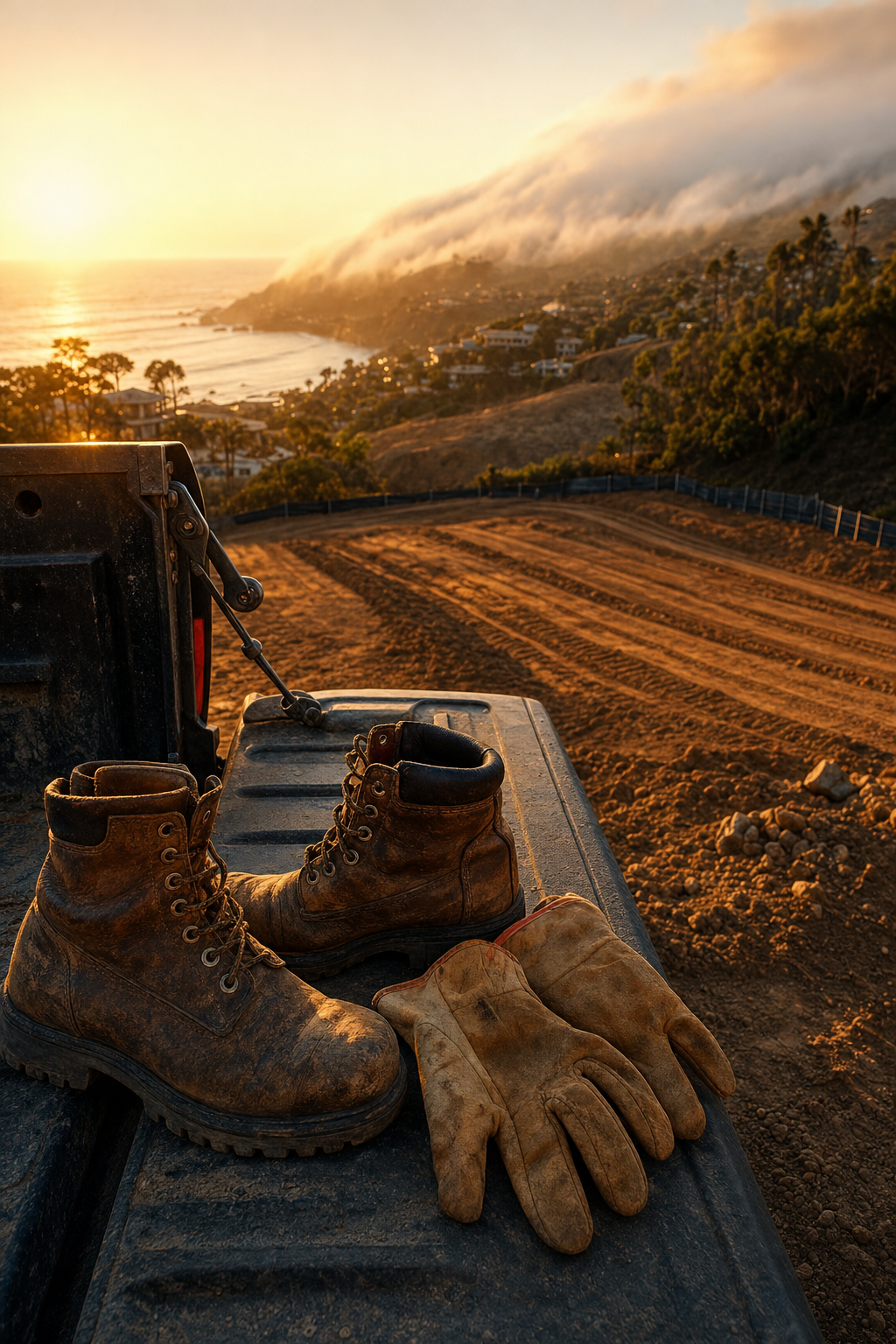
Achieving a stable building pad is not just about bringing in the right material; it is about the physics of how that material is applied and compressed. Soil must be placed in thin, manageable layers known as lifts. For most residential and light commercial projects in Orange County, we work in 6 to 8 inch lifts. Attempting to dump three feet of dirt and simply running a roller over the top only compacts the upper few inches, leaving a loose and unstable core underneath. Over time, that uncompacted lower layer will settle under the weight of a slab, leading to the very cracks and structural failures we aim to avoid.
Effective compaction relies heavily on the concept of optimum moisture content. This is the precise amount of water needed to lubricate soil particles so they can slide into a dense configuration without leaving air pockets.
Soil Moisture State | Physical Characteristic | Impact on Compaction |
|---|---|---|
Too Dry | Dusty, high friction between particles | Soil resists packing; fails density tests |
Optimum | Damp, holds shape when squeezed | Maximum density achieved with minimum effort |
Too Wet | Spongy, muddy, or "pumping" | Water displaces soil; material becomes unstable |
We ensure the soil is conditioned properly before we begin our comprehensive earthwork and grading. This process is guided by the Proctor test, a laboratory standard that determines the maximum dry density a specific soil can reach. By comparing field results to the Proctor baseline, we can verify that the structural fill compaction Orange County meets the 90% or 95% requirements typically mandated by local engineers. This scientific approach removes the guesswork, ensuring that the ground beneath a Laguna Beach ADU or a South County retaining wall is as solid and predictable as the concrete poured on top of it.
Essential Equipment for Structural Compaction in Tight Spaces
Achieving the high density required for engineered foundations involves more than just selecting the right soil; it requires machinery capable of delivering high force in restricted environments. Large industrial developments often utilize massive vibratory rollers and heavy scrapers, but these machines are impractical for the residential and mid sized commercial projects typical of Laguna Beach. Our expertise lies in utilizing Bobcat equipment and specialized compactors that navigate narrow side yards, steep hillsides, and tight backyard footprints.
This maneuverability is vital when preparing for an ADU foundation or a hillside retaining wall where access may be limited to a few feet of clearance. Using smaller, dedicated equipment allows for precise specialized excavation and trenching without risking damage to existing structures or neighboring properties. We focus on the finesse required for comprehensive earthwork and grading in confined areas, ensuring that every lift of engineered soil is processed correctly.
Equipment Type | Best Application | Benefit in Tight Spaces |
|---|---|---|
Bobcat Skids/Loaders | Grading and moving material | Navigates narrow side yards and gates |
Plate Compactors | Finishing and corner work | Precision around footings and utility pipes |
Trench Rollers | Foundation trenches | High compaction force in restricted widths |
This focused approach allows us to deliver reliable structural fill compaction Orange County while maintaining the agility needed for complex residential sites. To discuss the logistics of your specific project and the machinery required for your terrain, contact our Orange County team for an expert evaluation.
Retaining Wall Backfill: Preventing Hydrostatic Pressure
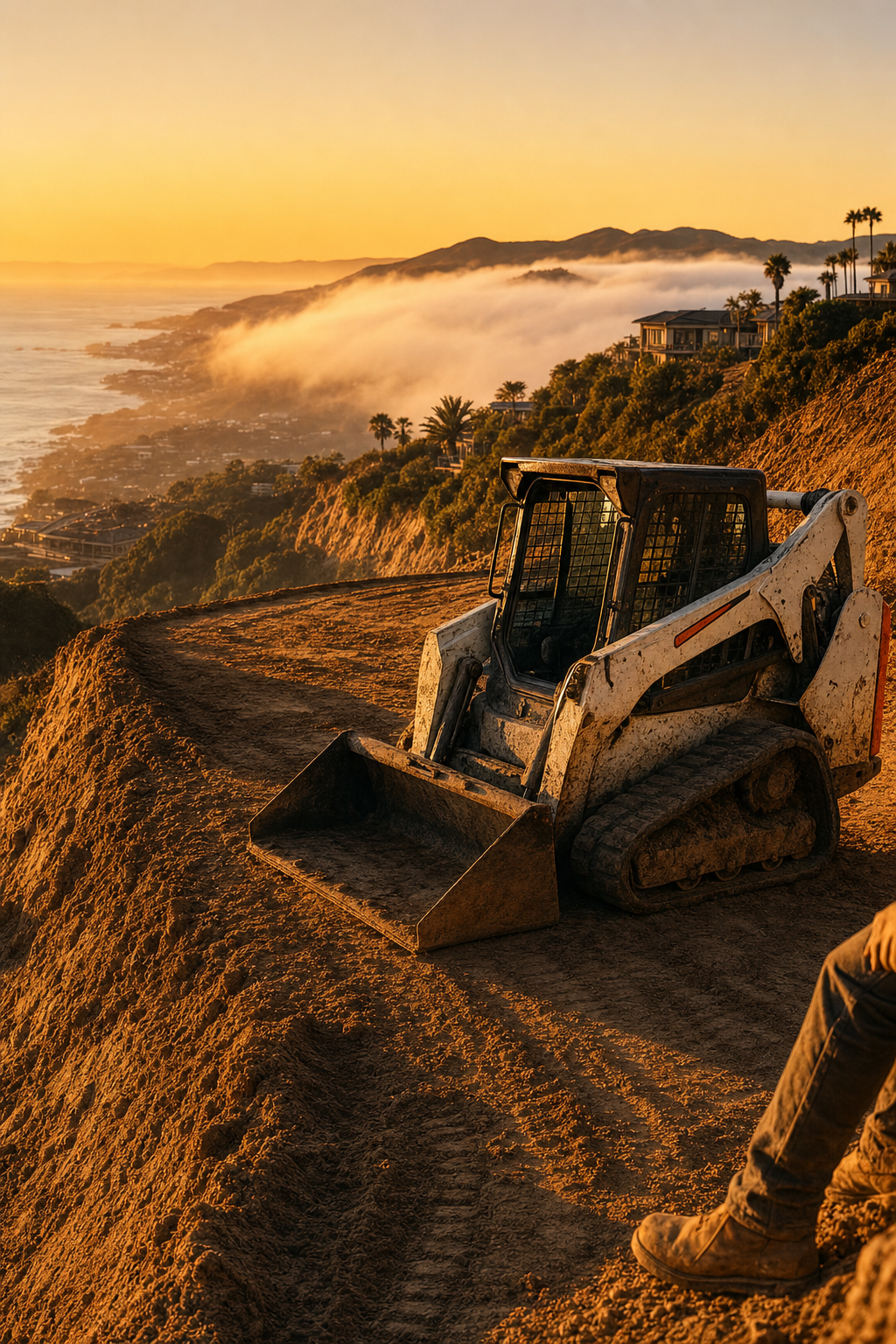
Retaining walls are a staple of the hilly landscape in Laguna Beach and South County, serving to create usable space on sloped lots. However, these structures frequently fail because they are backfilled with the same native Adobe clay excavated from the site. Clay is highly impermeable; it traps water against the back of the wall rather than letting it drain. This creates hydrostatic pressure, where the weight of the water saturated soil becomes significantly greater than the wall was designed to hold. Over time, this pressure causes the wall to lean, crack, or suffer a complete blowout.
To ensure long term stability, we replace native clay with a drainage ready system. This starts with a layer of 3/4 inch crushed gravel immediately behind the wall, which acts as a chimney for water to fall through. At the base, we install perforated drainage pipes wrapped in filter fabric to whisk water away from the foundation. The remainder of the backfill consists of engineered material where structural fill compaction Orange County is applied in careful lifts. This ensures the soil stays in place without putting undue lateral stress on the structure.
Component | Function | Material Used |
|---|---|---|
Drainage Stone | Prevents water buildup | 3/4" Crushed, clean gravel |
Filter Fabric | Prevents soil from clogging pipes | Non-woven geotextile |
Structural Backfill | Provides lateral stability | Low-plasticity engineered fill |
Perforated Pipe | Redirects hydrostatic pressure | SDR-35 or perforated PVC |
Success in these projects relies on the logistics of specialized excavation and trenching and the timely delivery of specific aggregates. Since most hillside projects have limited access, our team coordinates the hauling of heavy clay off site and the immediate import of drainage gravel and structural fill. For a site evaluation on your next hillside project, contact our Orange County team to discuss a plan for comprehensive earthwork and grading that protects your investment from water damage.
Navigating Orange County Drainage Compliance and Soil Reports
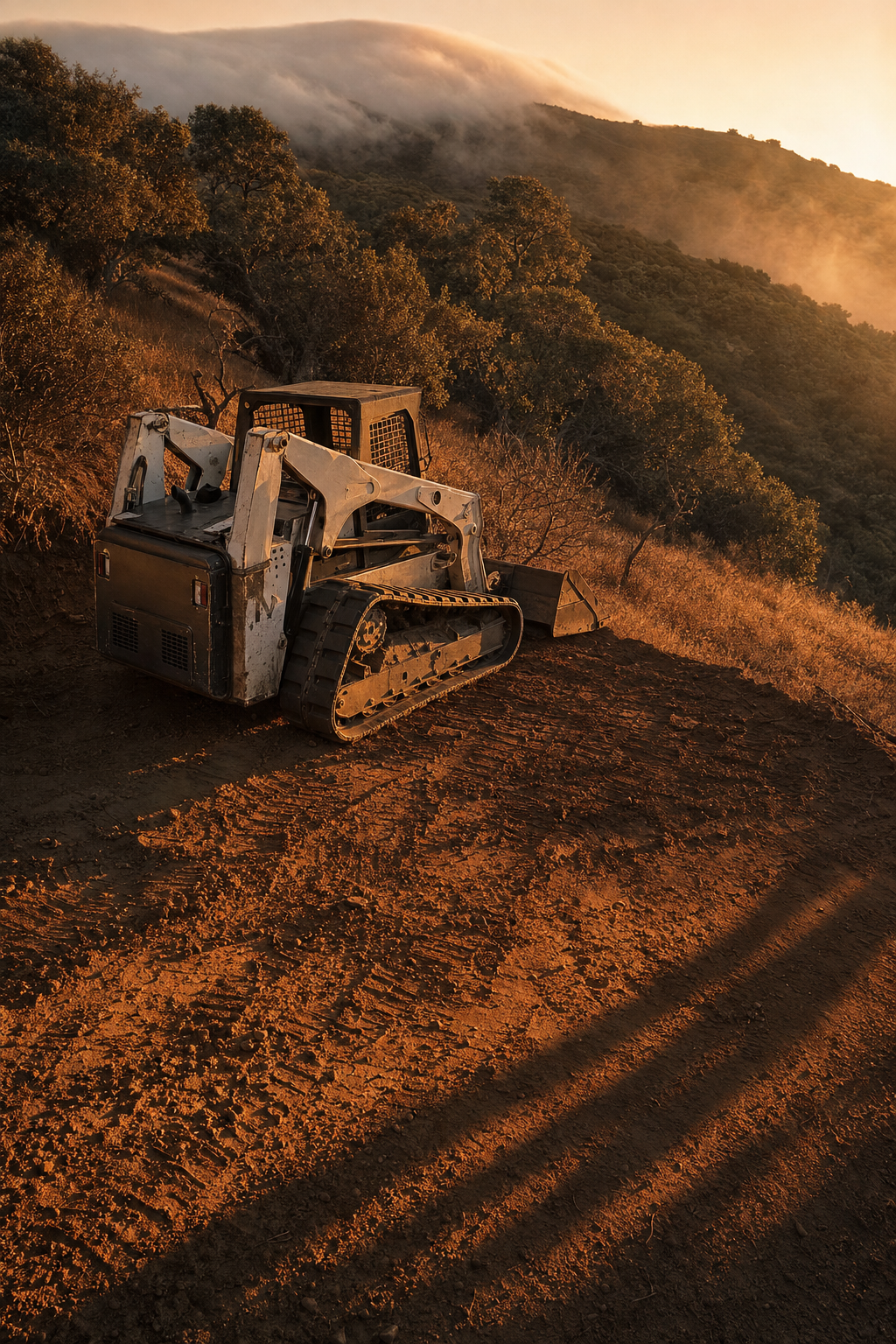
Building in Orange County requires strict adherence to the Orange County Drainage Area Management Plan (DAMP). These regulations manage how water moves across a property, ensuring that site work does not lead to erosion or pollute the regional watershed. When we perform comprehensive earthwork and grading, our team integrates these drainage standards into the initial site prep, ensuring that slopes and swales direct water away from the structure and toward approved discharge points.
For any permitted project, the process begins with a soil report provided by a geotechnical engineer. This document acts as a blueprint for the ground, specifying the exact compaction percentages required for various areas of the site. In most local jurisdictions, a minimum of 90% relative compaction is required for general yard areas, while structural zones such as building pads and retaining wall footings often demand 95%.
Project Component | Typical OC Compaction Requirement | Oversight Body |
|---|---|---|
Landscape & Yards | 90% Relative Compaction | Local Building Dept / DAMP |
ADU & Home Pads | 95% Relative Compaction | Geotechnical Engineer |
Retaining Wall Base | 95% Relative Compaction | Special Inspector |
Utility Trenches | 90% to 95% depending on location | Public Works / Engineering |
Achieving structural fill compaction Orange County involves constant coordination with field technicians who perform nuclear density tests on each lift of soil. Our team works closely with these professionals to ensure every layer meets the engineer's specifications before the next lift is placed. This partnership prevents the costly delays associated with failed tests and re-excavation. For projects involving specialized excavation and trenching, we maintain the precise moisture and lift thickness needed to secure a passing grade on the first attempt. To ensure your site meets all local regulatory and engineering standards, contact our Orange County team to review your soil report and grading plan.