ADU site preparation Orange County involves clearing vegetation, grading the land for a level pad, and excavating for utility connections to ensure a stable building foundation. Costs for this groundwork typically range from $1,500 to over $10,500; however, sloped lots requiring retaining walls can increase expenses by $20,000 or more. This essential phase stabilizes the soil and creates equipment access before foundation construction begins.
Building an accessory dwelling unit in Orange County often feels like navigating a minefield of regulatory hurdles and technical challenges. Most property owners focus on architectural finishes, yet the real success of your project depends on what lies beneath the surface. Improper grading or overlooked utility requirements can lead to costly delays, structural instability, and drainage failures that plague your property for years. At Orange County Site Work Services, we understand that precision groundwork is the non negotiable first step toward a lasting investment. This guide outlines the critical components of professional ADU site preparation. You will learn about navigating local grading permits, managing demolition in confined spaces, and executing specialized trenching for utilities. By mastering these foundational steps, you ensure your new construction remains safe, compliant, and built to withstand California's unique environmental demands.
The Foundation of a Successful ADU Starts with Expert Site Prep
In the Orange County real estate market, Accessory Dwelling Units (ADUs) have become a vital solution for multi-generational living and property value enhancement. While many homeowners focus their energy on architectural aesthetics and interior finishes, the structural integrity of the build depends entirely on what happens before the concrete is poured. ADU site preparation Orange County is the technical process of transforming a backyard or vacant lot into a stable, build-ready pad. It is the bridge between a conceptual site plan and a physical structure.
Site work functions as the invisible infrastructure of your project. Expertly executed Grading and Drainage in Orange County prevents common pitfalls such as foundation settlement, hydrostatic pressure issues, and water intrusion. Without professional Excavation and Trenching Orange County, homeowners often face significant permit delays or expensive mid-build corrections. Proper preparation ensures the soil can support the specific load of a detached unit while managing the unique drainage requirements of Southern California lots.
Orange County Site Work Services brings over 20 years of field experience to this critical transition phase. Established in 2004, our team specializes in providing comprehensive site work solutions tailored to the local landscape. We focus on the precision required to move a project from raw land to a certified pad, ensuring every ADU starts with a foundation designed to last.
Navigating Orange County ADU Grading and Site Approval Process
Before equipment ever touches the dirt, your project must navigate the specific regulatory landscape of Orange County Development Services. California state law has streamlined this process significantly; local agencies are now required to approve or deny ADU applications within a 60-day window. For homeowners utilizing pre-approved plans, this timeline can often be compressed to as little as 30 days. Managing these submittals typically happens through the MyOCService online portal, which serves as the central hub for permit tracking, fee payments, and document uploads.
The complexity of your ADU site preparation Orange County depends largely on the distinction between a simple site plan and a comprehensive grading plan. A site plan is often sufficient for flat properties where earthwork is minimal and does not significantly alter the existing landscape. However, in topographically diverse areas such as Laguna Beach or San Juan Capistrano, a full grading plan is almost always mandatory. These rigorous documents must detail exactly how the land will be shaped to manage runoff and ensure long-term structural stability.
Sloped lots introduce specific engineering requirements, including hydrologic calculations and precise drainage documentation. If your project disturbs more than a minor amount of soil or sits on a significant incline, the county requires detailed elevations to ensure the new pad does not negatively impact neighboring properties or the public right of way. This stage is where technical expertise becomes vital, as incorrect drainage plans can lead to costly revisions or permit denials. Engaging a team that understands these nuances ensures that the transition from the digital portal to the physical job site remains compliant and efficient.
Step 1: Clearing the Footprint and Demolition Requirements
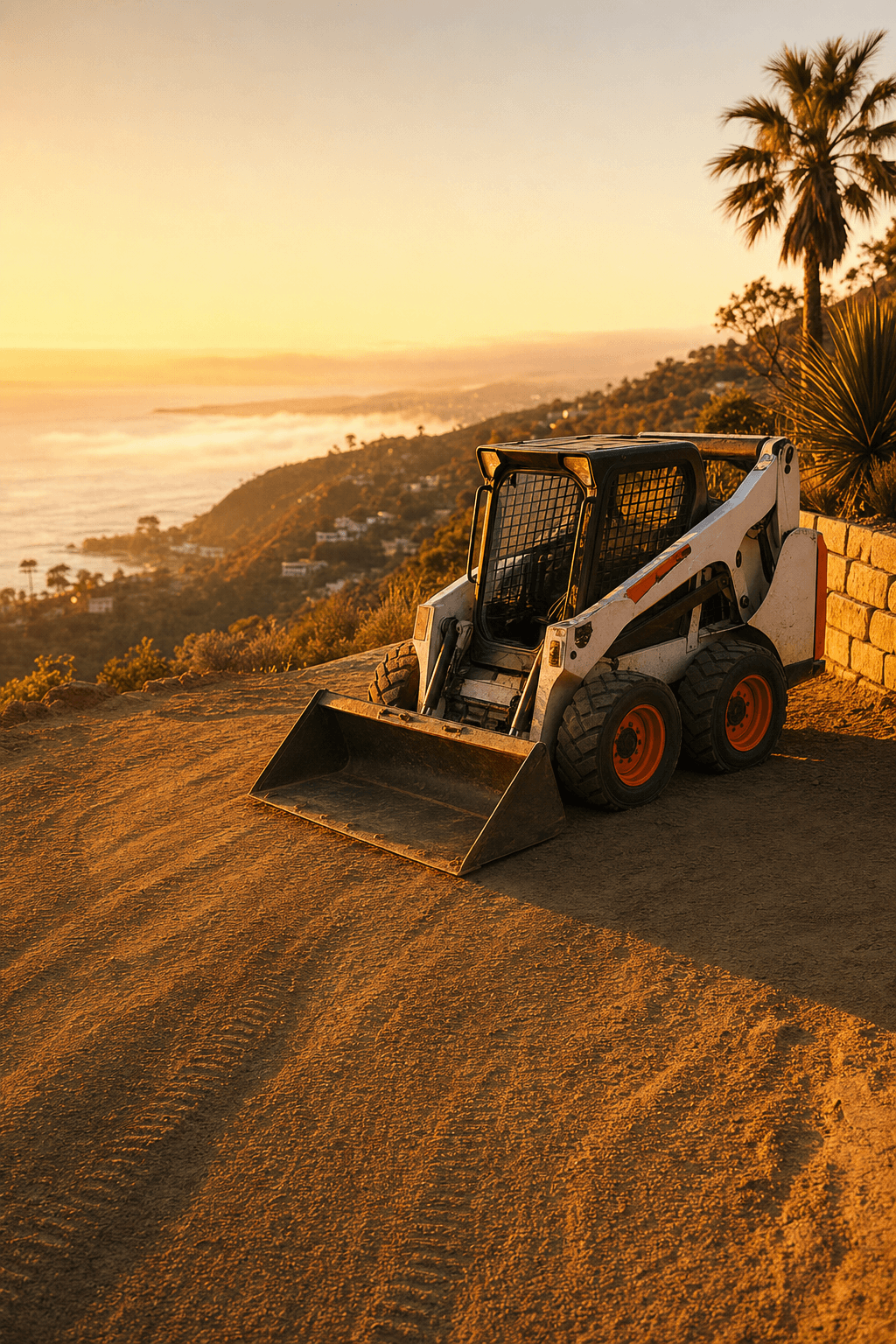
Once your permits are secured, the physical ADU site preparation Orange County begins with clearing the building footprint. This initial phase involves the meticulous removal of surface vegetation, large rocks, and organic debris that would otherwise compromise the structural integrity of the building pad. If your backyard currently hosts an old tool shed, a cracked concrete patio, or a garage slated for replacement, professional demolition is the first priority. We utilize Bobcats and dump trailers to efficiently break up and haul away these materials, ensuring no subsurface debris is left behind to cause future settling or foundation voids.
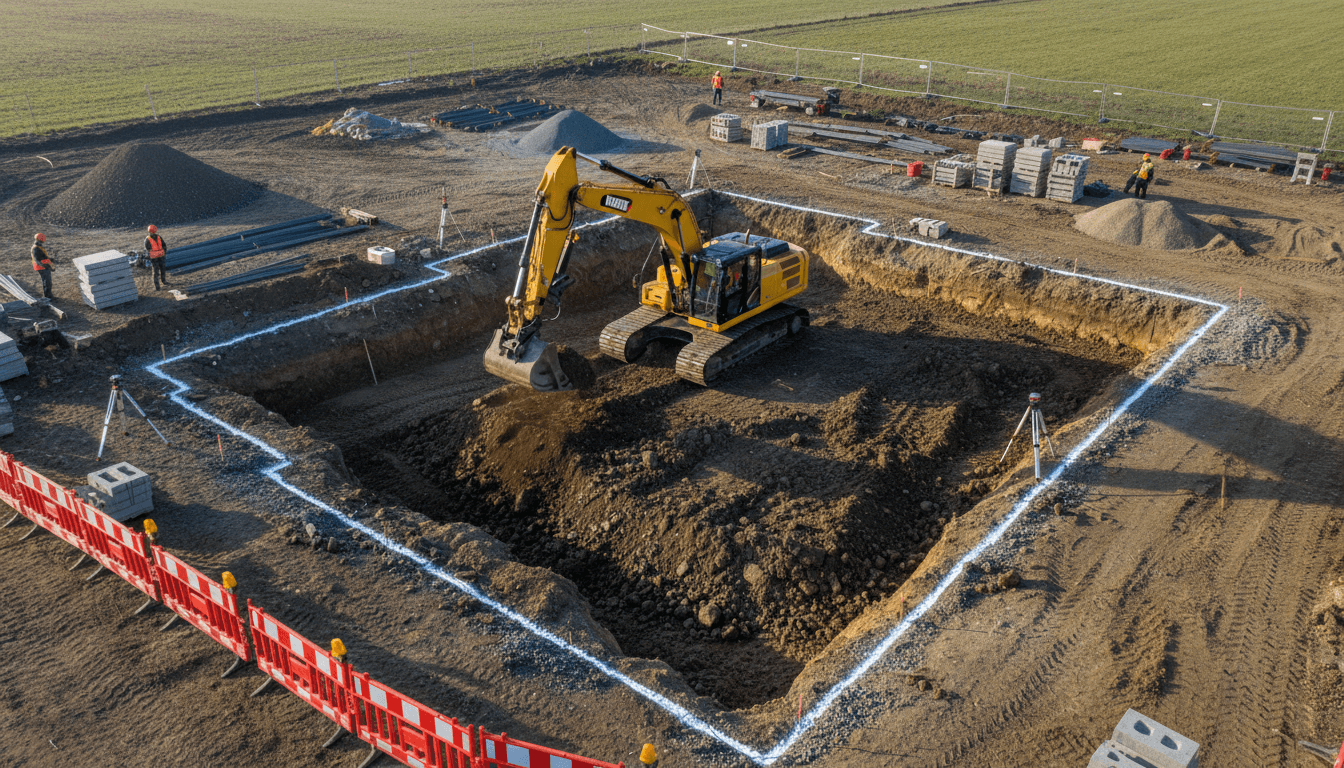
The objective is to achieve a completely clean site. This level of precision is non-negotiable because it allows surveyors to establish accurate benchmarks and layout lines without obstruction. Our team handles this Excavation and Trenching Orange County phase by stripping the land down to stable subsoil. Clearing the way properly at the start prevents the need for costly mid-build corrections when footings or utility lines encounter unexpected buried obstacles.
Step 2: Specialized Grading for Orange County ADU Pads
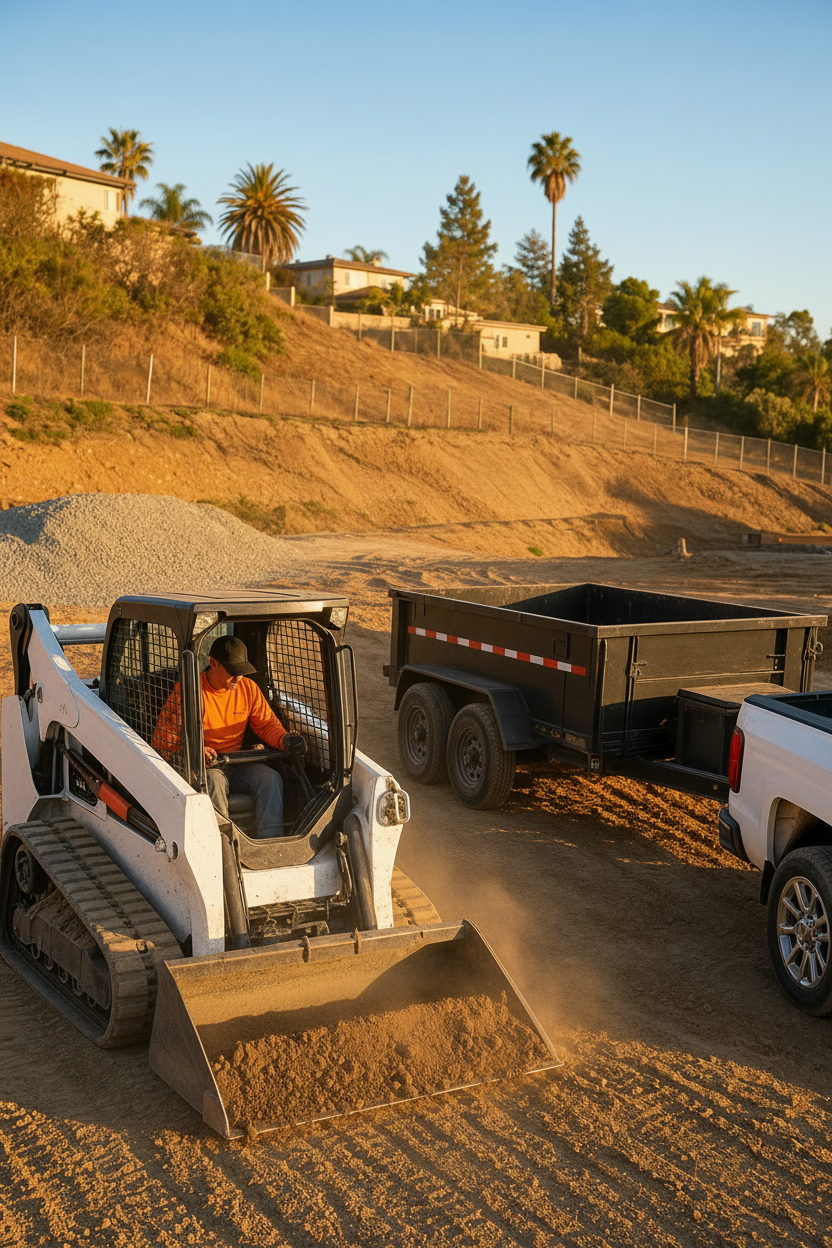
Following the removal of surface debris, the process shifts to rough grading. This is the technical phase where we shape the earth to meet the specific designed elevation required for your ADU foundation. A critical component of Grading and Drainage in Orange County is the stripping of topsoil. We remove the uppermost layer of organic material, roots, and loose soil because these elements cannot support a structural load. Organic matter eventually decomposes, leading to voids that cause foundation failure.
Our team utilizes Bobcats and dump trailers to execute this precision work. The Bobcat allows for nimble excavation within the confined footprints of most Orange County backyards, while dump trailers facilitate the immediate removal of excess spoils. In the Southern California climate, ADU site preparation Orange County is not merely about creating a flat spot in the yard. It is a calculated effort to prepare the underlying soil for the concentrated weight of a detached unit. By reaching the stable subgrade and establishing the correct rough elevation, we ensure the site is ready for the high-density compaction necessary for long term structural integrity.
Step 3: Underground Utility Preparation and Trenching
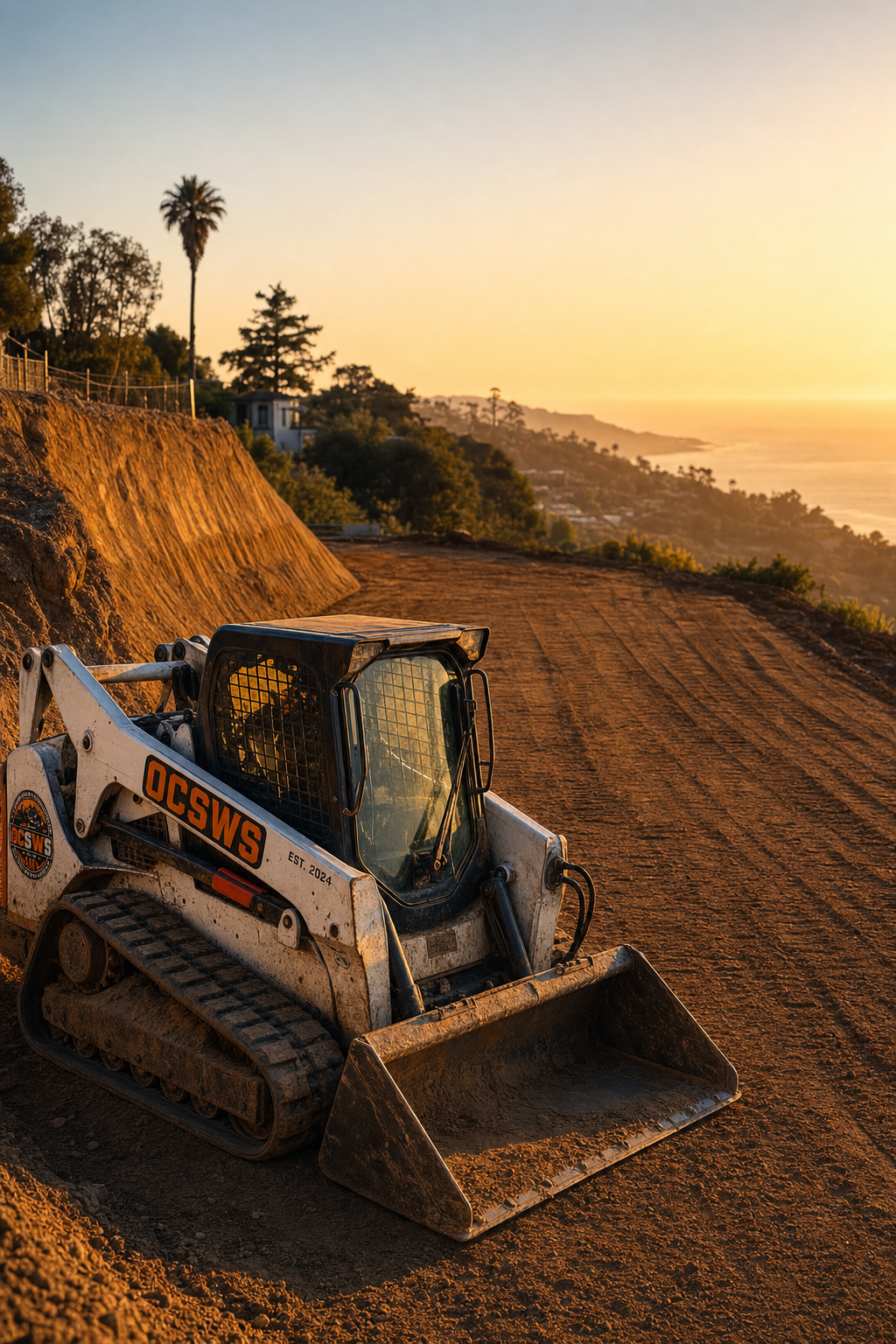
Once the pad is rough-graded, the focus shifts to the vital arteries of the structure. Excavation and Trenching Orange County is a critical phase of ADU site preparation Orange County that requires precise execution to meet California Building Code and local utility standards. Unlike a simple home addition, a detached ADU typically requires its own dedicated or redirected lines for water, sewer, gas, and electricity. If these trenches are not dug to specific depths, often ranging from 18 to 36 inches depending on the utility type and local OC ordinances, you risk failing inspections before the foundation is even poured.
Our team uses specialized, compact equipment like Bobcats to navigate the tight constraints of established residential lots in areas like Laguna Beach. Professional trenching ensures that utility lines remain separate enough to prevent interference while maintaining the necessary pitch for gravity-fed sewer lines. By utilizing dump trailers for immediate soil management, we minimize the footprint of the work and reduce disruption to your existing yard and landscaping. Precise trenching also protects the integrity of the newly graded pad, ensuring that the utility paths do not compromise the soil compaction necessary for the upcoming foundation work. This technical coordination between excavation and utility layout is what keeps a project on its 60 day approval timeline.
Ensuring Structural Integrity through Soil Compaction and Drainage
Achieving the final grade is only half the battle; the long term stability of an ADU depends on high quality Grading and Drainage in Orange County. In our region, expansive clay soils are a common challenge. These soils swell when wet and contract when dry, which can easily cause foundation cracks if the building pad is not engineered correctly. To mitigate this risk, we adhere to the strict 90 to 95 percent relative compaction standard common in ASTM specifications. By mechanically densifying the soil, we remove air pockets and ensure the earth can support the structural load without shifting or settling over time.
Proper ADU site preparation Orange County also requires meticulous attention to water management. The California Residential Code mandates a specific drainage profile where the finished grade must slope away from the foundation a minimum of 6 inches within the first 10 feet. This rule ensures that rainwater and irrigation runoff move away from the slab, preventing hydrostatic pressure buildup and moisture intrusion. Without this precise slope, water pools against the foundation, leading to soil saturation and potential structural failure. Our team uses laser levels and specialized equipment to verify these grades, ensuring the site meets code and protects your investment from the ground up.
Challenges of Tight Access in Orange County Backyards
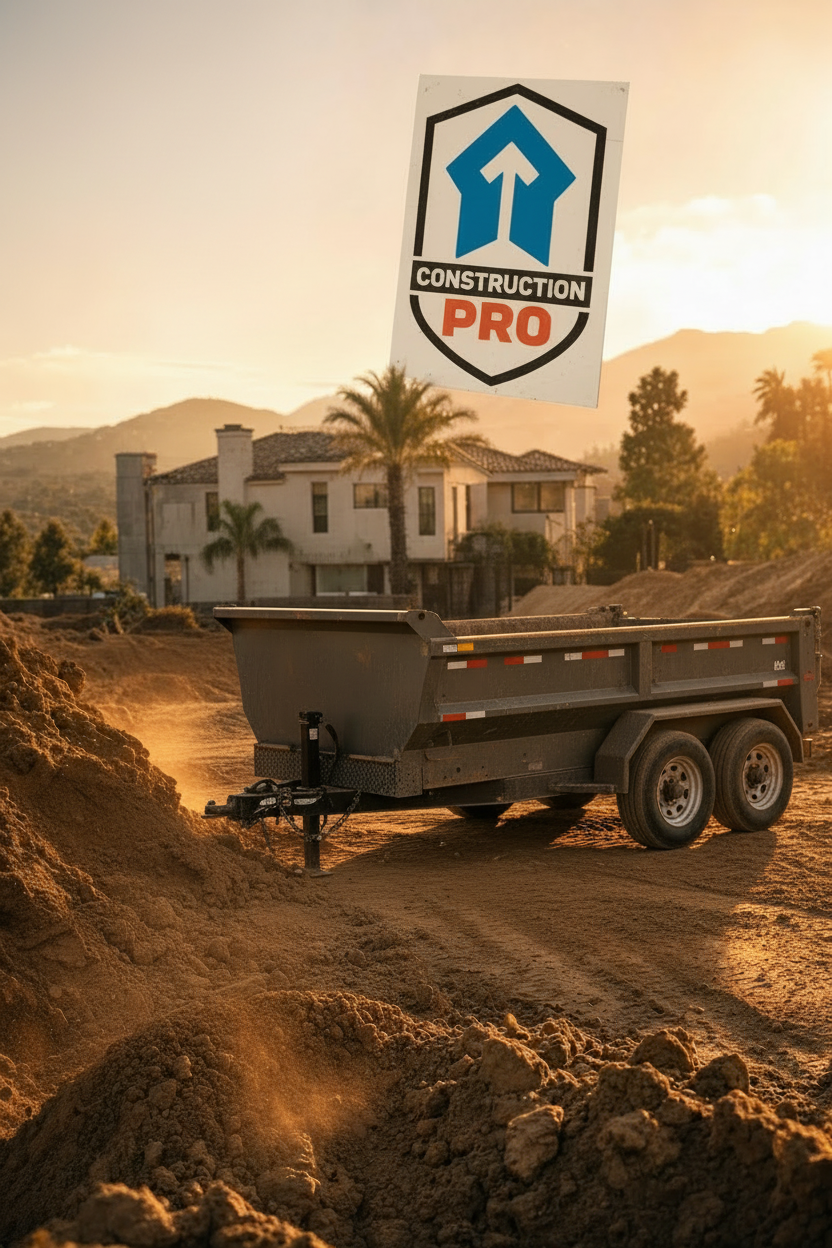
One of the most significant logistical hurdles for ADU site preparation Orange County is the physical constraint of established property lines. In neighborhoods like Corona del Mar or the hillside lots of Laguna Beach, the path to the backyard is often limited to a narrow side gate or a slender driveway shared with a neighbor. Navigating these restricted sites requires a surgical approach to protect the primary residence while moving tons of earth and debris.
Our team utilizes specialized compact equipment, including nimble Bobcats and maneuverable dump trailers, to traverse these tight corridors without crushing mature landscaping or damaging decorative driveways. These machines allow us to perform comprehensive site work solutions in spaces where traditional, heavy construction equipment simply cannot fit. By carefully planning the ingress and egress routes, we ensure that the excavation process for your new unit does not compromise the aesthetics or structural health of your main home; this precision proves that even the most confined backyard can support a professional grade building pad.
Budgeting for ADU Sitework Costs in California
Budgeting for ADU site preparation Orange County involves balancing fixed labor costs with variable site conditions. For a standard, relatively flat backyard, homeowners should budget between $3,500 and $12,000 for basic pad preparation. This range typically covers essential clearing, stripping of topsoil, and the high density compaction required for a stable foundation. However, the diverse terrain of the OC can lead to price fluctuations. Sloped lots that necessitate engineered retaining walls or significant hillside stabilization can push site work costs above $20,000.
Homeowners must also account for essential soft costs and compliance measures. Soil reports are often necessary to guide the grading strategy, while larger projects may trigger the need for a Stormwater Pollution Prevention Plan (SWPPP) to manage runoff. Utilizing comprehensive site work solutions ensures these technical requirements are met from the start. Access also dictates the budget; utilizing compact equipment like Bobcats for Excavation and Trenching Orange County is efficient, but tight spaces increase the time required for hauling spoils via dump trailers. Prioritizing expert Grading and Drainage in Orange County during the budgeting phase prevents the hidden costs of foundation failure later.
Answers to Common Questions about California ADU Site Preparation
When does an ADU project require a Stormwater Pollution Prevention Plan (SWPPP)? California mandates a SWPPP for projects disturbing one acre or more. However, local Orange County jurisdictions often require an Erosion and Sediment Control Plan (ESCP) for smaller backyard builds. If your lot is on a hillside or near a storm drain, expect specific requirements to manage runoff during Excavation and Trenching Orange County. Professional ADU site preparation Orange County ensures these erosion controls are in place to meet municipal inspections.
What are the most frequent errors in site preparation? Neglecting to strip topsoil is a major error; buried organic matter eventually decomposes and creates foundation voids. Homeowners also frequently overlook soil compaction. Without reaching the 90 to 95 percent relative compaction standard, the structure is prone to settling and cracking. Finally, failing to measure clearance for a Bobcat can lead to unexpected manual labor costs if equipment cannot reach the backyard.
Can the $40,000 CalHFA ADU Grant cover site work? Yes, the CalHFA program is designed to cover pre-development costs. This includes soil reports, Grading and Drainage in Orange County, and comprehensive site work solutions. Using these grant funds for professional pad preparation ensures the structural integrity of your unit while preserving your primary construction budget for the build phase.
Preparing your property for an accessory dwelling unit is a significant investment that requires careful planning and precision. From grading to utility trenching, getting these early steps right ensures your new structure remains stable and functional for years to come. If you want expert help managing these technical details, you can explore our full range of Services to see how we can assist with your project. Our team is ready to provide the professional groundwork needed to bring your vision to life.