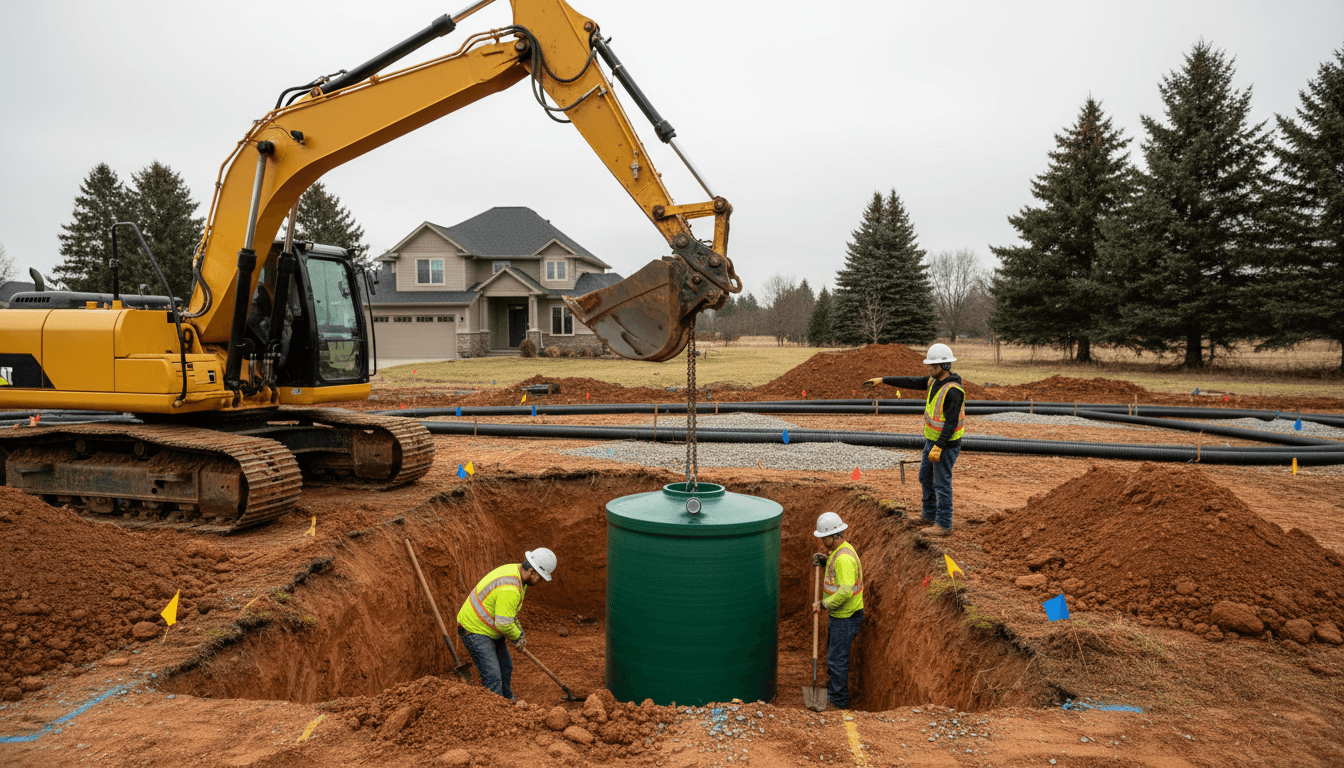
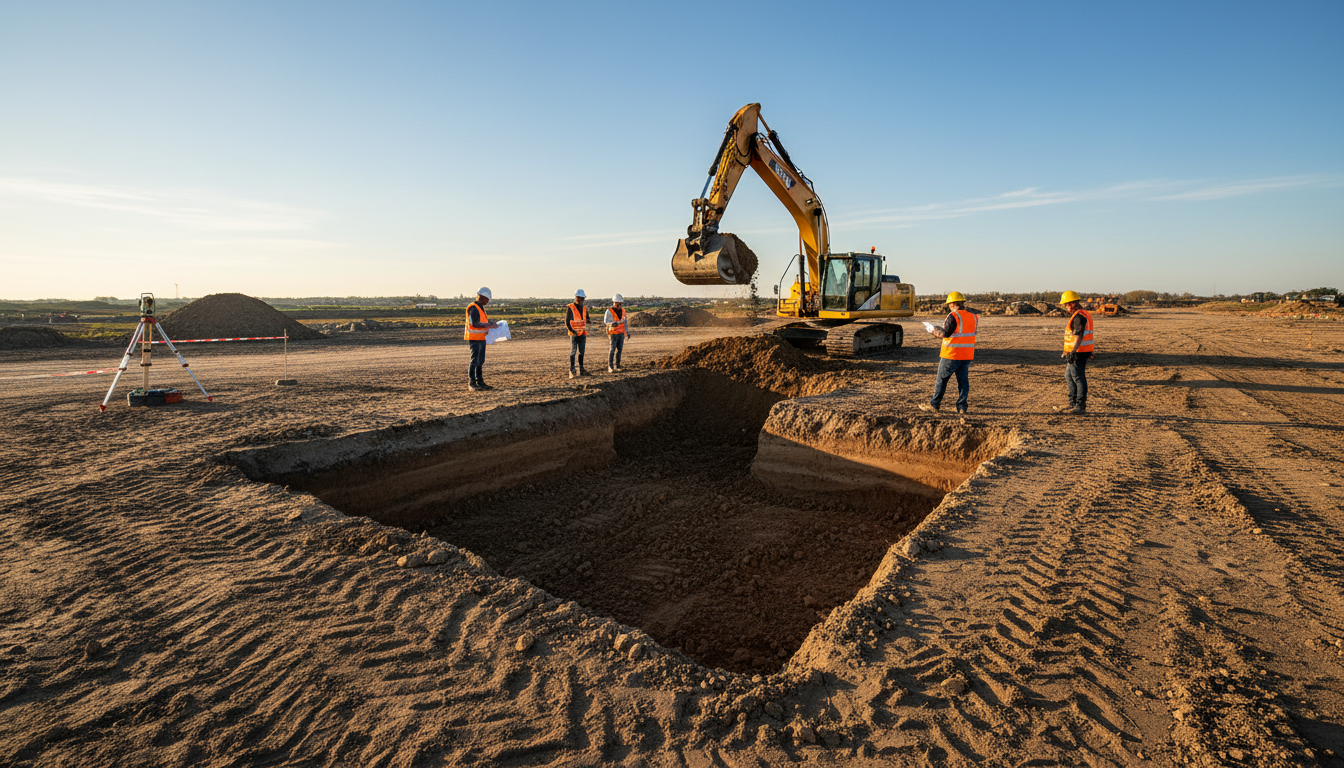
Maintaining a compliant erosion control construction site Orange County requires implementing Best Management Practices like silt fences and stabilized entrances to prevent sediment runoff. Developers must follow a site-specific Stormwater Pollution Prevention Plan (SWPPP) to satisfy local grading permits and California’s Construction General Permit standards. These measures ensure environmental protection and help avoid significant fines during the rainy season.
In Orange County, a single heavy rainstorm can wash away weeks of precise grading progress and trigger expensive code enforcement visits. Builders often face the stress of unexpected runoff or sediment discharge that threatens to shut down production. Maintaining strict compliance with local drainage regulations is not just about avoiding fines; it is about protecting your project investment and keeping your schedule on track during the unpredictable Southern California rainy season. This guide outlines the critical relationship between site preparation and sediment control. You will learn about the specific triggers for SWPPP requirements, essential Best Management Practices for local terrain, and how to navigate SMARTS filing without errors. By understanding these professional site work strategies, you can prevent common erosion mistakes and ensure your jobsite remains both stable and compliant throughout the construction cycle.
Understanding Erosion Control for Construction Sites in Orange County
Construction projects in Southern California face rigorous environmental standards, but effective management begins with understanding the physics of the land. In a construction context, erosion control is the proactive practice of stabilizing soil to prevent it from detaching in the first place. This is a critical distinction for any erosion control construction site Orange County project because it targets the source of the problem rather than the symptoms.
Erosion control is often confused with sediment control, but the two serve different functions. Erosion control focuses on keeping the soil in its original position using methods like blankets or soil binders. Conversely, sediment control acts as a secondary defense; it is designed to trap soil particles once they have already started to move toward the site perimeter. A successful plan integrates both to protect local waterways and neighboring properties.
The geology of Orange County requires a nuanced approach. The heavy expansive clays prevalent in Irvine behave very differently during a rain event than the sandy loams found throughout the coastal canyons of Laguna Beach. Clay tends to resist water penetration, leading to high-volume runoff, while sandy soils can wash away rapidly if not properly stabilized. Since 2004, Orange County Site Work Services has applied these principles across thousands of jobsites. As site work experts, we leverage 20 years of local experience to implement professional site work solutions that account for these geological variations. This deep understanding of local soil behavior ensures that Orange County grading services are not just compliant, but effective for the specific terrain of the project.
What Triggers the Need for a SWPPP in California?
Determining if a project requires a Stormwater Pollution Prevention Plan (SWPPP) depends primarily on the total area of soil disturbance. In California, the legal threshold is one acre. If a project disturbs one or more acres of land, or is part of a larger common plan of development that collectively disturbs one or more acres, it falls under the jurisdiction of the California Construction General Permit.
It is important to understand that soil disturbance is not limited to the building footprint. Activities such as clearing, Orange County grading services, excavation, and trenching all contribute to this total. Even equipment staging areas and soil stockpiles are factored into the acreage calculation. For projects in high-density areas or smaller coastal lots in Laguna Beach, it is easy to underestimate how quickly these secondary activities add up to the one-acre limit. If your site involves multiple phases of professional site work solutions, the cumulative impact usually triggers the need for a formal plan.
The regulatory landscape became more stringent with the 2023 update to the permit, officially known as Order WQ 2022-0057-DWQ. This updated permit requires all eligible projects to file for coverage through the Stormwater Multiple Application and Report Tracking System (SMARTS). This digital platform is where developers must submit their Notice of Intent (NOI) and upload their site-specific SWPPP before any ground is broken.
The legal risks of non-compliance in Southern California are substantial. The State Water Resources Control Board and local regional boards actively monitor sites for compliance. Failing to file for a permit or neglecting to follow the site-specific BMPs can result in fines exceeding tens of thousands of dollars per day of violation. Beyond the financial impact, a lack of professional oversight can lead to stop-work orders that derail construction timelines. Ensuring a site is properly permitted and prepared is the first step in managing a compliant erosion control construction site Orange County project.
The Foundation of Compliance: Grading and Drainage Site Preparation

Successful compliance on a construction site begins long before the first roll of silt fence is installed. While perimeter controls are necessary, they are reactive measures. True erosion control construction site Orange County management starts with strategic grading and drainage. If water is allowed to pool or flow uncontrollably across a disturbed surface, even the best sediment traps will eventually fail. Orange County grading services focus on sculpting the terrain to ensure that runoff is diverted away from vulnerable slopes and channeled toward stabilized drainage systems or detention basins.
In Southern California, the rainy season typically spans from November to April. Performing rough grading before the first storm hits is vital for maintaining a clean site. By establishing the basic contours of the site early, we can eliminate low spots that lead to ponding. Standing water saturates the soil, increasing the likelihood of slope failure and creating deep ruts that are difficult and expensive to repair mid-project. This proactive shaping reduces the velocity of water as it moves across the site, which remains the most effective way to keep soil in place.
Managing these tasks requires specialized equipment, especially in the tight access residential lots of Laguna Beach and Newport Coast. Site work experts use compact machinery like Bobcats paired with dump trailers to navigate narrow property lines and steep canyons where larger graders cannot operate. These professional site work solutions allow for precision grading in confined spaces, ensuring that even the most challenging coastal properties maintain compliance and structural integrity during heavy rainfall.
Essential Best Management Practices (BMPs) for Orange County Sites

Once the initial grading provides a stable foundation, the focus shifts to deploying specific Best Management Practices (BMPs). These physical tools and methods are the front line of defense for an erosion control construction site Orange County project, ensuring that sediment remains on the property and out of the storm drain system. Selecting the right combination of tools requires an understanding of how water interacts with different materials.
Silt fences are frequently misunderstood as solid dams, but they are actually designed to act as filters. When installed correctly, the fabric allows water to seep through at a controlled rate while trapping suspended soil particles. The most critical step in this process is the 'trenching in' method. Rather than simply staking the fabric to the surface, we excavate a six inch deep trench to bury the bottom edge of the fence. This prevents water from flowing underneath the barrier, which is the leading cause of fence failure during heavy rainfall.
For slope stabilization in areas like the San Joaquin Hills or Laguna Canyon, straw wattles, also known as fiber rolls, are essential. These are placed along the contours of a slope to break up the length of the run. By intercepting sheet flow, wattles reduce the velocity of water, giving it a chance to settle and preventing the formation of deep rill erosion.
Maintaining the perimeter also involves managing the exit points of the site. To prevent 'track out,' where mud and debris are carried by equipment tires onto public roads, we implement stabilized construction entrances. By using layers of three to six inch crushed rock or heavy duty shaker plates, we ensure that site work experts can move equipment without violating local municipal codes. These professional site work solutions are vital for keeping Orange County grading services efficient while protecting the surrounding community.
Navigating the SMARTS Filing and Inspection Schedule
Maintaining compliance on an erosion control construction site Orange County requires more than just physical barriers; it demands strict adherence to the state’s reporting schedule via the SMARTS system. This process involves two critical roles defined by California law. The Qualified SWPPP Developer (QSD) is responsible for the initial engineering and technical plan creation, while the Qualified SWPPP Practitioner (QSP) manages the ongoing site inspections and monitors BMP performance. As site work experts, we work alongside these professionals to ensure that professional site work solutions are executed in a way that satisfies these rigorous regulatory audits.
The inspection schedule is strictly dictated by weather patterns, specifically focusing on Qualifying Precipitation Events. A project team must conduct a pre-rain inspection within 72 hours before a forecast predicts a 50 percent or greater chance of 0.5 inches of rain. Once the storm begins, the QSP must inspect the site every 24 hours to verify that sediment controls are holding and that runoff is being managed correctly. Finally, a post-rain inspection is required within 96 hours of the event’s conclusion to identify any necessary repairs to Orange County grading services or perimeter BMPs. This data-driven approach ensures that potential issues are identified and corrected before they result in a discharge violation or a costly work stoppage.
Common Erosion Control Mistakes on Southern California Jobsites

Compliance on paper often fails during the first major Southern California rain event because of poor field execution. One of the most frequent errors in an erosion control construction site Orange County is the improper installation of silt fences. Many crews simply staple the fabric to wooden stakes without burying the bottom edge. When water hits these un-trenched fences, it follows the path of least resistance, flowing underneath and carrying sediment directly off the property. Proper Orange County grading services must be supported by physical barriers that are actually integrated into the soil to be effective.
Another critical failure involves storm drain inlet protection. In steep terrain like Laguna Canyon, runoff gains velocity rapidly. If curb inlets are not fortified with gravel bags or filter inserts, sediment laden water enters the municipal system and discharges into the Pacific Ocean. This triggers immediate environmental fines. Similarly, in high density developments in South County, neglecting perimeter controls on hillside lots often results in mud sliding onto neighboring driveways. Site work experts avoid these pitfalls by ensuring every BMP is installed to technical specifications. Using professional site work solutions that prioritize correct installation over speed prevents the localized flooding and soil loss that common mistakes inevitably cause.
Why Professional Site Work Prevents Costly Fines and Delays
Cutting corners on the initial phase of a project often leads to exponential costs when the rainy season arrives. By investing in precise Orange County grading services at the outset, developers ensure that water moves predictably across the property rather than pooling in sensitive areas. When the foundation of a site is graded and drained correctly, temporary Best Management Practices like silt fences and fiber rolls face significantly less hydraulic pressure. This proactive approach reduces the ongoing cost of BMP maintenance and prevents the expensive cycle of repairing blown-out barriers after every minor storm.
Orange County Site Work Services was established in 2004, providing our team with over two decades of experience navigating the intense weather patterns of the region. We understand how local soil compositions, particularly the expansive clays of South County, react during significant El Niño cycles. This historical perspective allows site work experts to anticipate drainage failures before they result in a stop-work order or a heavy fine from the regional water board. Implementing professional site work solutions from the start is the most reliable way to maintain a compliant erosion control construction site Orange County and keep the overall build on schedule.
Effective erosion control in Orange County involves a balance of precise grading, strategic drainage, and consistent sediment management. Staying ahead of rainy season requirements is the best way to keep your project compliant and safe. If you want expert help navigating these technical site challenges, consider working with a team that understands local standards. You can learn more about our approach to professional site preparation. Taking the right precautions now ensures a much smoother construction process for everyone involved.