Slope stabilization Orange County is achieved through a combination of structural retaining walls, professional drainage systems, and deep-rooted native vegetation. These methods work together to secure loose hillside soil and manage stormwater runoff, which prevents erosion and potential landslides. Implementing a comprehensive grading plan ensures that properties remain stable despite the unique geological challenges of Southern California.
Orange County homeowners and developers understand that the region's iconic hillsides come with significant geological risks. Whether you are dealing with visible surface erosion after a heavy rain or the subtle, constant creeping of expansive clay soil, the stability of your property is non-negotiable. Neglecting these early warning signs often leads to compromised structural integrity and massive repair costs down the line. To protect your investment, you must implement engineered solutions that address the specific adobe soils found across Southern California. In this guide, we will explore the essential methods for professional slope stabilization. You will learn about the critical role of subsurface drainage, the importance of precise grading and terracing, and how to navigate the complex local permit requirements to ensure your hillside remains secure for decades to come.
Why Orange County Hillsides Require Professional Slope Stabilization
Orange County presents a diverse topographical landscape, ranging from the steep, salt-worn coastal bluffs of Laguna Beach to the rugged, fire-prone terrain of Silverado and Modjeska Canyons. This geography demands a specialized approach to land management because the environmental risks are cyclical and intense. A primary driver for professional slope stabilization Orange County projects is the well-documented wildfire-flood cycle. During the hot summer months, wildfires often strip away the deep-rooted vegetation that naturally anchors hillside soil. When winter atmospheric rivers follow these fires, the scorched earth, which often becomes hydrophobic and repels moisture, cannot absorb the heavy rainfall.
This lack of absorption leads to rapid surface runoff, triggering debris flows and mudslides that can devastate local properties. In our region, managing a slope is not a matter of simple landscaping or aesthetics; it is a critical structural necessity. Unstable hillsides put immense pressure on residential foundations, potentially leading to cracked slabs or total structural failure. By investing in professional hillside grading and drainage, homeowners protect their primary asset from the shifting soil conditions common in Southern California. Properly engineered slopes maintain the integrity of the land, ensuring that property values remain stable even as the local climate fluctuates between extreme drought and heavy seasonal storms. Engaging with a team that understands these local geological pressures is the first step in preventing catastrophic soil movement.
The Challenge of Local Clay Soil and Adobe in Erosion Control
The primary culprit behind hillside instability in our region is the prevalence of expansive clay soil and adobe. Unlike sandy soils that drain quickly, Orange County clay acts like a sponge. During heavy winter rains, these clay particles absorb water and expand significantly, becoming both heavy and incredibly slippery. This added weight creates immense downward pressure on a slope, often exceeding the internal friction that holds the hillside together.
When the Mediterranean climate shifts back to dry, hot conditions, the clay shrinks and pulls apart, leaving deep fissures and subterranean voids. These cracks become dangerous conduits during the next storm, allowing water to bypass the surface and saturate the deeper layers of the hillside almost instantly. This cycle of expansion and contraction eventually leads to slope failure as the soil loses its structural integrity.
Standard DIY solutions, such as simple surface seeding or shallow silt fencing, are frequently overwhelmed because they fail to account for this subsurface movement and the sheer mass of saturated adobe. Effective slope stabilization Orange County projects require professional site work to physically manage the soil weight through precision grading and specialized Orange County drainage solutions. Without addressing the structural weight and the expansion-contraction cycle of the clay itself, surface level fixes are merely temporary measures that will likely fail during the next significant weather event.
Professional Slope Stabilization Methods for Southern California
Addressing the volatile nature of local clay requires choosing the right intervention based on the slope gradient and soil mass. In Southern California, we generally categorize these interventions into three categories: structural, vegetative, and hybrid. Given the heavy weight of saturated adobe, data shows that roughly 50% of slope stabilization Orange County projects require structural solutions to ensure long term safety.
Structural methods are non negotiable for steep terrain. A common rule of thumb in site work is the 45 degree slope threshold. Any hillside with a gradient steeper than 45 degrees, which is a 1:1 slope, almost always requires engineered structural intervention because the internal friction of the soil cannot overcome gravity on its own. Vegetative solutions, while aesthetically pleasing, are often insufficient as a standalone fix for deep seated movement in clay. They work best as part of a hybrid approach where plants anchor the surface while structural benches or walls handle the core weight of the hillside.
Approach | Primary Use Case | Typical Components |
|---|---|---|
Structural | Slopes > 45 degrees or heavy soil mass | Retaining walls, terracing, soldier piles |
Vegetative | Shallow surface erosion on mild slopes | Deep-rooted native shrubs, hydroseeding |
Hybrid | Moderate to steep slopes requiring drainage | Graded benches with integrated planting |
It is important to differentiate between temporary and permanent measures. Temporary controls, like silt fences and fiber rolls, are designed to catch sediment during a single rainy season or construction phase. They do not provide structural support. Permanent solutions involve professional hillside grading and drainage work, such as creating graded benches or terraces. These terraces break a long, steep run into smaller, manageable steps, which significantly reduces the velocity of water runoff and prevents the massive soil shifts that lead to property damage. For immediate surface protection, we often utilize erosion control blankets, which provide a stable layer for new growth to take hold without being washed away by the first storm.
Grading and Terracing: The Foundation of Slope Protection

Grading is the physical reshaping of the land to neutralize the effects of gravity. By regrading a slope to a gentler gradient, we fundamentally change how surface water interacts with the soil. In the steep terrain of Laguna Beach, creating benches, or terraces, is a primary strategy for slope stabilization Orange County homeowners rely on. These horizontal steps break a single, long descent into several smaller, manageable sections. This design significantly slows down water velocity, preventing runoff from gaining the momentum needed to scour the hillside and create deep gullies.
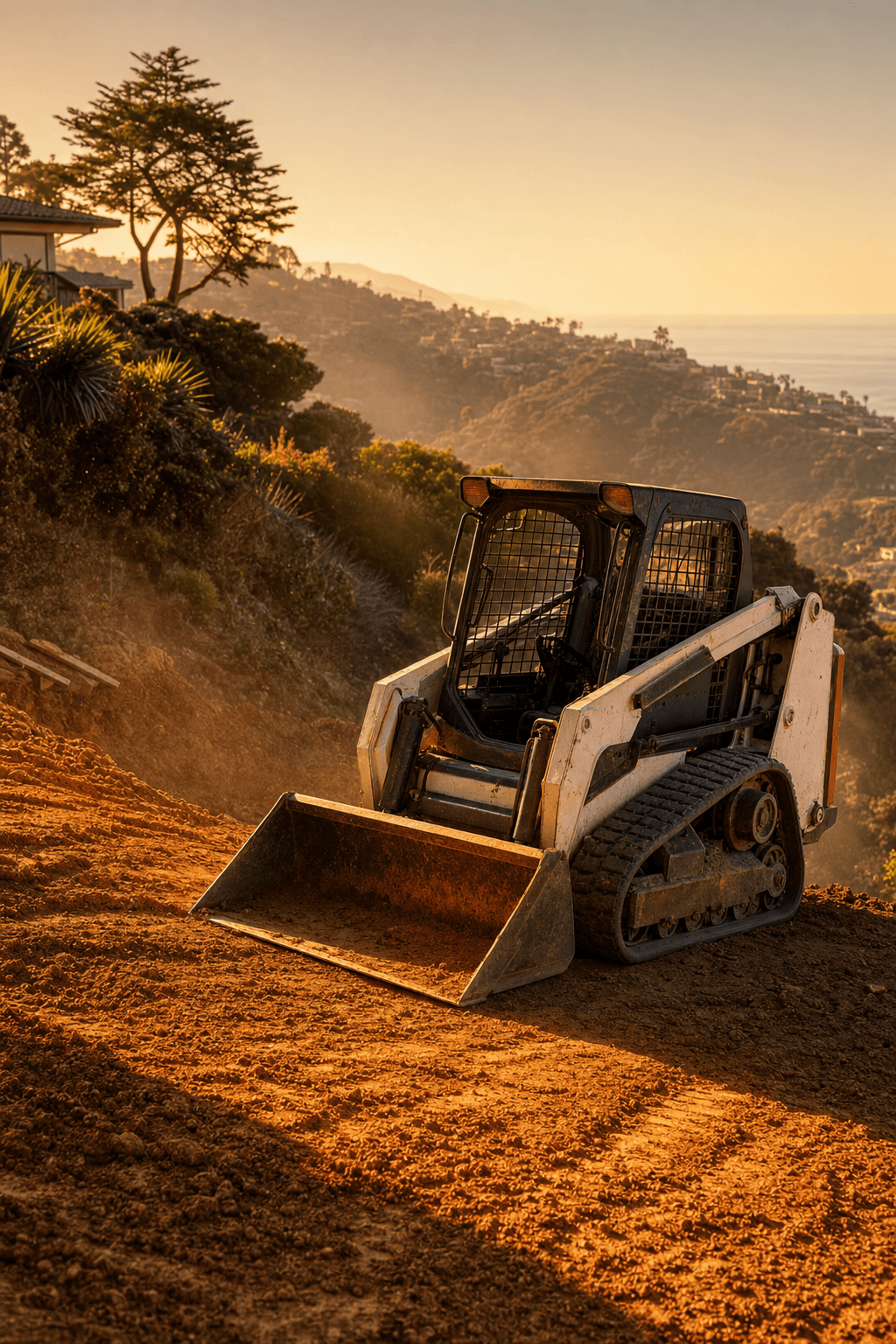
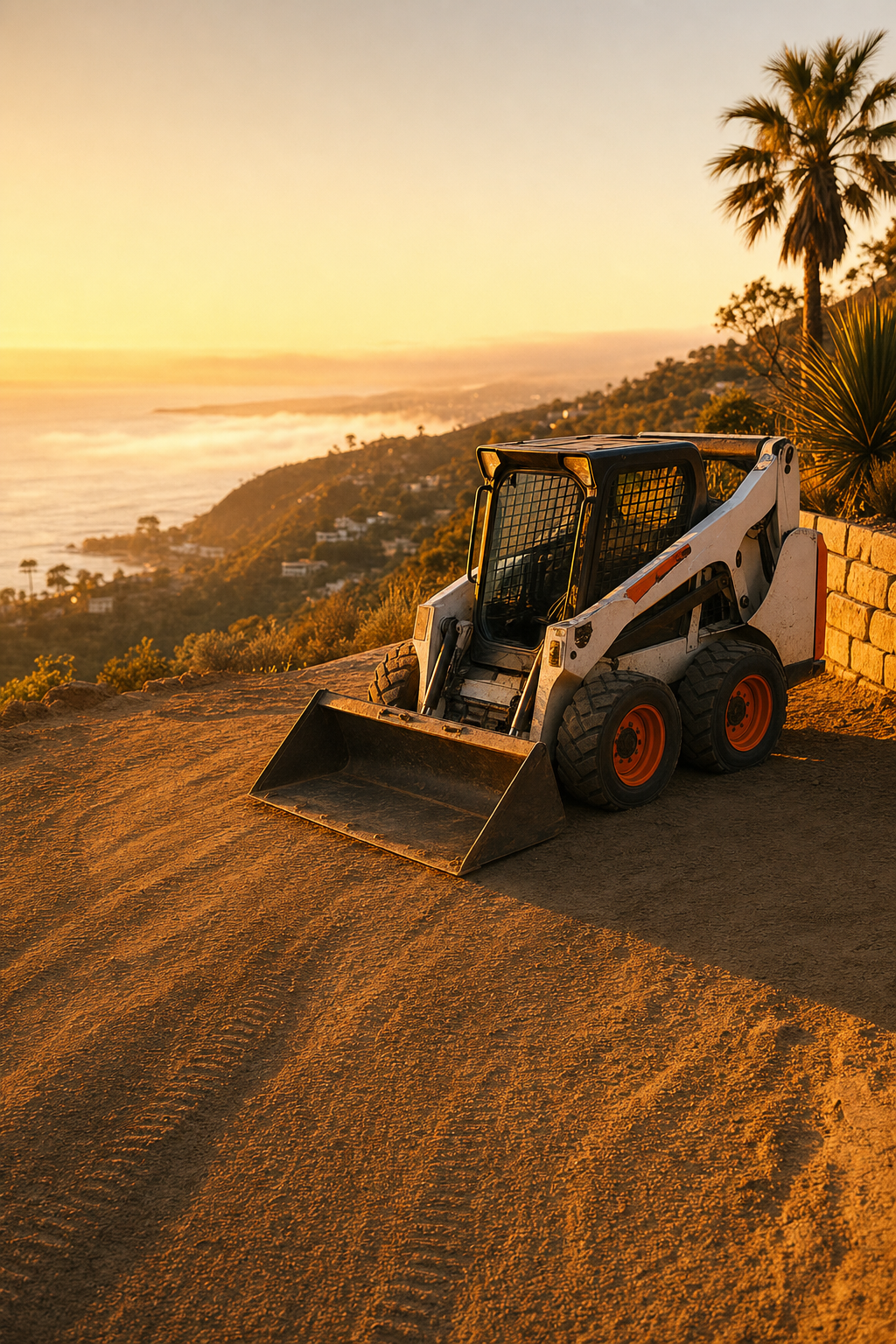
Executing these precision cuts requires specialized equipment like Bobcats. These machines are small enough to maneuver through tight residential side yards but powerful enough to handle heavy adobe. A Bobcat allows our team to precision-grade benches to the exact specifications required for proper drainage. However, the success of these terraces depends entirely on compaction. We compact the soil in thin layers, known as lifts, to ensure the new grade is dense and stable. Without professional compaction, the redistributed earth remains loose and porous; it will quickly saturate and wash away during the first significant winter storm. Proper hillside grading and drainage ensures that the restructured land acts as a solid foundation rather than a liability.
Subsurface Drainage: The Secret to Long Term Hillside Stability
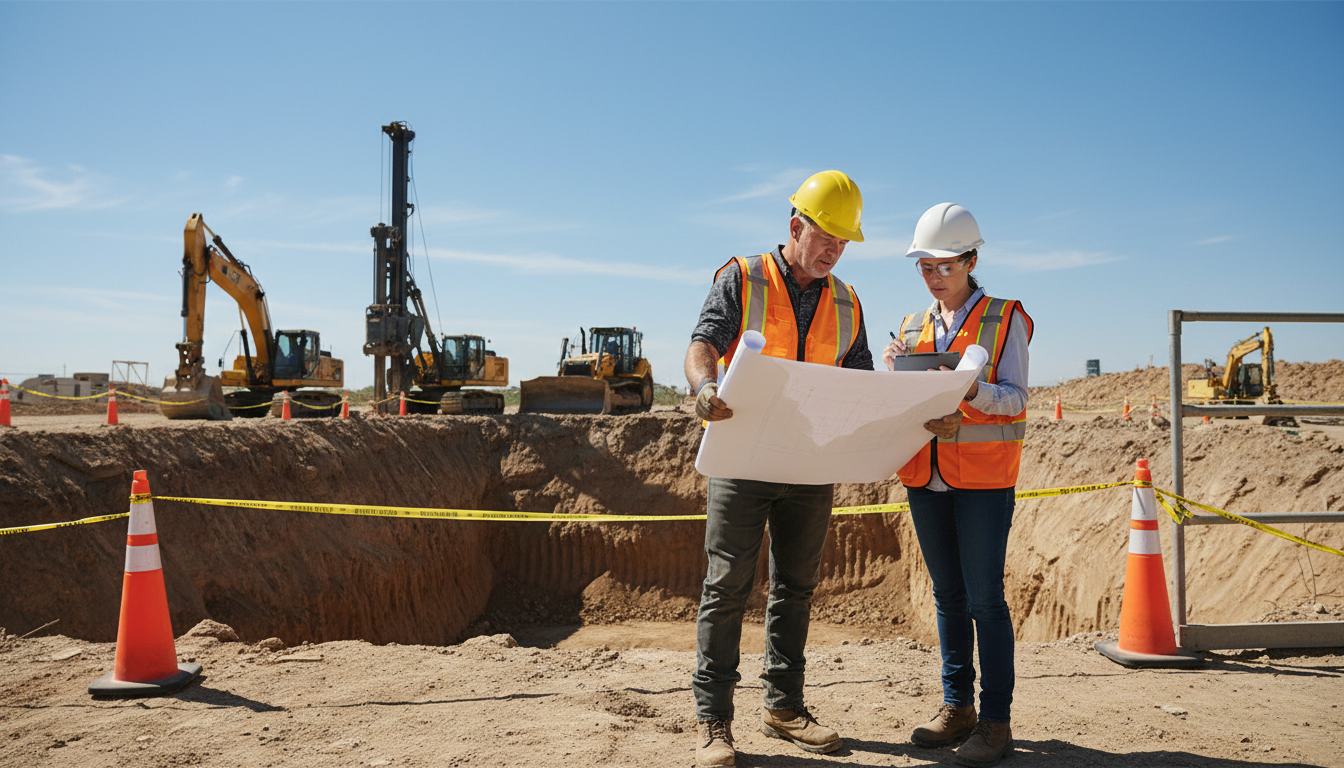
While grading shapes the surface, the real battle for slope stabilization Orange County occurs underground. The single greatest threat to hillside integrity is hydrostatic pressure. This occurs when water becomes trapped behind soil layers or retaining structures, creating immense force that can push even the most heavily compacted adobe off a slope. For clay soil, the best drainage strategy is a multi layered subsurface system designed to relieve this pressure before it reaches critical levels.
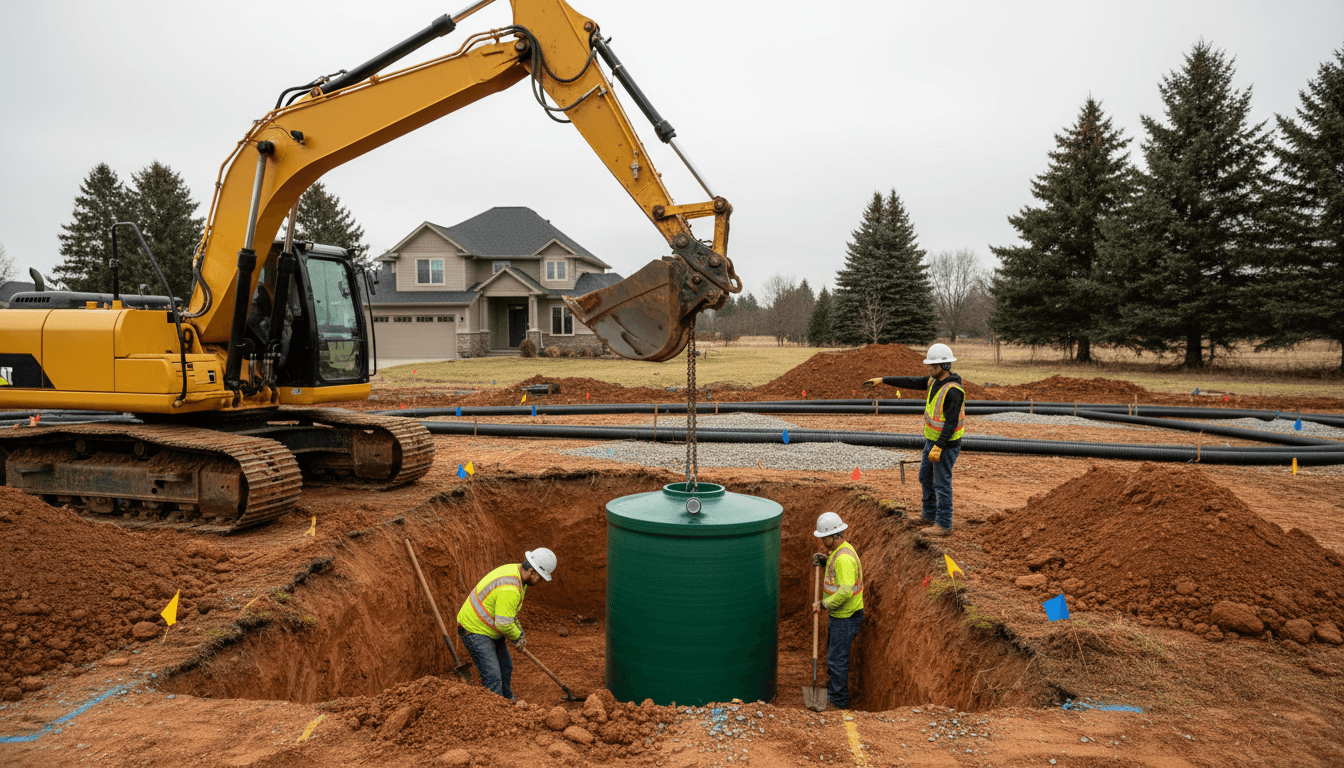
Orange County Site Work Services integrates these systems into the initial grading process. We install French drains, which consist of perforated pipes buried in a bed of clean gravel and wrapped in filter fabric to prevent clay sediment from clogging the line. For structural walls, we prioritize weep holes spaced every 4 to 6 feet horizontally. These small openings allow water trapped behind the wall to escape, preventing the buildup of weight that leads to wall failure.
Component | Function in Clay Soil | Key Benefit |
|---|---|---|
French Drains | Collects water through perforated pipes and gravel | Prevents soil saturation |
Weep Holes | Relieves pressure behind retaining walls | Prevents wall collapse |
Filter Fabric | Separates fine clay from drainage gravel | Maintains long term flow |
Perforated Pipe | Channels water to a designated discharge point | Directs water away from foundation |
Effective Orange County drainage solutions require a strategic exit point. We ensure that all subsurface pipes are graded to carry water away from both the slope face and the home foundation, directing it toward municipal storm drains or safe discharge zones. By managing water at the subsurface level, we address the root cause of hillside instability rather than just treating the surface symptoms.
The Role of Earthwork and Hauling in Erosion Projects

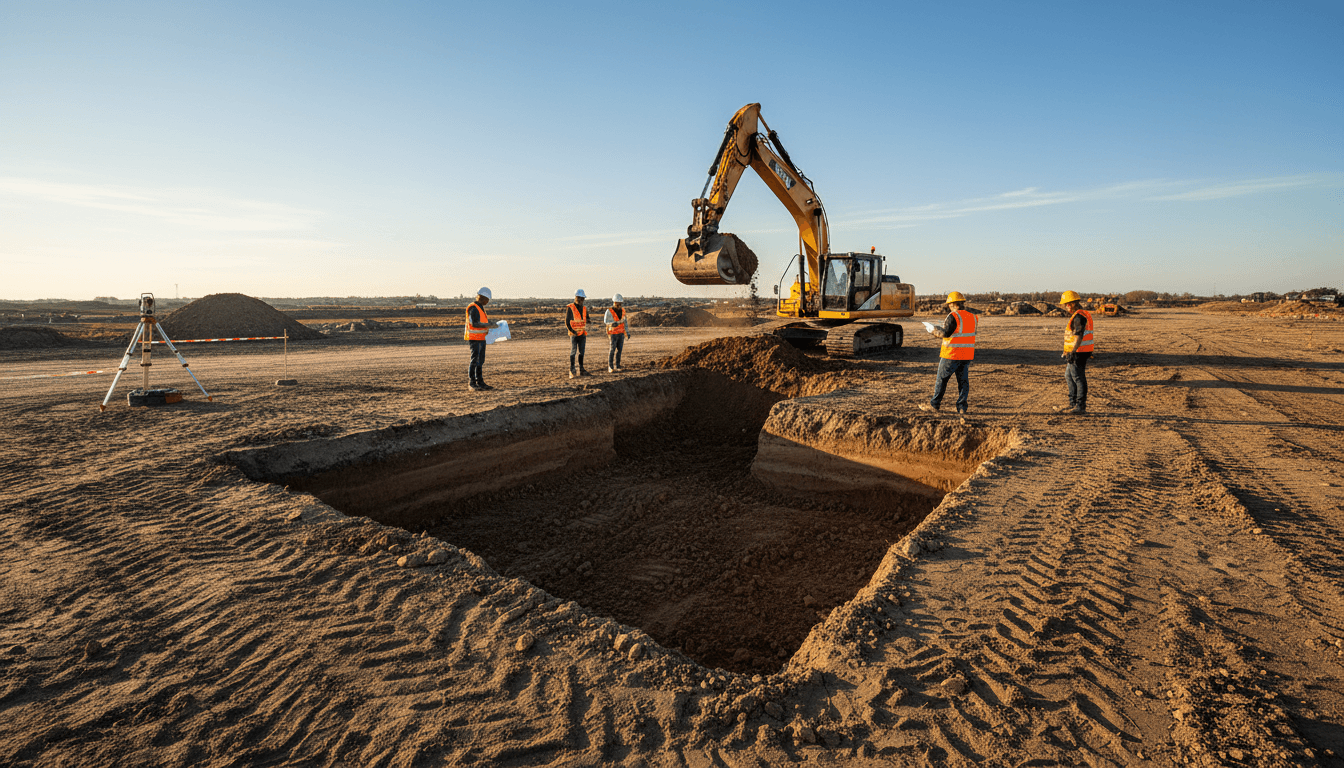
Managing subsurface water is only half the battle; the physical movement of material is where the heavy lifting of slope stabilization Orange County occurs. Many residential sites, particularly in older coastal communities, sit on decades of uncompacted, unstable fill that cannot be salvaged. Our process often involves the aggressive removal of this saturated or loose material to reach a solid substrate. We then haul in engineered, stabilized soil that provides the structural density needed to resist future movement, which is a key component of effective hillside grading and drainage.
Logistics play a critical role in these projects. Navigating steep, narrow canyon or coastal roads requires specialized equipment. We utilize compact Bobcats for precision excavation on the slope itself and dedicated dump trailers for material transport. Large semi trucks are often physically unable to reach these hillside lots, making our smaller, more maneuverable fleet essential for efficient site work. By coordinating the export of debris and the import of structural fill within these tight constraints, we ensure the project remains dependable and correctly executed.
Navigating Orange County Grading Permits and Regulations
Ensuring your slope stabilization Orange County project meets regulatory standards requires strict adherence to the OC Public Works Grading Manual. In most cases, you must obtain an Orange County grading permit if your project involves moving more than 50 cubic yards of earth. Furthermore, any retaining wall exceeding 4 feet in height, measured from the bottom of the footing to the top of the wall, requires specific engineering and permit approval. For properties in Laguna Beach, additional hillside overlay zone requirements may apply to protect local coastal resources and neighborhood aesthetics.
Homeowners should prioritize a professionally prepared grading plan and a Stormwater Pollution Prevention Plan (SWPPP) for any significant hillside work. The SWPPP is a critical document that outlines how we will contain sediment and prevent runoff from entering the municipal storm drain system during the construction phase. Because OC soils are prone to rapid erosion, staying compliant with these codes is not just a legal hurdle; it is a safety necessity. Our team works within these guidelines to ensure every yard of dirt moved and every drainage pipe installed meets the high standards required by county and city inspectors.