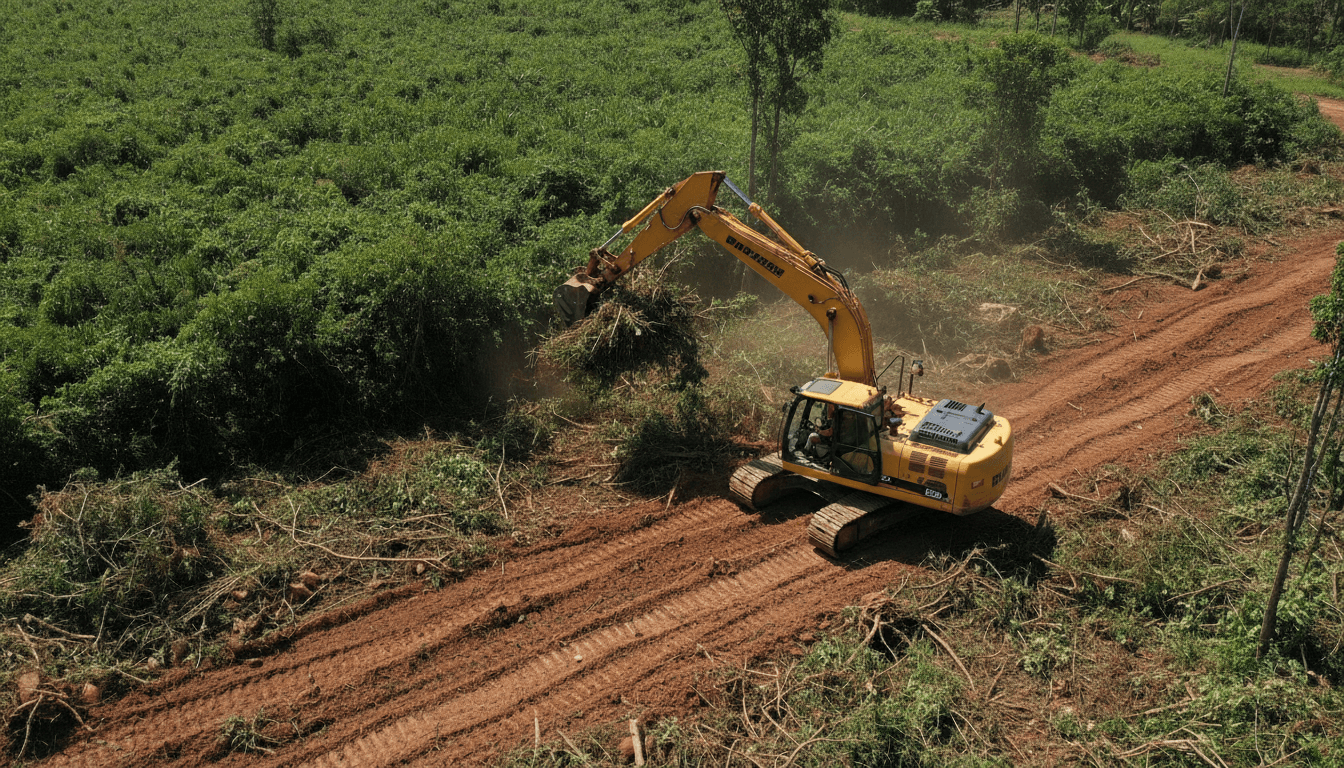

Orange County property owners must prioritize Orange County drainage preparation El Niño winter grading to mitigate flooding and erosion risks from predicted intense atmospheric rivers. Inspecting catch basins and landscape slopes now ensures runoff is diverted away from foundations; this prevents significant structural damage before the severe rainy season begins.
For many Orange County property owners, the arrival of the first atmospheric river is often a stressful wake-up call involving flooded landscape beds or shifting hillside soil. When a Super El Niño is on the horizon, minor yard maintenance is rarely enough to protect a high-value property from significant water damage. The stakes are particularly high in coastal areas like Laguna Beach, where unique terrain demands expert intervention to prevent erosion. This guide examines why professional grading is your first line of defense against the upcoming winter storms. We will cover the specific topographical risks facing local estates, the critical differences between surface maintenance and structural site preparation, and the essential Orange County grading codes you must follow. By understanding these technical requirements now, you can ensure your property remains stable and dry throughout the most severe weather patterns.
The 2026 Super El Niño Forecast: What Orange County Can Expect
Meteorologists are currently monitoring a significant shift in Pacific climate patterns that indicates a challenging winter ahead. According to data from the National Oceanic and Atmospheric Administration (NOAA), there is a 63 percent chance that sea surface temperatures in the central Pacific will exceed the 2.0 degrees Celsius threshold during the 2026 season. This classification defines a "Super El Niño," a phenomenon that historically triggers extreme weather patterns across Southern California.
For Orange County property owners, this forecast represents a significant departure from standard seasonal rain. A Super El Niño typically brings a higher frequency of atmospheric rivers, which are concentrated corridors of moisture capable of delivering catastrophic rainfall volumes in very short windows. While a typical storm might provide a steady soak, these intense systems can drop as much as five inches of rain per hour. Most residential drainage systems, designed for average coastal weather, are not equipped to process that volume of water without failing.
At Orange County Site Work Services, we draw on over 20 years of experience in the construction field to assess how these climate shifts impact local topography. When a property faces five inches of rain in sixty minutes, the risk of soil saturation and hydrostatic pressure against foundations increases exponentially. Proper Orange County drainage preparation El Niño winter grading is a technical necessity to ensure that your land is shaped to move this volume of water away from structures faster than it can accumulate. Relying on existing swales or aging landscape drains often leads to severe flooding when the storm intensity exceeds the system's original design capacity.
Why Laguna Beach and Orange County Terrain Pose Unique Drainage Risks
The geography of coastal Orange County, particularly in areas like Laguna Beach, Newport Coast, and Dana Point, creates a perfect storm for drainage failures. Unlike the sandy loams found in some other coastal regions, much of our local terrain consists of dense clay soils. These soils have extremely low permeability, meaning they act like a sponge that quickly reaches its limit rather than a filter. Once clay is saturated, additional rainfall does not soak in; it sheets across the surface, gaining velocity as it moves down the steep hillsides that define our local landscape.
The risk is amplified by heavy urbanization across the county. As natural hillsides are replaced by rooftops, driveways, and paved roads, we lose the pervious surfaces that would normally absorb rain. This lack of natural absorption makes comprehensive earthwork and grading a critical defense. Without a professionally managed slope to direct runoff, water will find its own path, often leading directly into crawlspaces or against foundation walls. Research indicates that approximately one in five homes in Southern California faces a long-term risk of flash flooding, a statistic that frequently becomes a reality during a Super El Niño event.
Managing these risks requires more than just clearing a path for water. In steep coastal areas, the combination of gravity and saturated clay can lead to mudslides and structural erosion. Specialized excavation and trenching is often necessary to install heavy duty drainage solutions that can handle the sheer volume of an atmospheric river. Proper Orange County drainage preparation El Niño winter grading ensures that the unique challenges of our local terrain, from the clay composition to the vertical drop of Laguna's canyons, are factored into your property’s water management plan. When water cannot go down into the earth, it must be moved away from your investment with precision.
The Difference Between Yard Maintenance and Professional Grading

Routine yard maintenance, like clearing gutters and removing debris from surface drains, is vital for managing light showers. However, these tasks are strictly cosmetic when compared to the structural demands of a Super El Niño. While clean downspouts ensure water leaves the roof, they do nothing to prevent that water from saturating the ground directly against your foundation once it hits the deck or soil.
Proper water management starts at the soil level. The Orange County Lot Grading Policy mandates a minimum slope of 1 percent for all lot areas, ensuring water moves effectively toward a street, alley, or approved drainage device. This means for every 10 feet of distance, the ground should drop at least 1.2 inches. Achieving this gradient is often difficult on established properties where soil has settled over decades or where previous landscaping projects have inadvertently created basins that trap water against the structure.
Homeowners often attempt DIY fixes by adding bags of topsoil or mulch, but this typically masks the problem without changing the underlying subgrade. True comprehensive earthwork and grading involves resetting the landscape's profile using heavy equipment. We utilize Bobcats to cut precise swales and establish the necessary fall that manual shoveling cannot achieve. When we encounter excess soil or heavy clay that prevents proper drainage, we use dump trailers for efficient hauling to ensure the site is re-engineered rather than just rearranged.
With over 20 years of experience in the construction field, our team understands that specialized excavation and trenching is the only way to address subterranean hydrostatic pressure. Effective Orange County drainage preparation El Niño winter grading requires a calculated topographical shift to ensure your home remains dry when the next atmospheric river arrives.
Critical Site Preparation Steps Before the First Atmospheric River

Preparation for the 2026 season requires a systematic review of your property’s water management capabilities. Waiting for the first major atmospheric river to identify weak points often results in emergency repairs that are both costly and less effective than proactive comprehensive earthwork and grading. Owners should use the following checklist to evaluate their readiness:
Inspect subsurface systems: Remove the grates from catch basins and clear out accumulated silt or debris. For properties with French drains, ensure the discharge point is clear and not buried under new mulch or soil. If these pipes are even partially blocked, they will quickly back up during intense rainfall.
Evaluate grade around structures: Walk the perimeter of retaining walls and Accessory Dwelling Units (ADUs). These structures are often built on smaller footprints where grading can be overlooked. Ensure the soil slopes away from these walls at a visible angle to prevent hydrostatic pressure from building up against the footings.
Monitor utility trench integrity: Specialized excavation and trenching for utility lines can leave behind soil that settles differently than the surrounding ground. Look for depressions over gas, water, or electrical lines where water could infiltrate and cause subterranean erosion.
Observation during small, early season showers provides the most accurate data for property owners. Any "ponding," or standing water that remains visible on the surface for more than 24 hours after a light rain, is a definitive warning sign. While a small puddle might seem harmless in November, it indicates a fundamental failure in the property's ability to shed water. During a Super El Niño event, that same area will likely become a point of deep saturation that threatens structural integrity. Correcting these issues now through professional Orange County drainage preparation El Niño winter grading is the only way to prevent minor ponding from becoming major flood damage. With over 20 years of experience in the construction field, our team can identify these subtle topographical failures before they become catastrophes.
Understanding OC Grading Codes for Hillside and Large Properties
Navigating the Orange County Grading and Excavation Code is a technical necessity for properties with significant elevation changes. These local regulations are not merely suggestions; they are engineered standards designed to prevent the catastrophic soil failures often seen during Super El Niño winters. When managing hillsides, the code specifies different tiers of protection based on the vertical height of the slope.
For any slope exceeding five feet in vertical height, the code typically requires specific landscape planting and irrigation to provide root-based stabilization. This vegetative cover acts as a primary defense against surface erosion. However, as slopes increase in scale, the requirements become much more rigorous. Slopes exceeding 15 feet in height demand engineered drainage solutions, such as terrace drains and interceptor swales, to catch runoff at mid-points before the water gains enough velocity to trigger a mudslide.
Slope Vertical Height | Minimum Requirement | Primary Function |
|---|---|---|
5 to 15 Feet | Stabilizing Planting | Surface Erosion Control |
Over 15 Feet | Terrace Drains & Benchers | Structural Slope Stability |
Foundation Adjacent | 1% Minimum Gradient | Moisture Diversion |
At Orange County Site Work Services, we apply over 20 years of experience in the construction field to ensure your property meets these legal and structural benchmarks. Implementing professional Orange County drainage preparation El Niño winter grading often requires specialized excavation and trenching to install the concrete terrace drains and sub-drains that larger hillsides require. We focus on comprehensive earthwork and grading that aligns with county standards, ensuring that your hillside protection is legally compliant and physically capable of withstanding the intense hydrostatic pressure of an atmospheric river.
Common Questions About El Niño Drainage Preparation
Addressing specific concerns regarding the upcoming weather patterns is the first step toward securing your property. Below are the most frequent questions we encounter regarding site readiness and technical water management.
Is 2026 going to be a wet winter in California? All current meteorological indicators, including the high probability of a Super El Niño, point toward an exceptionally wet winter for Southern California. While typical years might see scattered showers, the 2026 forecast emphasizes frequent atmospheric rivers. These systems can deliver months of rainfall in just a few days, making proactive Orange County drainage preparation El Niño winter grading a necessity rather than a suggestion for local homeowners.
Does clay soil have poor drainage? Yes, clay is notorious for its poor permeability. Because it is composed of microscopic particles that pack tightly together, there is very little pore space for water to move through. When clay becomes wet, it expands, creating an almost waterproof seal that forces water to pool on the surface. This characteristic is why comprehensive earthwork and grading is so vital in Orange County; since the soil cannot absorb the water, the surface must be shaped to carry it away.
How can I tell if my property is in a flood zone? Property owners should consult the Orange County Public Works (OCPW) flood maps or the FEMA Flood Map Service Center. However, remember that official flood zones often focus on rising creek or ocean levels. Many Laguna Beach properties face localized flooding from hillside runoff that does not appear on a federal map. Professional site assessments are often needed to identify these specific terrain risks.
What is the cost to fix backyard drainage? Costs fluctuate based on the volume of soil being moved and the complexity of the solution. Key variables include the depth of specialized excavation and trenching for sub-drains, the requirement for concrete swales, and hauling fees for removing saturated clay soil. Drawing on over 20 years of experience in the construction field, our team provides detailed estimates that account for the specific equipment, such as Bobcats and dump trailers, required to transform your lot into a well-drained site.
As Super El Niño approaches, taking proactive steps to protect your land is essential. Ensuring your property has proper grading and functional drainage systems can prevent costly water damage and soil erosion. While some maintenance tasks are manageable on your own, complex terrain often requires a more specialized approach. If you want expert help securing your landscape before the rains arrive, you can explore our full range of services to see how we can assist. Taking action now provides the peace of mind you need.