Defensible space land clearing Orange County requires homeowners to maintain a 100 foot buffer of managed vegetation to minimize wildfire fuel and ensure legal compliance. This process involves clearing dead debris within the immediate five foot ember resistant zone, pruning trees, and spacing shrubs according to fire safety standards; furthermore, new state regulations will mandate strict Zone 0 inspections starting in 2026.
Living along the canyons and hillsides of Orange County offers unparalleled views, yet it carries the persistent reality of seasonal wildfire threats. For many local property owners, the challenge lies in balancing aesthetic appeal with the rigorous demands of fire safety compliance and insurance requirements. Proper defensible space is more than a simple yard cleanup; it is a strategic engineering approach designed to safeguard your structure from radiant heat and flying embers. In this guide, we examine the essential strategies for effective land clearing, including the specific requirements of the three safety zones and the impact of the upcoming 2026 California wildfire laws. You will learn the technical differences between mechanical clearing and manual removal, how professional grading prevents secondary erosion issues, and the common pitfalls to avoid when securing your perimeter against the next fire season.
The Critical Role of Defensible Space in Orange County
In the Wildland-Urban Interface (WUI) zones of Orange County, the landscape is as beautiful as it is precarious. Areas such as the steep canyons of Laguna Beach, the rolling hills of Coto de Caza, and the wind-swept ridges of Yorba Linda require a specialized approach to fire mitigation. For homeowners in these regions, defensible space land clearing Orange County is not merely an aesthetic choice or a simple matter of cutting the grass. It is the creation of a scientifically managed buffer designed to decrease fire intensity and slow the spread of flames before they reach a structure.
A well-executed defensible space provides a critical staging area for firefighters, allowing them to defend a property without being overrun by extreme radiant heat. This buffer zone works by removing ladder fuels and thinning dense vegetation to ensure fire stays on the ground rather than climbing into the tree canopy. At Orange County Site Work Services, we draw on about our 20 years of experience to navigate the region's unique and often difficult terrain. We integrate our Orange County hauling services into every project to ensure that flammable biomass is fully removed from the site, preventing it from becoming a secondary hazard. We understand that effective fire protection involves more than surface-level clearing; it requires a deep knowledge of local flora, soil stability, and the specific mandates set by the Orange County Fire Authority (OCFA).
Understanding the Three Zones of Fire Safety Compliance
Effectively implementing defensible space land clearing Orange County requires a tiered approach that recognizes how fire moves through the landscape. The Orange County Fire Authority (OCFA) and CAL FIRE categorize these efforts into three distinct zones, each with specific requirements for vegetation density, fuel types, and structural proximity.
### Zone 0: The Ember-Resistant Zone (0–5 Feet) Zone 0 is the most critical area for home survival. This zone extends five feet from the exterior of the structure, including attached decks and fences. The primary goal here is to eliminate any material that could be ignited by wind-blown embers, which often travel miles ahead of a fire front. Professional site work in this zone focuses on replacing combustible mulch and woody shrubs with hardscaping. We recommend using gravel, decorative rock, or pavers to create a non-combustible perimeter. Our team ensures that any dead plant material or debris is completely removed, providing a clean break between the wildland fuels and the home.
### Zone 1: Lean, Clean, and Green (5–30 Feet) Moving further out, Zone 1 is designed to reduce the heat and flame length that reaches the home. Compliance in this zone involves removing all dead plants, grass, and weeds. Trees must be maintained with a minimum of 10 feet of clearance from chimneys and rooflines. We apply a 'Lean, Clean, and Green' philosophy by thinning out overgrown shrubs and ensuring that the remaining vegetation is well-irrigated and healthy. This creates a park-like aesthetic that integrates seamlessly with high-end residential landscapes in Laguna Beach or Coto de Caza.
### Zone 2: Reduced Fuel Zone (30–100 Feet) Zone 2 acts as the primary buffer against approaching wildfires. The focus shifts to horizontal and vertical spacing to prevent 'ladder fuels' from carrying fire into the tree canopy. Grass must be mowed to a maximum height of four inches, and shrubs must be spaced based on the slope of the land. Steeper slopes require greater separation between plants because fire travels faster uphill.
Slope Percentage | Tree Spacing (Canopy to Canopy) | Shrub Spacing (Edge to Edge) |
|---|---|---|
Flat to 20% | 10 Feet | 2x height of shrub |
20% to 40% | 20 Feet | 4x height of shrub |
Over 40% | 30 Feet | 6x height of shrub |
Our 20 years of experience allows us to execute these clearings with precision, using heavy machinery to manage large-scale fuel reduction while maintaining the property's visual appeal. By utilizing Orange County hauling services to remove the resulting green waste, we ensure that the fuel is not just moved, but entirely eliminated from the site.
New 2026 California Wildfire Laws and Zone 0 Requirements
California is entering a new era of wildfire legislation that directly impacts property owners throughout Orange County. Assembly Bill 3074 has officially established the requirement for a five foot ember resistant zone, known as Zone 0, for all structures in high fire hazard regions. While the concept of defensible space has long been encouraged, these new mandates move from suggestion to strict enforcement. Starting January 1, 2026, existing homes in Very High Fire Hazard Severity Zones must meet these rigorous standards. By 2027, this enforcement will extend to properties located in High Fire Hazard Severity Zones.
For those planning to buy or sell property in areas like North Tustin or San Juan Capistrano, compliance is no longer optional. Real estate transactions in OC now trigger mandatory defensible space inspections. Failing to meet these requirements can stall a sale or lead to non compliance fines, often ranging from $100 to $500 per day. Furthermore, the insurance landscape is shifting rapidly. Many major providers now require documented proof of regular defensible space land clearing Orange County before renewing a policy or processing a claim.
We understand that navigating these timelines can be daunting. With our 20 years of experience, we help homeowners stay ahead of state mandates. Our team specializes in the technical execution of Zone 0 requirements, including the removal of combustible debris and the preparation of sites for non-flammable hardscaping. Ensuring your property is compliant before an official inspector arrives is the most effective way to protect your investment and your peace of mind.
Mechanical Land Clearing vs Manual Brush Removal
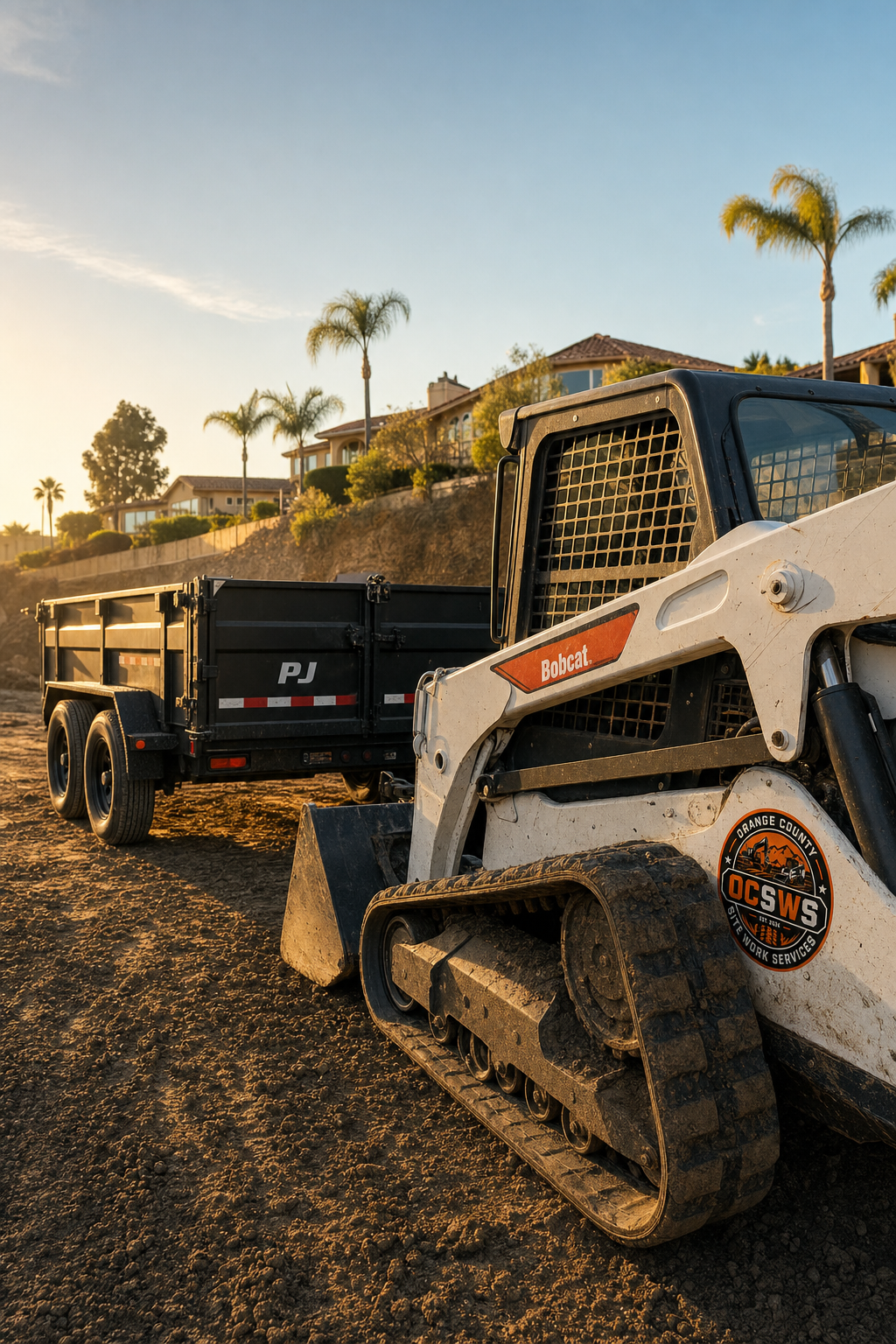
Meeting the strict requirements of new fire mandates requires choosing between manual labor and mechanical intervention. While hand-clearing with loppers or weed whackers is suitable for delicate areas within Zone 1, it is often inadequate for the dense chaparral and overgrown scrub oak found on larger parcels. For properties in the steep canyons of Laguna Beach or expansive lots in North Tustin, mechanical land clearing is the only practical way to establish a true safety buffer.
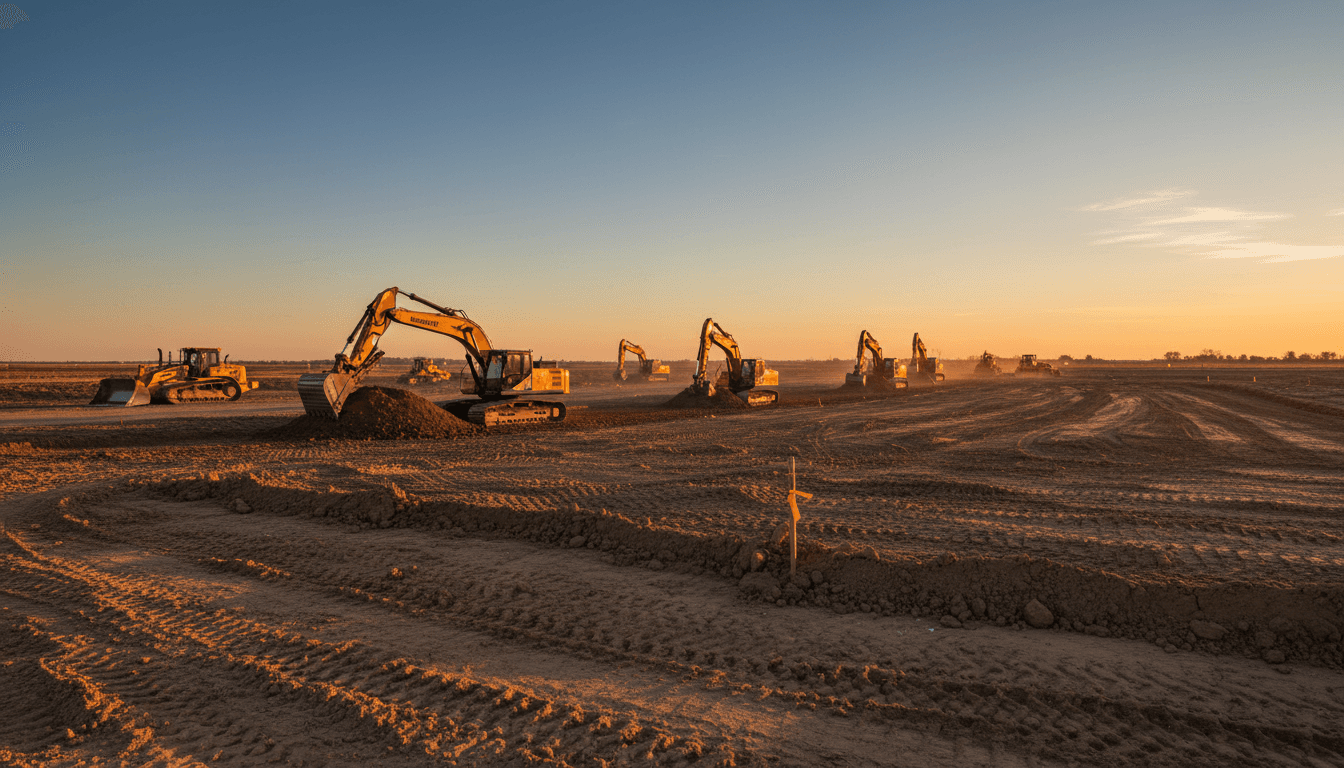
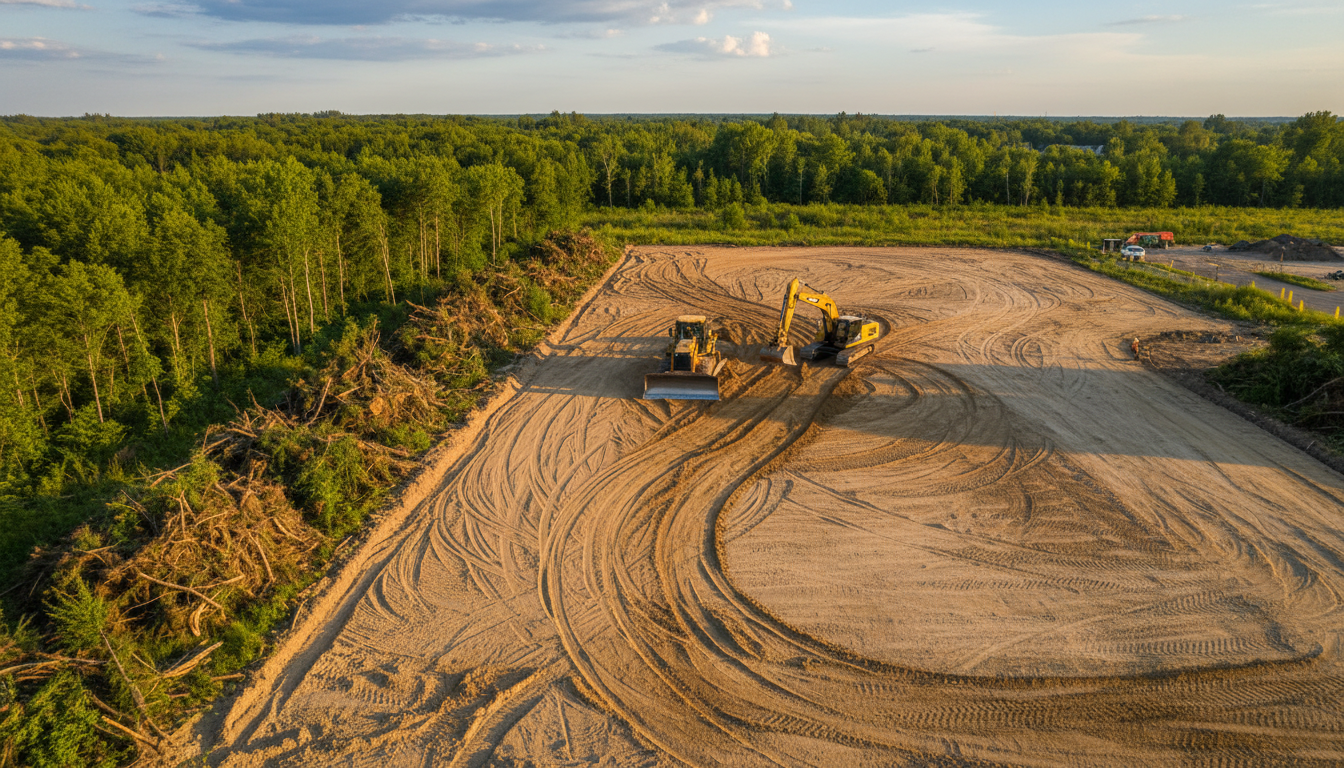
Mechanical clearing utilizes Bobcats and specialized equipment to remove heavy brush and dead trees that manual crews would struggle to manage. One of the primary advantages is the ability to address subterranean root systems. Dead roots can smolder underground long after a surface fire has passed, potentially reigniting days later. Our equipment allows us to pull these root balls and clear out thick vegetation that has been neglected for years. This process is not just faster; it is more thorough, ensuring that the fuel load is reduced at the source rather than just trimmed at the surface.
Feature | Manual Brush Removal | Mechanical Land Clearing |
|---|---|---|
Operational Speed | Limited to square footage per day | Capable of clearing multiple acres |
Fuel Reduction | Surface-level thinning | Complete removal of biomass and roots |
Slope Access | Foot-traffic only; high risk | Specialized equipment for steep terrain |
Waste Handling | Requires manual bagging or piling | High-volume removal via dump trailers |
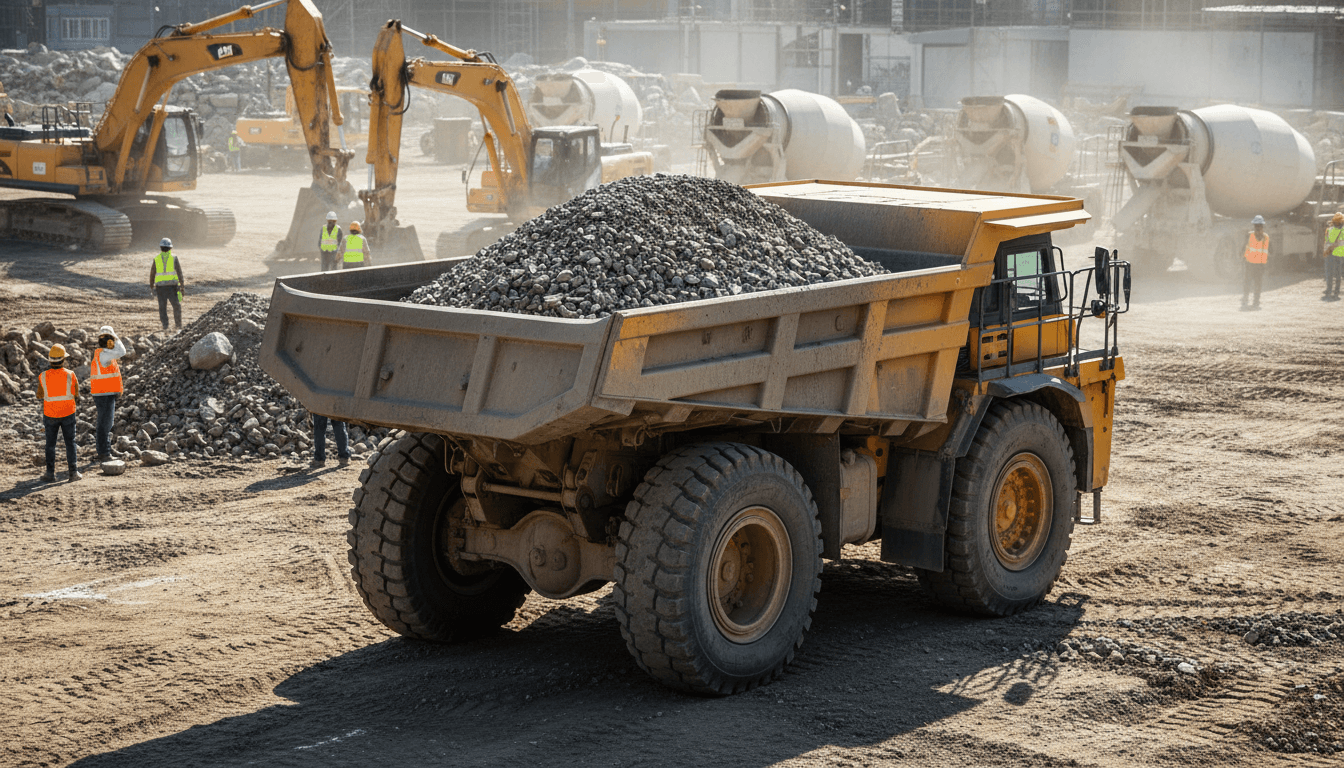
Our 20 years of experience has taught us that the most significant hurdle for homeowners is not the clearing itself, but the disposal of the debris. A single acre of dense brush can produce several tons of flammable green waste. If this material is left in piles, it remains a major fire hazard. We address this pain point by integrating Orange County hauling services into our workflow. By using dedicated dump trailers and heavy equipment to load and transport waste immediately, we ensure that the fuel is completely removed from the property, leaving a clean and compliant landscape that meets all defensible space land clearing Orange County standards.
The Importance of Grading and Drainage in Fire Mitigation
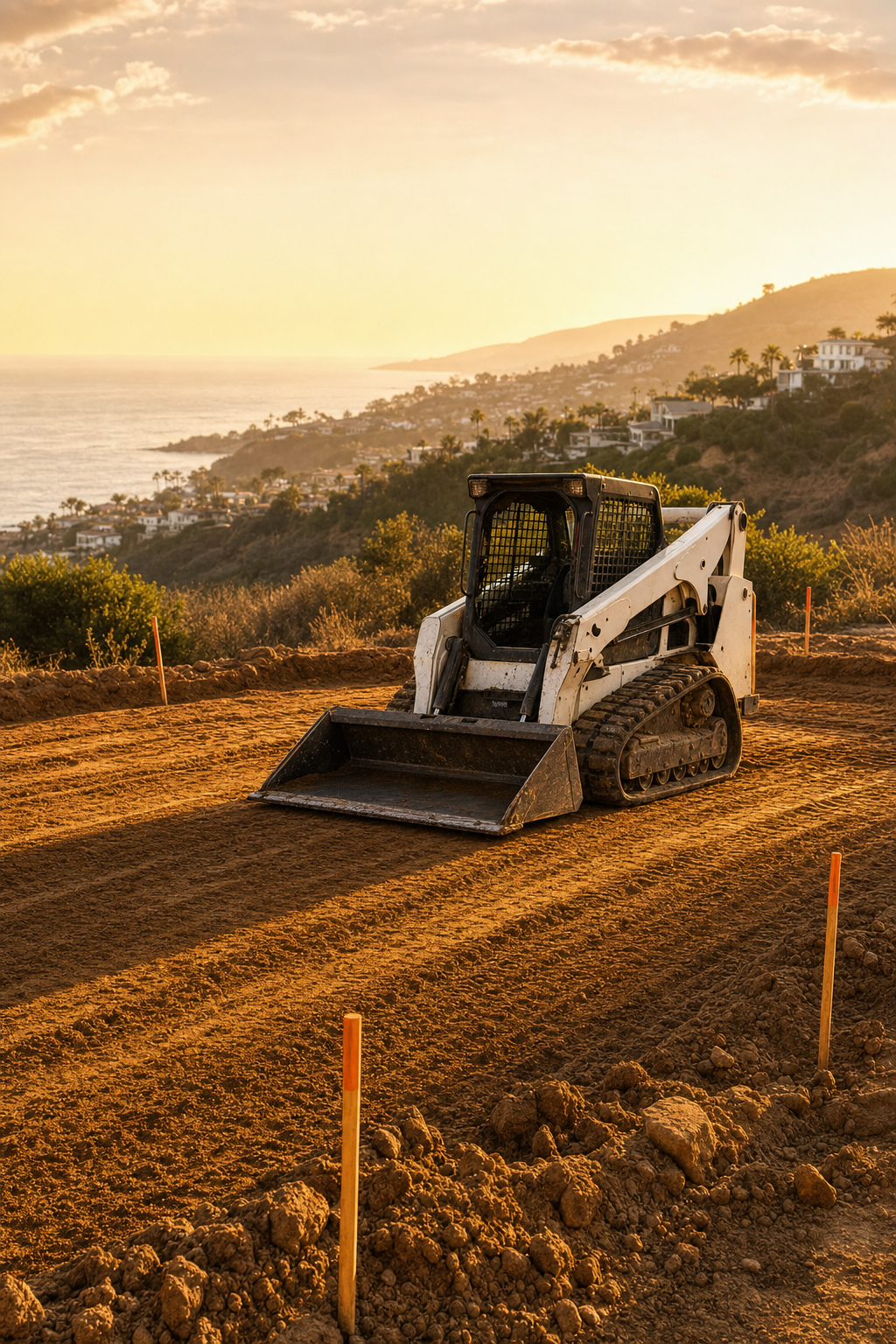
Removing dense chaparral and brush is the first step in fire protection, but it creates a secondary challenge: soil stabilization. When a hillside in Laguna Beach or Yorba Linda is stripped of its vegetative cover to meet defensible space land clearing Orange County standards, the raw earth becomes highly susceptible to erosion. Without the root systems of native plants to anchor the soil, the heavy winter rains typical of Southern California can quickly lead to topsoil loss, rilling, or devastating mudslides.
Properly managing a property requires looking beyond the immediate fuel load. Integrating professional grading and drainage solutions ensures that water is directed away from vulnerable slopes and structural foundations. We utilize our Bobcats to reshape the terrain, creating subtle swales or terraces that slow down surface runoff and encourage proper infiltration. This transition from clearing to stabilizing is where about our 20 years of experience becomes invaluable. We do not simply leave a property bare; we prepare the land for its next phase. By combining clearing with Orange County hauling services to remove excess debris and expert site leveling, we ensure the property remains both fire safe and geologically stable. This comprehensive approach protects your investment from the dual threats of wildfire and the seasonal flooding that often follows heavy land clearing.
Common Defensible Space Mistakes Homeowners Make
Even with the best intentions, homeowners often make errors that compromise their safety or lead to OCFA citations. A frequent oversight is leaving ladder fuels in place. This occurs when shrubs or tall grasses are allowed to grow directly beneath tree canopies. During a fire, these plants act as a ladder, allowing ground flames to climb into the treetops and create a crown fire that is nearly impossible to contain. To avoid this, always maintain a vertical clearance of at least six feet between the ground and the lowest tree branches.
Another common error is storing firewood or combustible materials in Zone 1. While convenient for winter, wood piles must be relocated to Zone 2, at least 30 feet from any structure, and cleared of vegetation within a 10 foot radius. Perhaps the most dangerous mistake is "moonscaping," or clearing a hillside to bare dirt. This strips the land of all structural integrity, leading to the erosion issues previously discussed.
Our 20 years of experience has shown us that effective defensible space land clearing Orange County requires a balance. We recommend strategic thinning rather than total removal to keep the soil intact. By combining precise vegetation management with grading and drainage solutions and Orange County hauling services, you can ensure your property is fire resilient without risking a landslide during the next rain cycle.
Creating a robust defensible space is the most effective way to protect your Orange County property from the threat of wildfires. By strategically removing hazardous vegetation and maintaining clear zones, you significantly improve your home's resilience during an emergency. If you want expert help navigating local regulations or executing a comprehensive clearing plan, our team is ready to assist. You can find more information About our commitment to local safety and our specialized equipment here. We provide the professional tools and knowledge needed for total peace of mind.