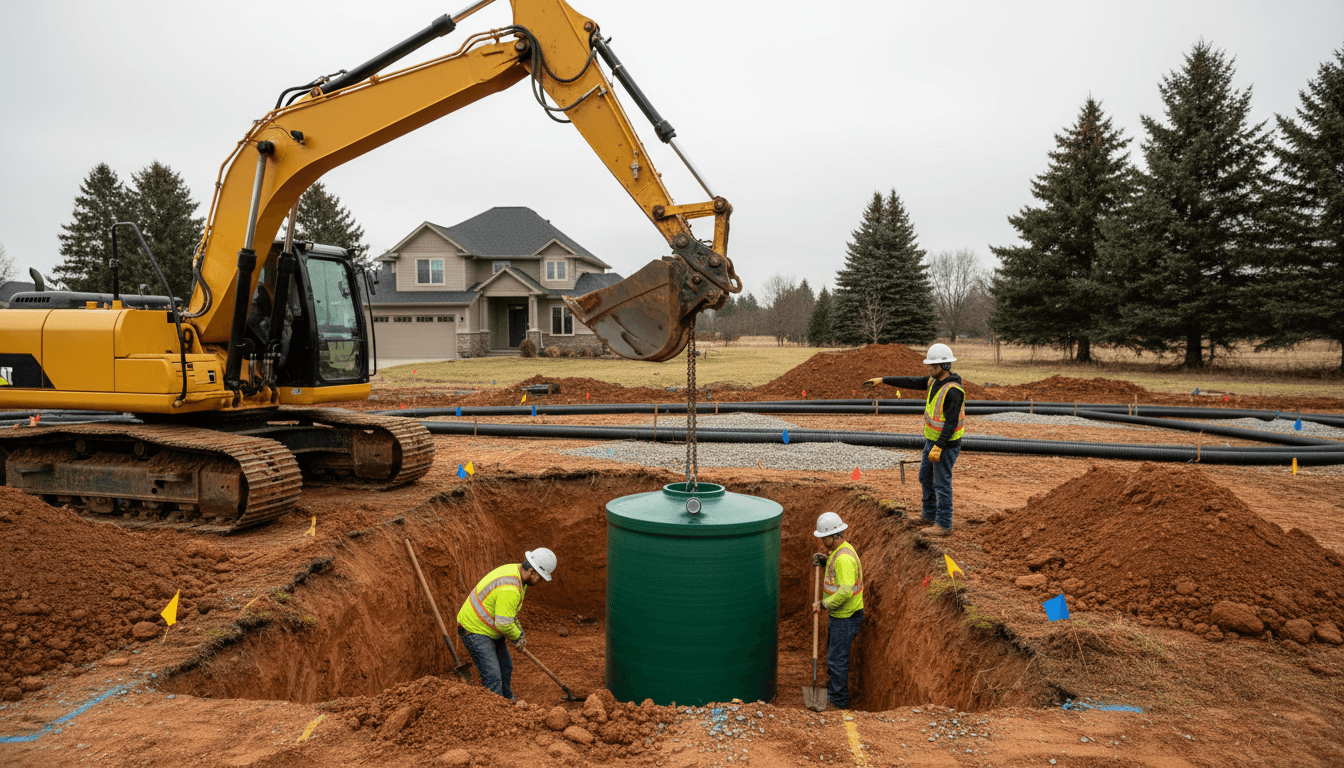
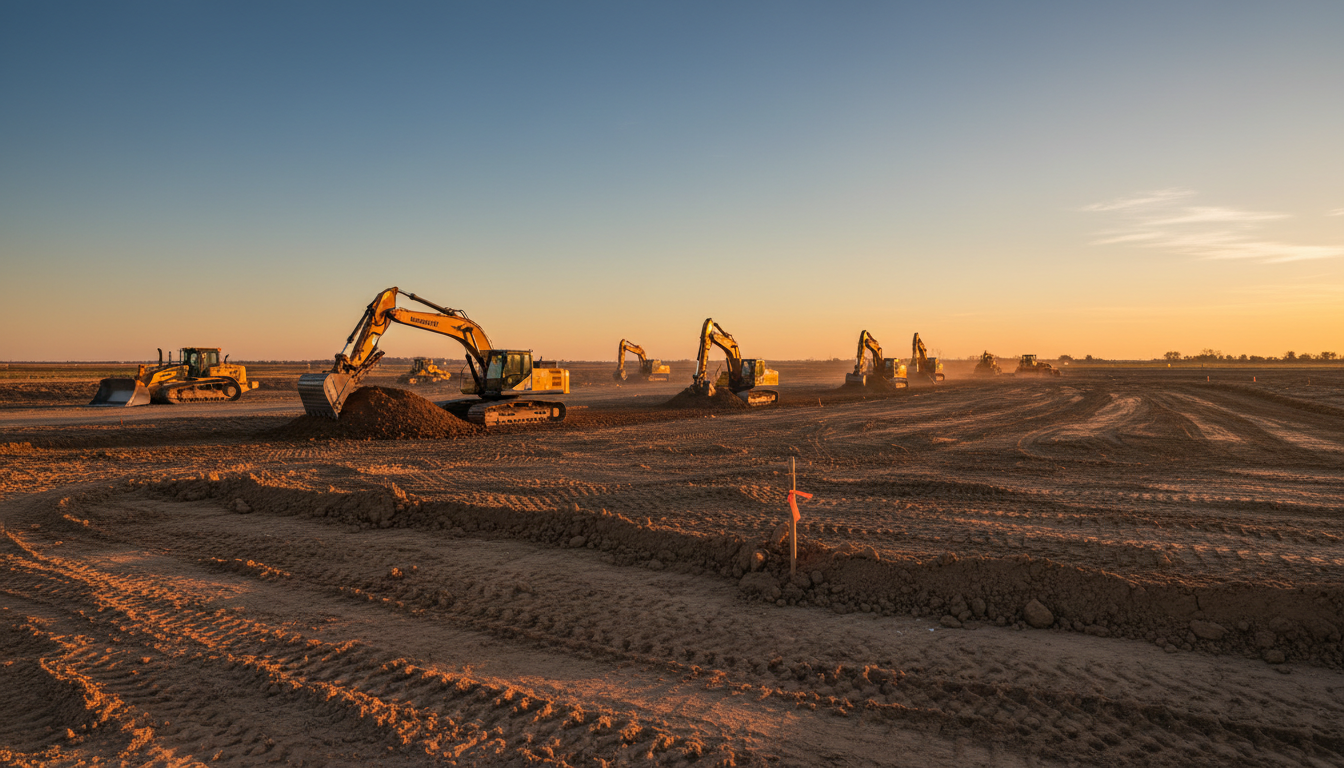
Professional commercial grading Orange County provides the essential foundation for new developments by leveling terrain and preparing soil for heavy structural loads. This critical site preparation process includes precise parking lot grading and drainage installation to prevent water damage and ensure long-term stability for commercial properties.
Commercial development in Orange County demands more than just heavy machinery; it requires a precise understanding of the region's unique geological constraints and regulatory environment. Developers often face costly delays due to poor site preparation, expansive clay soils, or overlooked drainage requirements. These initial steps dictate the longevity of your entire project. If the site is compromised by improper grading, the structural integrity of every subsequent phase is at risk. This guide provides a detailed breakdown of essential site work strategies. We examine the complexities of managing expansive earth, the technical requirements for commercial parking lots, and the process of securing regulatory approvals. By understanding these critical elements, GCs and property owners can ensure their projects remain on schedule and compliant with local standards. Our expertise ensures your development stands on a solid foundation from day one.
Understanding Commercial Grading in the Orange County Landscape
In the construction industry, site grading refers to the essential transition of raw, uneven terrain into a stable, build-ready surface. For developers in Southern California, commercial grading in Orange County represents a high-stakes engineering phase where the topography is manipulated to meet specific architectural and structural requirements. This process involves more than just leveling dirt; it is the strategic movement of earth to facilitate complex drainage patterns and support significant structural loads.
Commercial site work differs significantly from residential projects in both scale and regulatory intensity. While a residential pad focuses on single-family stability, commercial projects, such as new retail developments in Irvine or revitalized commercial spaces in Costa Mesa and Laguna Beach, must account for massive load-bearing requirements. These sites are designed to handle heavy vehicle traffic, large-scale equipment, and high-occupancy structures. Consequently, the soil compaction standards are more rigorous, often requiring precise PSI certifications verified by geotechnical engineers to prevent future settling.
The regulatory oversight for these projects is also more stringent. Developers must navigate a complex web of environmental Best Management Practices (BMPs) and hillside stability requirements. Success begins with understanding the Orange County Grading Permit Guide and ensuring that initial phases, such as Lot Clearing and Grubbing, are executed with the final build in mind. This foundational work ensures the property remains stable and compliant under the unique pressures of the California landscape.
The Strategic Process of Commercial Site Development
A successful commercial project relies on a sequential approach to earthwork that transforms a site from its natural state into a highly engineered platform. This progression begins with Lot Clearing and Grubbing, where all surface vegetation, root systems, and existing debris are removed. Clearing the site to its bare mineral soil is a prerequisite for accurate surveying and ensures that organic material is not trapped beneath the future foundation, which could otherwise lead to structural instability as the material decomposes.
Once the site is clear, we transition into rough grading. This phase involves mass excavation and the execution of cut and fill operations. In the sloped terrain found throughout the Laguna Beach hills and South County, balancing the site is critical. We cut soil from higher elevations and relocate it to lower areas, creating a level subgrade. By optimizing this balance, developers can minimize the need for expensive soil imports or exports, keeping the commercial grading Orange County project on budget. During this stage, heavy equipment establishes the primary contours for building footprints, parking areas, and detention basins.
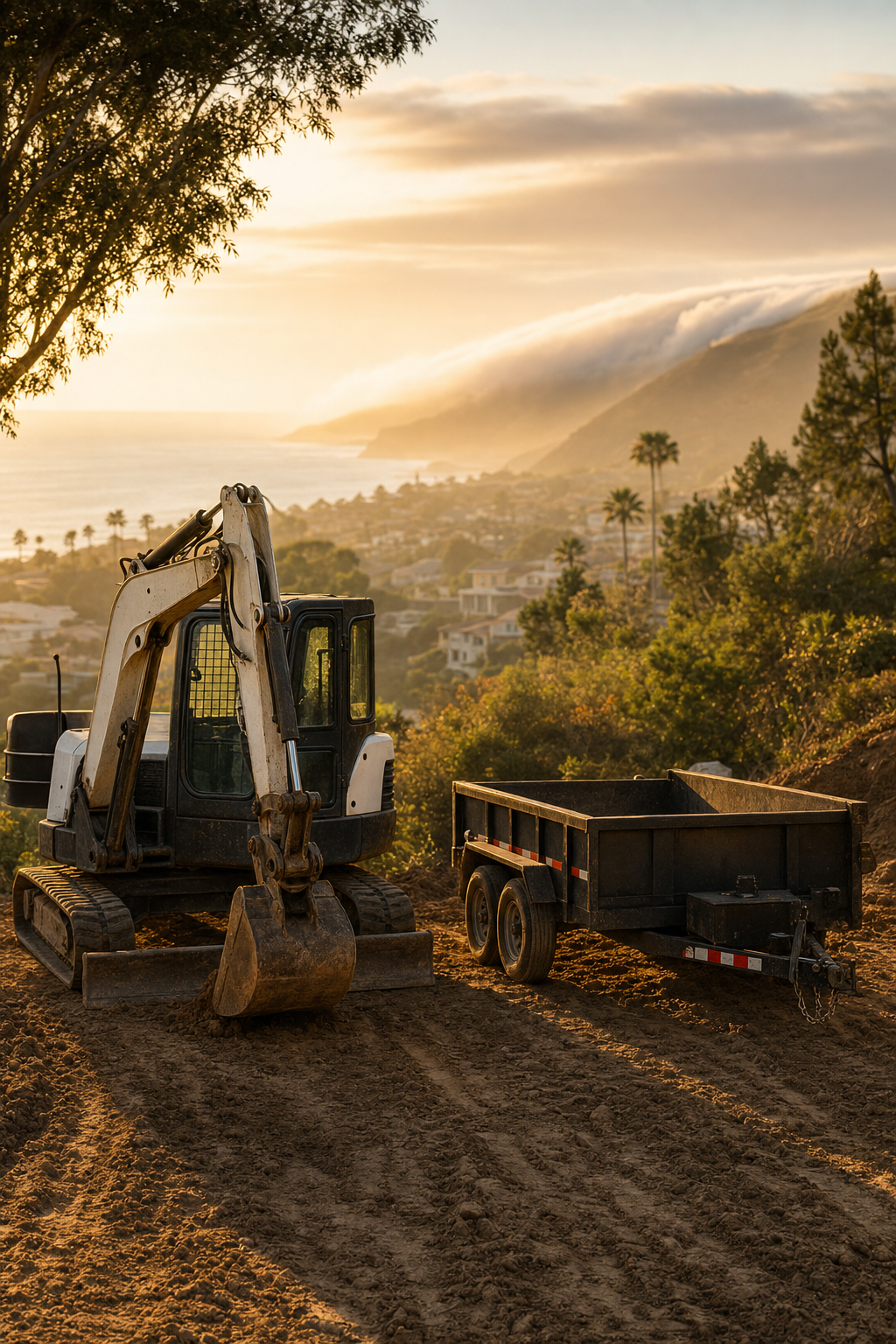
The final phase is fine grading, where precision is the priority. Using Bobcats and specialized leveling equipment, we refine the subgrade to within fractions of an inch of the design specifications. This level of detail is necessary for the proper installation of concrete pads and asphalt paving. For commercial infill projects in dense areas like Costa Mesa or Irvine, where space is restricted, our use of compact Bobcats and maneuverable dump trailers allows for efficient material movement without compromising the integrity of adjacent structures or utility lines.
Orange County Soil Challenges: Managing Clay and Expansive Earth
In Southern California, the physical composition of the ground often dictates the success of a project more than the architectural blueprints do. Regions like South County and the hillside developments in Laguna Beach are notorious for clay-heavy, expansive soils. These soils undergo significant volume changes, swelling when wet and shrinking during the dry season. For commercial developments, failing to address these characteristics during the grading phase leads to catastrophic results, such as foundation cracking or parking lot buckling under heavy vehicle loads.
Effective commercial grading Orange County requires a rigorous adherence to geotechnical reports and soil testing. Before moving a single yard of dirt, a professional soil engineer must identify the Plasticity Index (PI) of the earth. This data informs our team on whether to export native material or treat it with stabilizers to reduce expansiveness. During the subgrade preparation, we focus on moisture conditioning the clay to achieve an optimum state before structural fill is added.
We work closely with engineers to ensure every lift of soil meets the specific compaction percentages required for the site's intended use. This precision is a key part of Vetting a Site Work Contractor in Orange County, as improper compaction in expansive soil is the leading cause of post-construction structural failure. By managing these subgrade challenges early, we provide a stable foundation that protects the developer's long-term investment and minimizes future maintenance costs.
Commercial Parking Lot Grading and Drainage Solutions

Managing the transition from subgrade stabilization to parking lot site preparation requires a focus on two critical objectives: structural integrity and hydrodynamic efficiency. Unlike residential driveways, commercial parking lots must withstand the repetitive torsional stress of heavy delivery trucks and high-volume traffic. This necessitates a subgrade compacted to exacting specifications to prevent the asphalt or concrete from rutting or cracking prematurely. Properly executed commercial grading Orange County projects must account for these heavy load-bearing requirements long before the first layer of aggregate is spread.
Precision is equally vital for water management. Effective parking lot grading requires a minimum slope of 1% to 2% to facilitate sheet flow and prevent ponding. Standing water is not merely an aesthetic issue; it penetrates the pavement surface and weakens the underlying base, leading to catastrophic subgrade failure. However, this slope must be carefully balanced against ADA compliance requirements. Federal standards mandate that accessible parking stalls and access aisles do not exceed a 2% slope in any direction. Striking this balance is a primary reason for Vetting a Site Work Contractor in Orange County who understands these fine tolerances.
For a commercial project to satisfy the requirements outlined in an Orange County Grading Permit Guide, the site plan must include integrated drainage solutions that manage runoff before it enters the municipal storm system. We utilize specialized equipment like Bobcats to install catch basins and grade complex bioswales. These green infrastructure elements are now standard in OC commercial developments to filter pollutants and regulate water flow. By coordinating the fine grading with these drainage features, we ensure the site remains durable and compliant with local environmental mandates.
Building Pad Preparation and Foundation Excavation
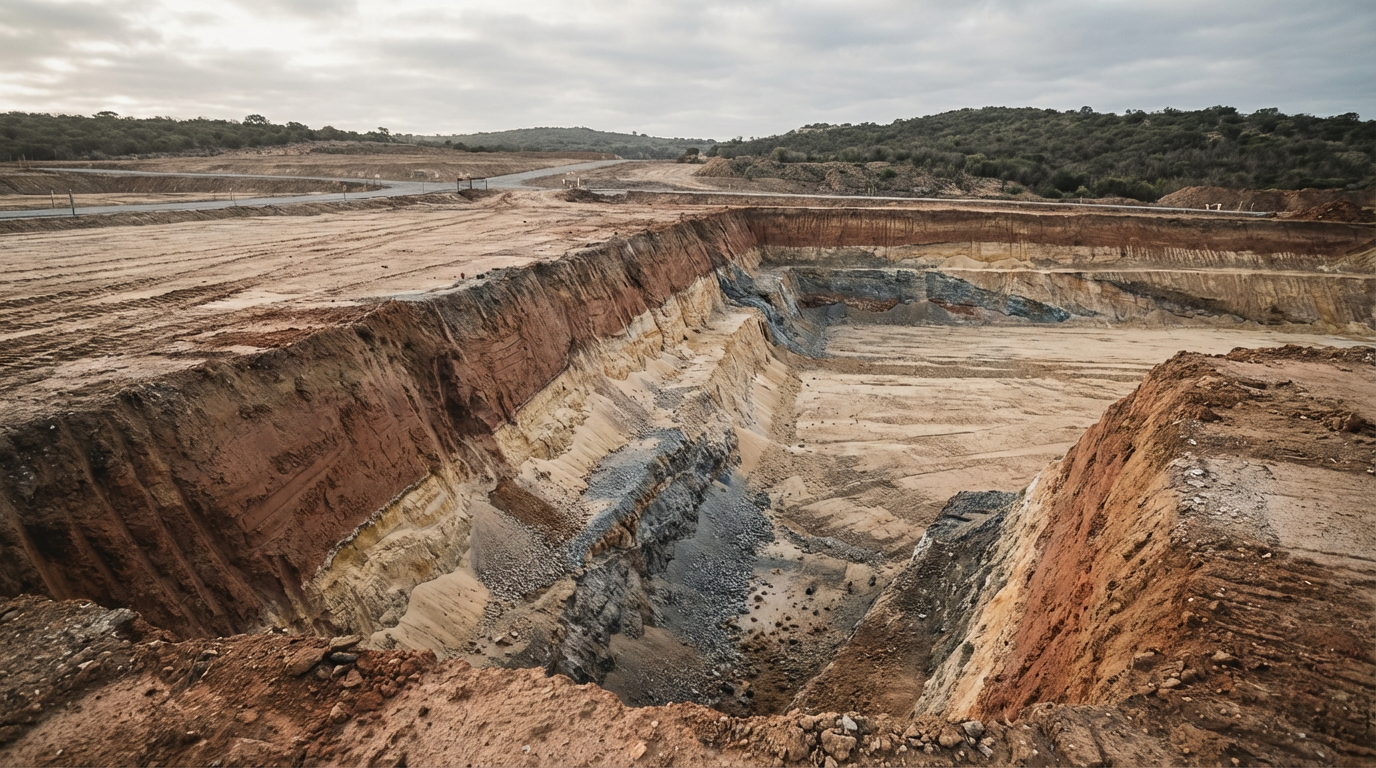
The construction of the building pad represents the most exacting phase of commercial grading Orange County, as any deviation here impacts the integrity of the entire structure. Precision excavation for the building footprint must account for both vertical stability and lateral drainage. Per standard building codes often enforced in Laguna Beach and Irvine, the required slope for site grading immediately adjacent to the foundation is typically 5 percent for the first 10 feet. This steep transition ensures that moisture is directed away from the slab, preventing hydrostatic pressure from compromising the foundation walls.
Once the rough cut is complete, we focus on achieving the specific compaction percentages defined in the geotechnical report, usually 90% to 95% of the maximum dry density. This leads to pad certification, a high-liability milestone where we work alongside a soil engineer to verify that the earth meets the required PSI standards. A certified pad provides the General Contractor with the legal and structural assurance needed to pour concrete. With over 20 years of local experience, our team understands that precision at this stage is non-negotiable. Vetting a Site Work Contractor in Orange County based on their history with pad certification is essential to avoid settlement issues that could manifest years after the project is finished.
Navigating Regulatory Approvals and Erosion Control (BMPs)
Securing a grading permit is only the first step; maintaining compliance throughout the commercial grading Orange County phase requires a rigorous adherence to environmental standards. Projects disturbing more than one acre must implement a Stormwater Pollution Prevention Plan (SWPPP). This plan details the specific Best Management Practices (BMPs) we use to prevent sediment runoff, such as installing silt fences, fiber rolls, and stabilized construction entrances. In coastal and hillside regions, local inspectors are particularly vigilant about preventing loose soil from entering the municipal storm system.
Dust control is another critical regulatory hurdle. The South Coast Air Quality Management District (SCAQMD) enforces strict rules regarding fugitive dust. We utilize water trucks and moisture conditioning techniques during mass excavation to ensure the site remains compliant and avoids heavy fines. For hillside stabilization, we implement temporary erosion control blankets and hydroseeding to secure slopes during the build cycle. Vetting a Site Work Contractor in Orange County who understands these local enforcement nuances ensures that your project avoids stop-work orders and environmental litigation.
Why Developers and GCs Choose Orange County Site Work Services
Orange County Site Work Services has been a fixture in the Southern California construction landscape since 2004, providing a level of stability and local insight that generic national firms often lack. We understand that in a high-speed commercial build cycle, the foundation of a project's timeline rests on the efficiency of the earthwork phase. By maintaining a team-oriented approach, we ensure that our excavation, trenching, and hauling solutions integrate seamlessly with other trades, preventing the scheduling bottlenecks that often occur during site development.
Our fleet is intentionally equipped for precision. We utilize dedicated Bobcats and dump trailers that are ideal for navigating the tight-access commercial infill projects common in Laguna Beach, Costa Mesa, and Irvine. This specialized equipment allows for surgical accuracy in fine grading and pad preparation, ensuring that your commercial grading Orange County requirements are met without the collateral damage often caused by oversized machinery.
Getting site work done correctly the first time is non-negotiable for protecting a developer's ROI. With over 20 years of experience, we anticipate the specific soil and regulatory challenges of the region before they become costly change orders. When Vetting a Site Work Contractor in Orange County, GCs prioritize partners who deliver build-ready sites that meet exact engineering specifications. We provide that reliability, ensuring your project starts on a firm, compliant, and expertly prepared foundation.