Fill dirt delivery Orange County typically costs between $15 and $25 per cubic yard, with delivery fees ranging from $50 to $150 depending on the location. For structural grading and backfilling projects, bulk pricing may be as low as $13.50 per ton depending on the material quality and specific site requirements.
Navigating the complexities of site preparation in Orange County requires more than just a truckload of soil; it demands a precise understanding of material integrity and local grading regulations. Many property owners discover too late that substandard fill leads to foundational settling or costly drainage failures, especially when dealing with the unique soil profiles of our coastal and hillside neighborhoods. At Orange County Site Work Services, we know that every cubic yard delivered impacts the long term stability of your investment. This guide clarifies the critical differences between clean and structural fill, outlines projected delivery costs for the 2026 season, and provides a roadmap for accurate volume calculations. You will also learn about the logistical nuances of delivering to Laguna Beach and other high density areas, ensuring your project meets strict compaction standards without unnecessary delays or hidden expenses.
Understanding Fill Dirt Delivery in Orange County
Construction in Southern California starts with ground stabilization. For projects ranging from leveling a sloped backyard in Costa Mesa to preparing the pad for a new ADU in Laguna Beach, the right material is essential. Fill dirt serves as the foundational subsoil layer, specifically chosen for its lack of organic matter to ensure long term stability. When planning these projects, reliable fill dirt delivery Orange County is the first step toward a successful build.
Orange County Site Work Services has functioned as an established site work team since 2004, bringing over 20 years of local expertise to every job. We understand that fill dirt is not just dirt; it is a functional tool used to raise grades and fill deep voids without the risk of decomposition or shifting that occurs with topsoil. Our comprehensive earthwork and grading solutions ensure that materials are placed and compacted according to the specific geological demands of our coastal and canyon landscapes. Securing professional fill dirt delivery Orange County ensures your project begins on a solid, non-compressible base.
Clean Fill versus Structural Fill: Which Does Your Project Need?
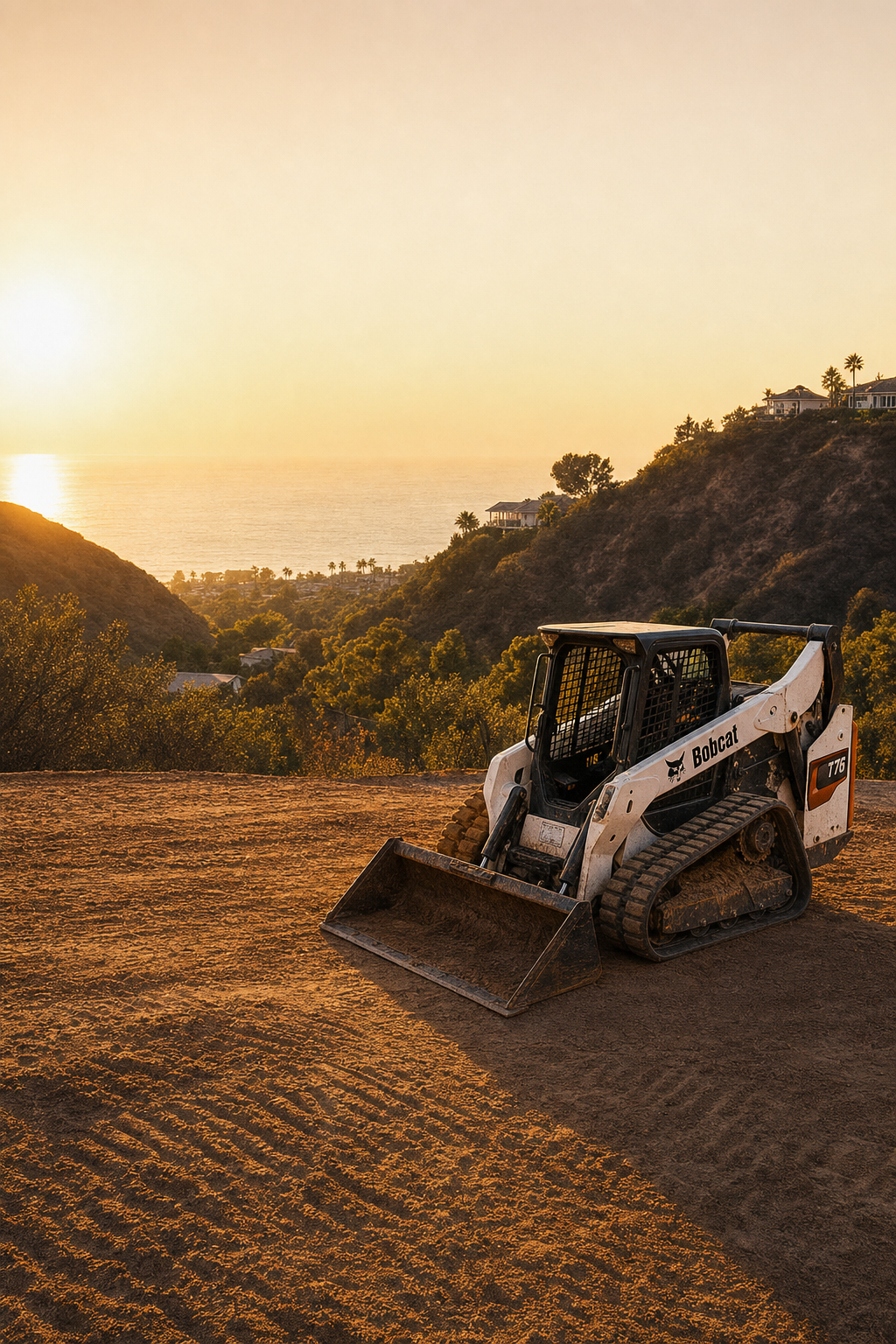
Selecting the right material is a technical decision that impacts the long term integrity of your site. Our established site work team emphasizes that while general fill dirt delivery Orange County providers might offer various options, understanding the distinction between clean fill, structural fill, and topsoil is vital for meeting California building codes.
Clean fill consists of subsoil that has been screened to remove non soil contaminants like glass, metal, or large concrete chunks. It is ideal for filling deep holes or raising the elevation of a yard where no structures will be built. However, because its particle size distribution is not strictly controlled, it may not provide the uniform density required for heavy loads. It is a cost effective solution for volume, but it lacks the certified reliability of engineered options.
Structural fill, often called engineered fill, is a specific grade of material tested for its ability to reach high compaction levels. This material is typically a mixture of sand, gravel, and clay, verified for specific particle sizes to ensure it can support weight without shifting. In Orange County, where hillsides and seismic activity are constant factors, local building codes almost always mandate structural fill for foundations, retaining walls, and slope repairs. Professional grading and drainage services rely on this material because it minimizes the risk of settling over time.
Topsoil stands in direct contrast to these materials. While it is excellent for landscaping and gardening due to its high organic content, it is entirely unsuitable for earthwork. As organic matter decomposes, it creates air pockets that lead to significant settlement and instability. Using topsoil for site preparation is a common mistake that results in cracked foundations and poor drainage.
Material Type | Primary Application | Characteristics |
|---|---|---|
Clean Fill | General grading, filling large voids | Screened of debris; non organic |
Structural Fill | Foundations, ADU pads, hillsides | Engineered particle size; highly compactable |
Topsoil | Planting, gardens, lawns | High organic matter; prone to settling |
Fill Dirt Delivery Costs in Orange County for 2026
Budgeting for earthwork in Southern California requires a clear understanding of both material scarcity and the logistics involved in transport. In 2026, the price for fill dirt delivery Orange County reflects the high demand for residential expansion and hillside stabilization. For standard fill dirt, material costs generally range from $15 to $25 per cubic yard. When a project necessitates screened clean fill, which has been processed to remove debris that could interfere with compaction, prices typically reach between $29 and $40 per cubic yard.
Material or Service Type | Estimated Cost (2026) |
|---|---|
Standard Fill Dirt | $15 – $25 per cubic yard |
Screened Clean Fill | $29 – $40 per cubic yard |
Standard Delivery (within 20 miles) | $50 – $150 per load |
Long Haul or Difficult Access | $200+ per load |
Delivery fees are calculated based on distance and the complexity of site accessibility. A standard drop within a 20 mile radius, such as a haul from Aliso Viejo to Irvine, usually costs between $50 and $150. However, projects located in the Laguna Beach canyons or along steep coastal bluffs often incur higher fees, frequently exceeding $200. These higher costs account for the specialized equipment and additional time required to navigate narrow, winding roads and tight residential footprints safely.
To optimize your budget, consider the bulk discount factor. Our established site work team finds that ordering a full 10 to 16 yard dump truck load is significantly more cost effective per yard than smaller quantities. The fixed overhead of the delivery vehicle and driver remains the same regardless of volume, so maximizing each load reduces the total unit price. For comprehensive earthwork and grading projects, planning for bulk deliveries ensures the site remains productive while controlling overall expenses.
The Real Cost of Free Dirt: Why Quality Matters
Searching for "free clean fill" is a common tactic for homeowners trying to mitigate project expenses; however, this approach often leads to significant financial liabilities. Dirt sourced from unknown excavation sites frequently contains hidden debris like asphalt, glass, or plastic, which compromises the structural integrity of your land. More concerning is the risk of environmental contamination. If the material contains hazardous chemicals or heavy metals, you become legally responsible for professional remediation costs that can run into the tens of thousands of dollars.
Our established site work team has seen many projects stalled because a building inspector rejected undocumented fill. Without a compaction certificate or a clear chain of custody, the soil cannot be verified for structural use under local building codes. If the material is deemed unsuitable, you are forced to pay for its removal, disposal at a specialized facility, and then the replacement cost of a legitimate fill dirt delivery Orange County to start over. Investing in high quality, comprehensive earthwork and grading materials from the start protects your property value and ensures long term site stability.
How to Calculate Your Fill Dirt Needs
Precision in the planning phase prevents expensive material shortages or the logistical headache of disposing of excess dirt. To determine the volume required for your project, use the standard industry formula: multiply the length by the width and the desired depth in feet, then divide the total by 27. This calculation provides the total cubic yards needed for the footprint of the space.
Calculating the raw volume is only the first step. When soil is excavated and loaded for fill dirt delivery Orange County, it undergoes a process called bulking where air is introduced into the material. As an established site work team, we know that once this material is placed and compacted using a Bobcat or heavy roller, those air pockets disappear. This leads to a settlement factor that must be accounted for during the ordering process.
We recommend adding a 20 to 30 percent margin to your final cubic yardage to ensure the site reaches the proper grade after compaction. For comprehensive earthwork and grading, underestimating this factor often results in a site that sits lower than intended. This typically requires an additional, smaller delivery that lacks bulk discounts and increases the total project cost.
Measurement Type | Formula or Adjustment |
|---|---|
Base Volume | (Length x Width x Depth) / 27 |
Settlement Factor | Add 20% to 30% to Base Volume |
Compaction Method | High-density finish via Bobcat or plate compactor |
Compaction and Grading Specifications for Site Stability
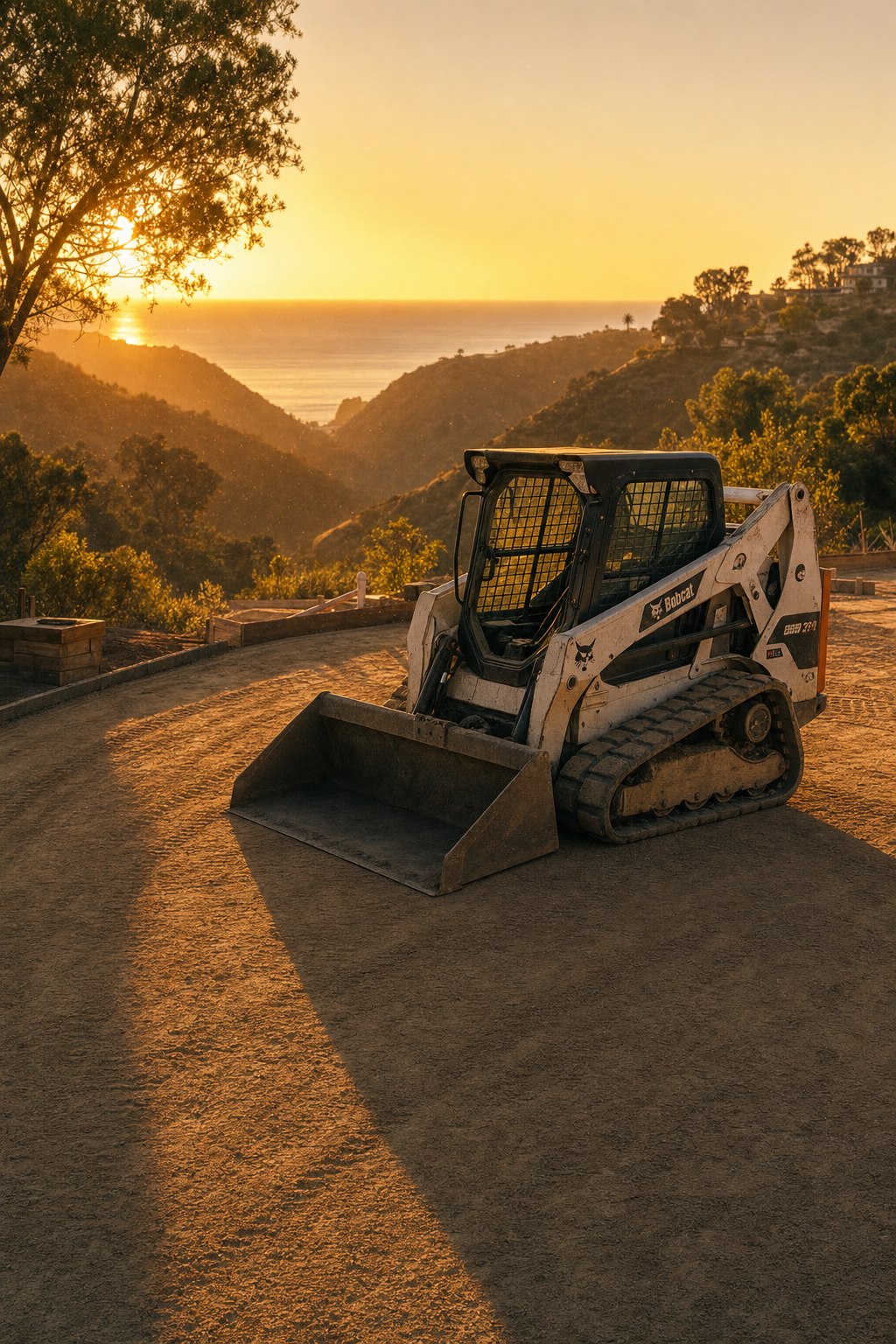
Once the volume is determined and the fill dirt delivery Orange County arrives at your site, the focus shifts to mechanical stabilization. Our established site work team utilizes the lift method to ensure long term structural integrity. This process involves spreading the material in thin, uniform layers, typically between 6 to 8 inches deep. Each lift is thoroughly compacted using a vibratory plate or a Bobcat before the next layer is added. Attempting to compact a large pile of loose soil at once is ineffective; the pressure from the equipment only reaches the top few inches, leaving the bottom loose and prone to failure.
Proper compaction is particularly critical in regions with clay-heavy soil, which is common throughout Southern California. Clay particles are microscopic and flat, meaning they hold moisture and expand or contract significantly based on water content. If fill is not properly integrated and compressed, air pockets will eventually fill with water, causing the ground to shift or sink. This instability can lead to hairline cracks in foundations, sunken pavers, or uneven hardscaping that requires expensive repairs.
Beyond vertical stability, precision grading defines how water interacts with your property. We implement specific slope requirements to ensure surface water flows consistently away from foundations and toward designated exit points. Integrating grading and drainage services during the earthwork phase prevents the hydrostatic pressure that often damages retaining walls or leads to moisture intrusion. This technical approach to comprehensive earthwork and grading ensures that once the project is finished, the ground remains exactly where it was placed, providing a permanent foundation for your build.
Local Logistics: Delivering to Laguna Beach and Coastal Orange County
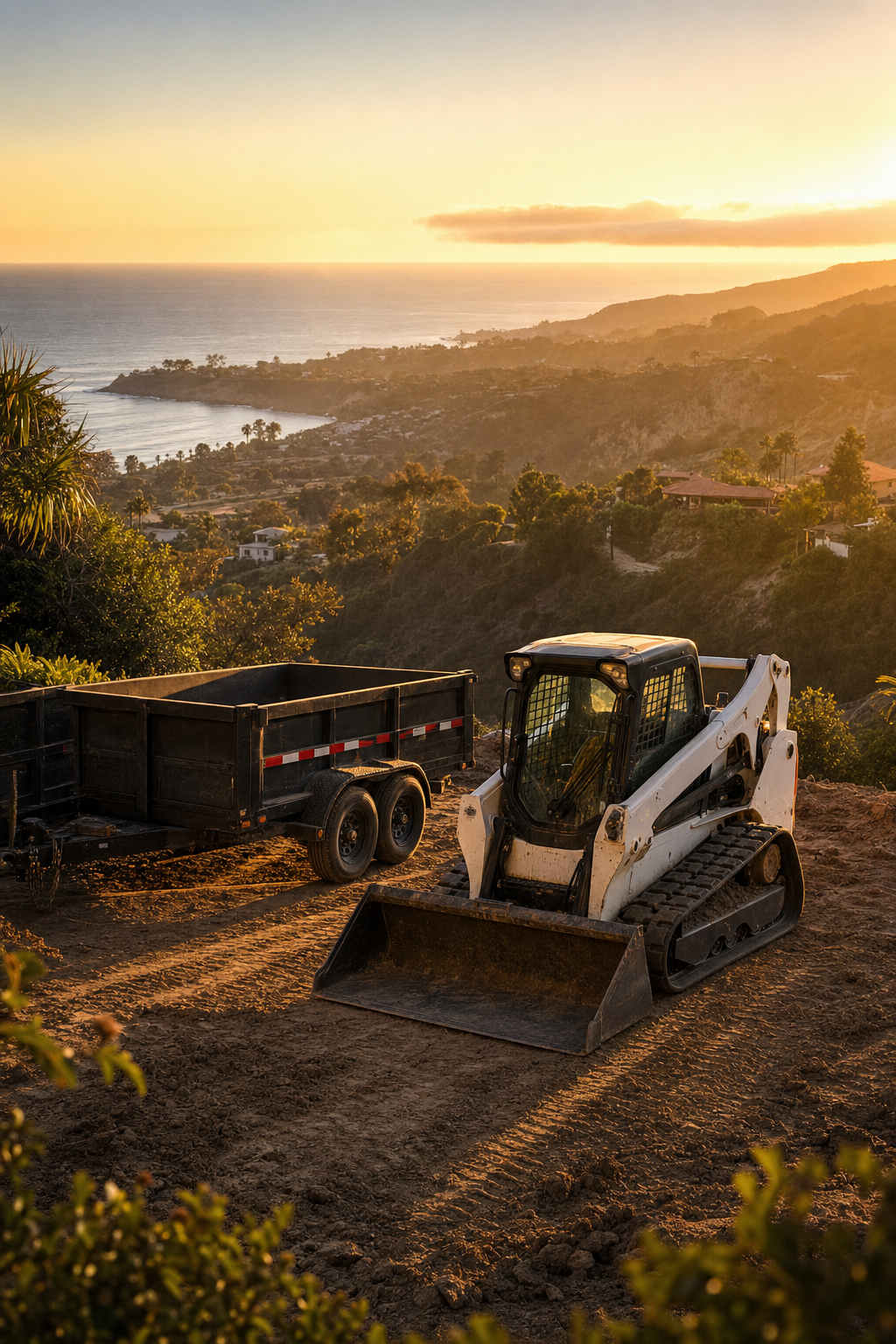
Navigating the geographical constraints of Laguna Beach and coastal Southern California requires more than just a truck. The narrow, winding canyon roads and steep driveways common in these neighborhoods often prohibit the use of full-sized dump trucks. Instead, an established site work team utilizes specialized equipment, such as smaller dump trailers and Bobcats, to transport material from a safe staging point to the tight-access footprints of residential sites. This approach minimizes property damage and ensures that fill dirt delivery Orange County remains efficient despite the challenging terrain.
Beyond physical logistics, local regulatory knowledge is critical. For any project involving the movement of more than 50 cubic yards of material, Orange County typically requires specific grading permits. Our team manages these administrative requirements, ensuring that comprehensive earthwork and grading projects remain compliant with local ordinances. Our 20 years of experience in the region allow us to anticipate the nuances of coastal setbacks and seismic considerations, ensuring your site work is both legally sound and structurally permanent.
Selecting the right fill dirt and calculating grading costs are critical steps for any construction project in Orange County. While managing these logistics on your own is possible, ensuring the ground is properly leveled requires precision and the right equipment. If you want expert help navigating these material choices or preparing your site for the next phase, you can learn more About our team and our approach to site preparation. We focus on providing reliable solutions tailored to your specific land requirements.