To calculate how much fill dirt do i need Orange County projects require, multiply the area's length, width, and depth in feet and divide by 27 to find the total cubic yards. You must add an extra 20 to 30 percent to this volume to account for soil compaction and settling during the leveling process. This calculation ensures you have sufficient material to achieve a stable, professional grade for your landscape or construction site.
Estimating fill dirt for an Orange County project looks simple on paper, but a single miscalculation often leads to expensive hauling delays or an unsightly surplus. Whether you are leveling a residential lot in Irvine or preparing a commercial foundation in Santa Ana, underestimating your needs by even ten percent can halt production and inflate your logistics costs. This accuracy is critical given our region's unique soil compositions, where expansive clay and specific compaction factors significantly alter final volumes. In this guide, Orange County Site Work Services breaks down the essential cubic yard formula. We will explore the critical difference between shrink and swell factors, provide practical examples for yard leveling, and explain how to convert volumes into tons for precise hauling. You will gain the technical insight needed to ensure your site preparation remains on schedule and within budget.
The Quick Answer: How to Estimate Your Fill Dirt Volume
Determining the volume of material required for a project starts with a standard mathematical formula. To find the cubic yardage, multiply the length of your area by the width and the desired depth, ensuring all measurements are in feet. Multiply those three numbers together and divide the total by 27 to convert cubic feet into cubic yards. This calculation provides the theoretical volume of the space you intend to fill.
This number rarely represents the actual amount of material you should order. For residential projects in coastal communities like Laguna Beach or inland neighborhoods in Irvine, homeowners frequently underestimate their needs by at least 20 percent. This discrepancy occurs because dirt is not a static material. When equipment like a Bobcat or a vibratory plate compactor processes the soil, the air pockets are removed and the volume shrinks significantly. If you order exactly what the basic math dictates, you will likely find yourself several loads short of a level finish.
Providing comprehensive earthwork and grading solutions requires accounting for both mechanical compaction and natural settling over time. When trying to determine how much fill dirt do i need Orange County, remember that the raw calculation only describes the loose volume. For a stable foundation or a level yard, you must buffer your order to account for the soil’s transition from the truck to its final, compacted state.
The Essential Formula: Calculating Cubic Yards for Grading Projects
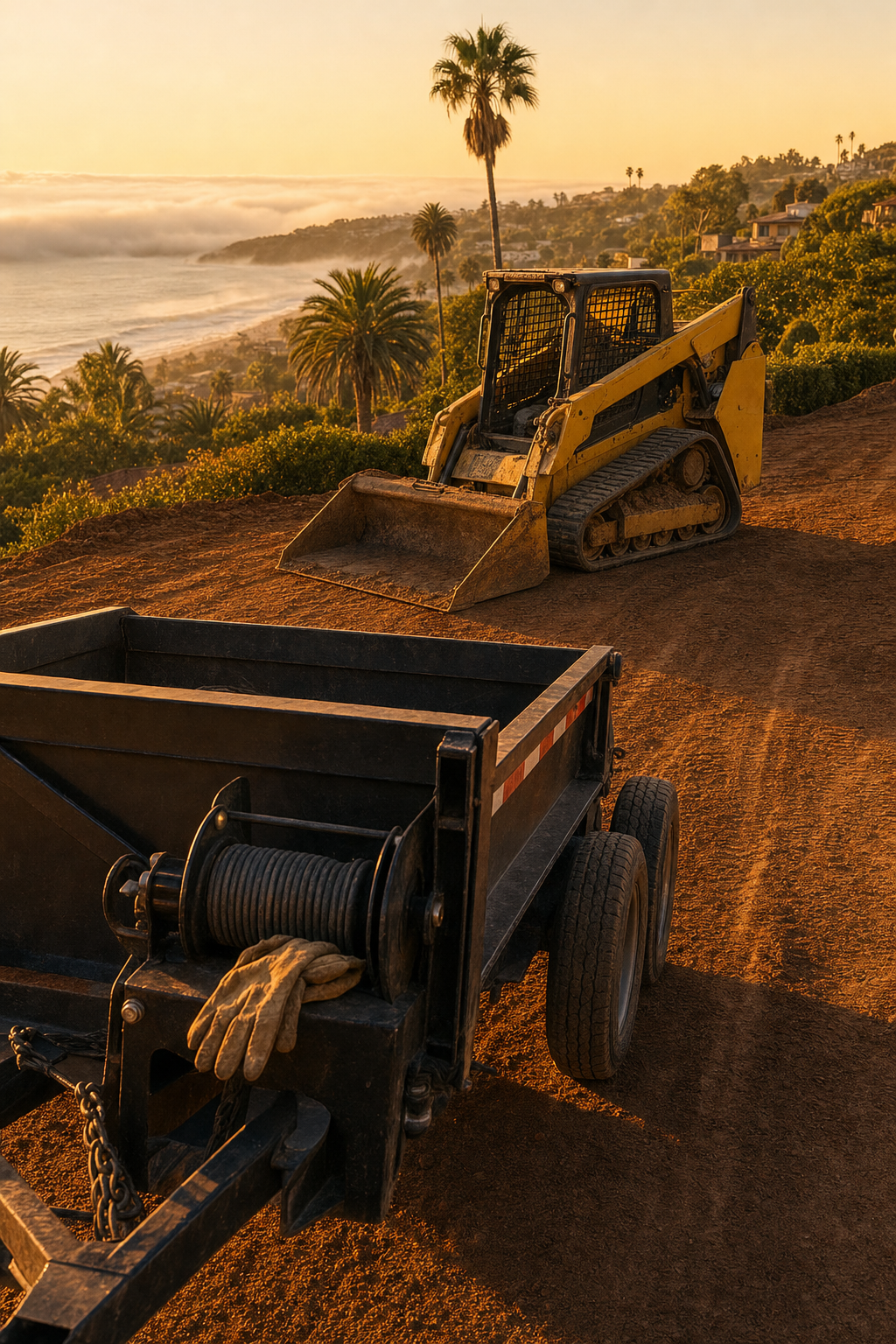
The core of professional grading and site preparation lies in breaking down complex spaces into simple geometry. Most properties in Orange County are rarely perfect rectangles; they often feature curved planters, rounded pool edges, or wedge-shaped corners. To calculate the volume accurately, you must divide these irregular areas into smaller rectangles and triangles. For a triangular section, multiply the base by the height, divide by two to find the square footage, and then multiply by the depth before dividing by 27.
Inconsistent depth measurement is the most frequent reason homeowners miscalculate how much fill dirt do i need Orange County. On a sloped lot in the hills of Laguna Beach, the depth of fill might be 6 inches at the top of the slope and 3 feet at the bottom. To find the volume for such a space, you should take several depth measurements across the area and calculate the average. Relying on a single measurement at the shallowest or deepest point will result in a significant material shortage or a costly surplus on your driveway.
Consider a standard backyard leveling project. If you are prepping a 20 foot by 30 foot area to a consistent depth of 1 foot, the calculation is straightforward: 20 times 30 times 1 equals 600 cubic feet. When you divide 600 by 27, you get approximately 22.2 cubic yards. This represents the absolute minimum amount of material needed to fill that physical void. Even with precise math, this theoretical number serves only as the baseline for your project, as it does not yet account for the specific physical characteristics of the local soil being imported.
The Orange County Variable: Expansive Clay and Shrink Factors
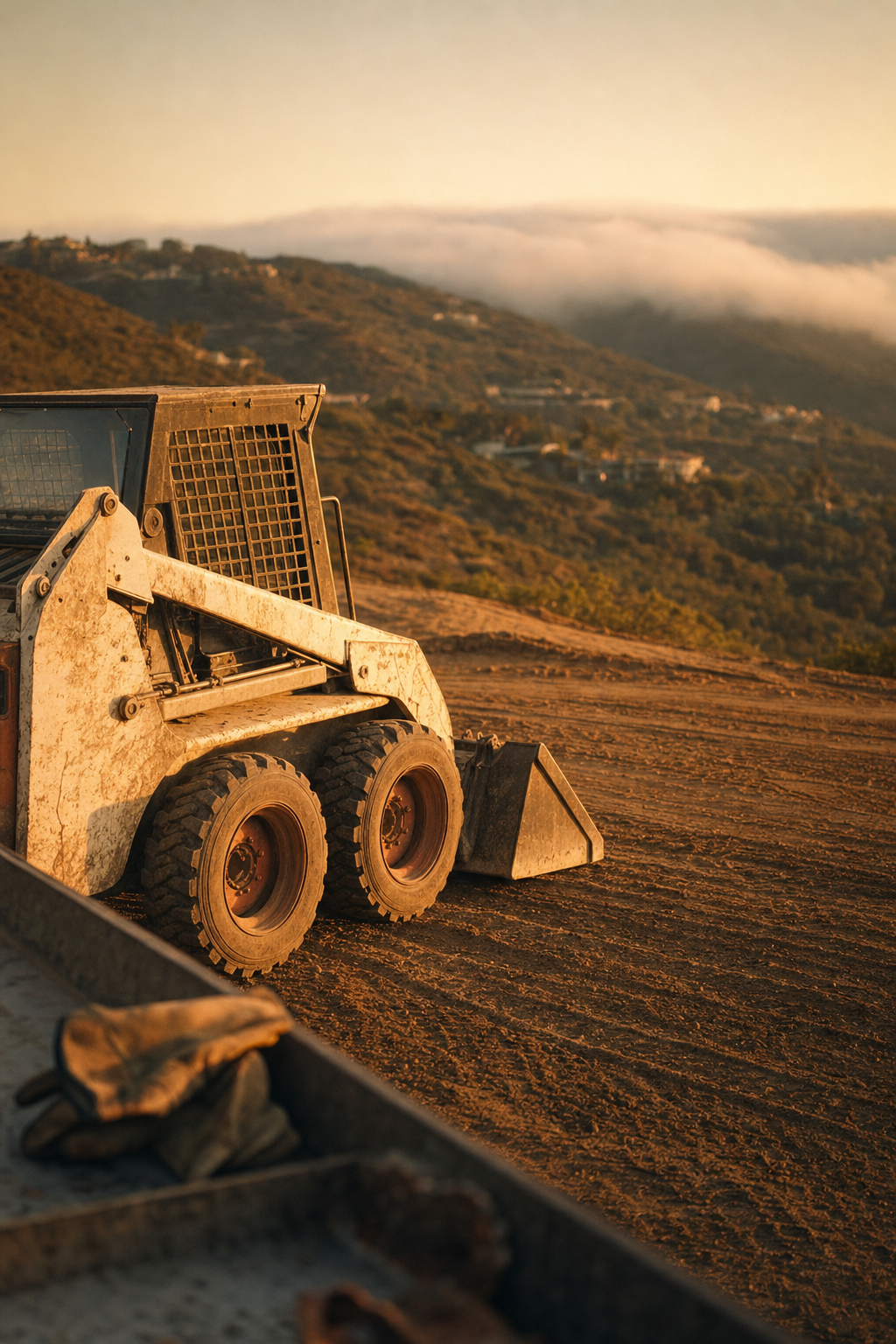
In Orange County, the local geology presents a specific challenge known as expansive clay. This material behaves quite differently than the loose, sandy loam common in other regions. Clay consists of extremely fine particles that pack tightly together. Because of this inherent density, the shrink factor, which is the reduction in volume that occurs when soil is mechanically compressed, is significantly higher than the national average. When a dump trailer delivers a load of dirt, that material is in its loose state. As we use a Bobcat or vibratory rollers to press the soil into place, the air pockets between those fine clay particles are eliminated.
Standard online calculators often suggest adding a 10 percent buffer for compaction. For local projects, that figure is almost always insufficient. To meet the 95 percent compaction standards required by many municipal building codes for structural fill, our team recommends ordering between 15 and 25 percent extra material. If you are filling a large area behind a new retaining wall or preparing a building pad, the clay will compress much further than a basic length times width calculation suggests.
Failing to account for this specific soil behavior is a leading cause of project delays. When calculating how much fill dirt do i need Orange County, you must consider the final utility of the fill. If the dirt is strictly for non-structural landscaping, a 15 percent buffer might suffice. However, for any area that needs to support weight, a 25 percent margin ensures you reach the required grade without needing a last minute emergency delivery. For a precise assessment of your site's specific soil needs, you can contact our Orange County site work team to discuss the grading requirements for your neighborhood's unique terrain. This preparation ensures that the foundation of your project remains stable even as the clay reacts to the changing moisture levels common in the Southern California climate.
Shrink vs Swell: Why Your Excavated Dirt Wont Fit Back in the Hole
A common point of confusion during professional grading and site preparation occurs when a homeowner digs a hole and realizes the pile of dirt removed is significantly larger than the void it left behind. In the earthwork industry, we categorize soil volume into three distinct states: bank, loose, and compacted. Soil in its natural, undisturbed state is measured in bank yards. This material has been compressed by the weight of the earth and environmental pressure for decades. Once you break that soil with an excavator or a Bobcat, you introduce air into the structure, creating loose yards.
In the heavy clay soils found across Orange County, this swell factor is substantial. When you excavate bank yards of clay, the volume typically increases by approximately 30 percent. This means a 10 cubic yard hole produces 13 cubic yards of loose material on your driveway. This distinction is critical for homeowners planning a cut and fill project, where they intend to move dirt from a high point to a low point to level the lot. If you do not account for this expansion, you might erroneously believe you have more usable material than you actually do.
The final stage of this cycle is the compacted yard. When we move that loose dirt back into a low spot and use a sheep foot roller or a vibratory compactor, we are forcing the air out to meet structural requirements. Because we often aim for a higher density than the original bank state to prevent future sinking, the soil shrinks again. Understanding these transitions is the only way to accurately answer how much fill dirt do i need Orange County for a balanced site. Without calculating for both swell during excavation and shrink during installation, your project will likely end with an unexpected surplus of waste or a frustrating shortage of structural fill.
How Much Dirt Do I Need to Level My Yard: Practical Examples
Applying the physics of swell and shrink to a real world landscape project requires a strategic approach to material selection. Many homeowners in expansive communities like Coto de Caza or Yorba Linda face the challenge of large, sloping lots that require significant volume to create a functional lawn or patio area. When calculating how much fill dirt do i need Orange County, you must distinguish between fill dirt and topsoil. Fill dirt is a subsoil material, primarily comprised of clay, sand, and stone without organic matter. This makes it stable and ideal for building up the bulk of your grade because it does not decompose or shift like organic soil.
For comprehensive earthwork and grading solutions that last, we recommend a layering approach. Use clean fill for the deep structural portions of the yard to provide a solid base. Once you are within 4 to 6 inches of your final finish grade, switch to high quality screened topsoil. Topsoil contains the organic nutrients necessary for turf or garden growth, but it lacks the density for structural stability. If you are raising a section of your yard by 18 inches, the bottom 12 to 14 inches should be compacted fill dirt, while the top layer is reserved for the planting medium. This professional technique prevents future sinkholes and ensures your landscape has the proper drainage and nutrient profile to thrive.
Weight Matters: Converting Cubic Yards to Tons for Hauling
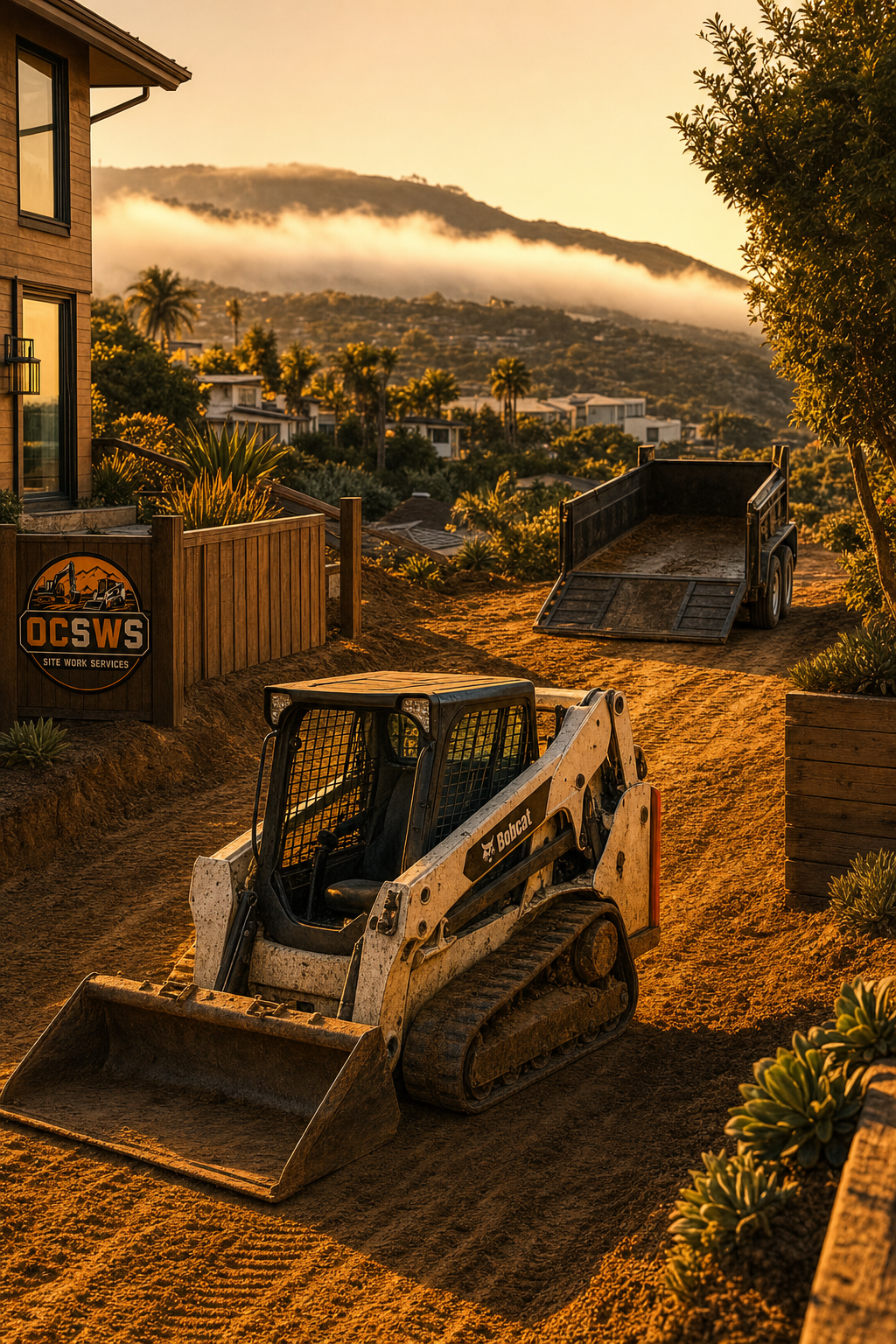
Understanding the volume of material is only half the battle; the logistical constraints of your project are dictated by weight. While you measure and purchase dirt by the cubic yard, transport regulations and disposal fees are strictly calculated by the ton. A single cubic yard of dry fill dirt typically weighs between 2,000 and 2,600 pounds. However, the heavy clay common in our region holds moisture exceptionally well. When working with wet Orange County clay, a single yard can easily exceed 3,000 pounds, which is 1.5 tons. This added weight can drastically change the number of trips required for your delivery or export.
Knowing these weights helps you coordinate with the equipment on site. If you are calculating how much fill dirt do i need Orange County for a project involving a dump trailer towed by a Bobcat, you must respect the payload capacity of the vehicle to avoid damaging the driveway or the equipment itself. Most professional hauling is handled by specific truck types, each with unique volume and weight limits.
Hauling Equipment | Typical Volume Capacity | Approximate Weight (Tons) |
|---|---|---|
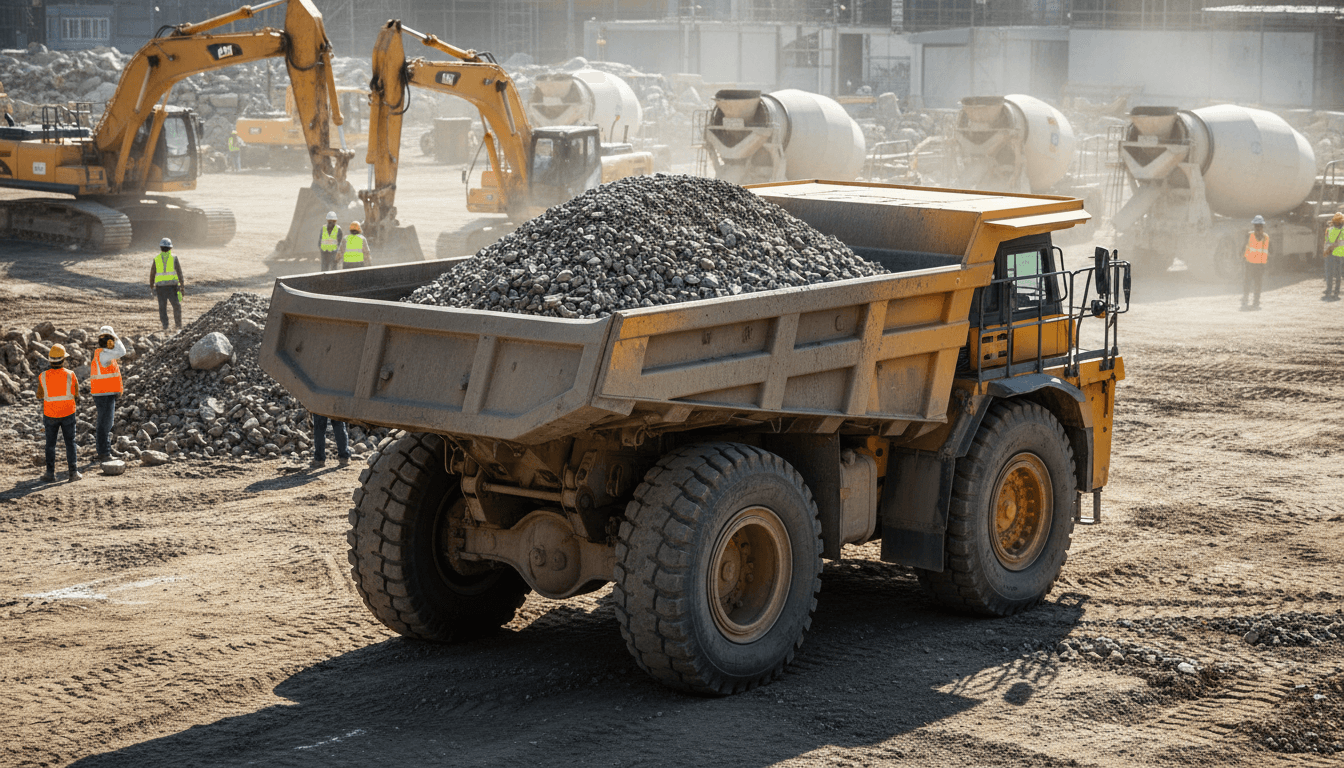
Bobcat Dump Trailer | 3 - 5 Cubic Yards | 4 - 6.5 Tons |
Standard Dump Truck | 10 - 12 Cubic Yards | 13 - 16 Tons |
Super Dump Truck | 16 - 18 Cubic Yards | 21 - 24 Tons |
Side Dump or End Dump | 20 - 24 Cubic Yards | 26 - 32 Tons |
Exceeding these limits leads to road fines and increased wear on machinery. For large scale comprehensive earthwork and grading solutions, our team often utilizes larger transfers or side dumps to minimize the number of loads, which reduces the overall cost of delivery. Always confirm if your quoted price includes these hauling fees, as landfill and quarry gates will weigh every load to determine the final tipping cost. To get a precise hauling plan for your site, you can contact our Orange County site work team to discuss the logistics of your specific location.
Common Mistakes in Estimating Fill Dirt Needs
Even with a solid formula, several logistical oversights can derail a project budget. A common mistake is forgetting to account for the physical thickness of a retaining wall or the gravel drainage layer required behind it. These structural elements occupy volume that reduces the amount of actual soil needed. Conversely, homeowners often misjudge the 'fluff' of delivered soil. When a dump truck tips its load, the loose material appears massive, yet it will shrink by a quarter or more once the air is removed through mechanical compaction.
Ignoring moisture content is equally risky. Wet clay is heavier and more difficult to spread, which can lead to inaccurate depth estimates during the initial pass. When homeowners miscalculate how much fill dirt do i need Orange County, running out of material near the end of the day is the most expensive outcome. Secondary delivery fees and equipment rental extensions far outweigh the cost of ordering a small surplus at the start. Our team utilizes professional laser levels during professional grading and site preparation to ensure every elevation is exact. To secure an accurate quote for your property, contact our Orange County site work team for a site assessment.