Professional pool removal Orange County typically costs between $4,000 and $16,000 for a full removal, while partial fill-ins range from $2,500 to $10,000. The process requires permits, demolition, and proper backfilling with engineered soil to address the region's expansive clay soils and ensure structural stability. Final costs are determined by the pool size, site accessibility, and the specific demolition method selected for the property.
An aging swimming pool often transitions from a luxury amenity to a significant liability, consuming valuable square footage while demanding constant maintenance and costly repairs. For many Orange County homeowners, reclaiming their outdoor space is the first step toward a more functional backyard; however, the process requires more than just heavy machinery. Navigating the complexities of local permitting and the structural demands of South Orange County’s expansive clay soils is essential for a successful project. In this guide, Orange County Site Work Services provides a professional overview of the pool demolition landscape. You will learn the critical differences between partial and full removals, current 2026 pricing benchmarks for the region, and the specific engineering requirements for backfilling. Whether you plan to build an ADU or simply want a lush lawn, understanding these technical requirements ensures your property remains stable and compliant.
Why Homeowners are Choosing Pool Removal in Orange County
Backyard priorities are shifting across Southern California. In established neighborhoods from the Laguna Beach canyons to the residential tracts of Irvine and Mission Viejo, many property owners now view aging concrete pools as liabilities rather than assets. High utility costs, constant chemical upkeep, and rising insurance premiums are driving a significant increase in requests for pool removal Orange County.
Instead of maintaining a 30 year old gunite shell, homeowners are reclaiming their square footage for more functional uses. The California push for Accessory Dwelling Units (ADUs) has made pool demolition a strategic investment, providing the necessary footprint for rental income or guest houses. Others are transitioning to low water, drought-tolerant landscaping to comply with local water restrictions and reduce weekend yard work. Converting a high-maintenance water feature into usable yard space effectively increases a property's versatility.
Navigating this transition requires more than just a sledgehammer. Orange County Site Work Services has spent over two decades providing comprehensive demolition solutions tailored to the unique terrain of our region. Our team uses specialized equipment, including compact Bobcats and high-capacity dump trailers, to convert a sunken concrete pit into a clean, level blank slate. By focusing on precision backfill and compaction services, we ensure the land is stabilized for whatever comes next.
Partial vs Full Pool Removal: Which Option Fits Your Project?
Selecting the right demolition method depends entirely on your long term goals for the property. In Orange County, where land value is at a premium, the choice between a partial and full removal often comes down to budget versus buildability. Both methods effectively eliminate the water feature, but they leave the subsurface in very different conditions.
A partial removal, sometimes referred to as a fill in, is the more common entry level choice. During this process, our team uses hydraulic breakers to remove the top 18 to 36 inches of the pool wall, known as the bond beam. We then punch large, strategic holes in the bottom of the concrete shell to ensure proper drainage and prevent the bathtub effect, where water collects in the shell and causes soil instability. The remaining cavity is filled with soil and compacted. While this method is typically 40 to 60 percent more affordable, it carries significant restrictions. California real estate laws require you to disclose a buried pool shell to any future buyer, and most municipalities prohibit the construction of permanent structures over the buried debris.
Full pool removal involves the total extraction of all gunite, steel rebar, and plumbing lines. This requires intensive excavation and robust Orange County hauling services to transport tons of debris to local recycling centers. Once the shell is removed, the area is backfilled with engineered soil and compacted to meet specific density requirements.
Feature | Partial Removal | Full Removal |
|---|---|---|
Cost | 40% to 60% lower | Market standard |
Real Estate Disclosure | Required indefinitely | Not required as a liability |
Future Construction | Non-permanent (grass, decks) | Fully buildable (ADUs, additions) |
Debris Management | Buried on-site | Completely hauled away |
For homeowners in Laguna Hills or Irvine who intend to build a guest house or garage, Orange County Site Work Services recommends full removal. This method ensures the land is returned to a virgin state, removing any risk of future sinkage or structural failure. When you choose full pool removal Orange County, you are essentially erasing the pool from the property history, allowing for maximum flexibility in how you use your backyard in the years to come.
Orange County Pool Demolition Costs: 2026 Budgeting Guide
Budgeting for pool removal Orange County requires an understanding of local disposal rates and site specific logistics. In 2026, homeowners should expect to pay between $5,000 and $10,000 for a partial removal. While this is the more economical route, it reflects the lower volume of debris hauled away. For a standard gunite pool requiring full removal, the price range typically falls between $12,000 and $25,000. These figures account for the intensive labor required to break up reinforced shotcrete and the specialized equipment needed to extract it.
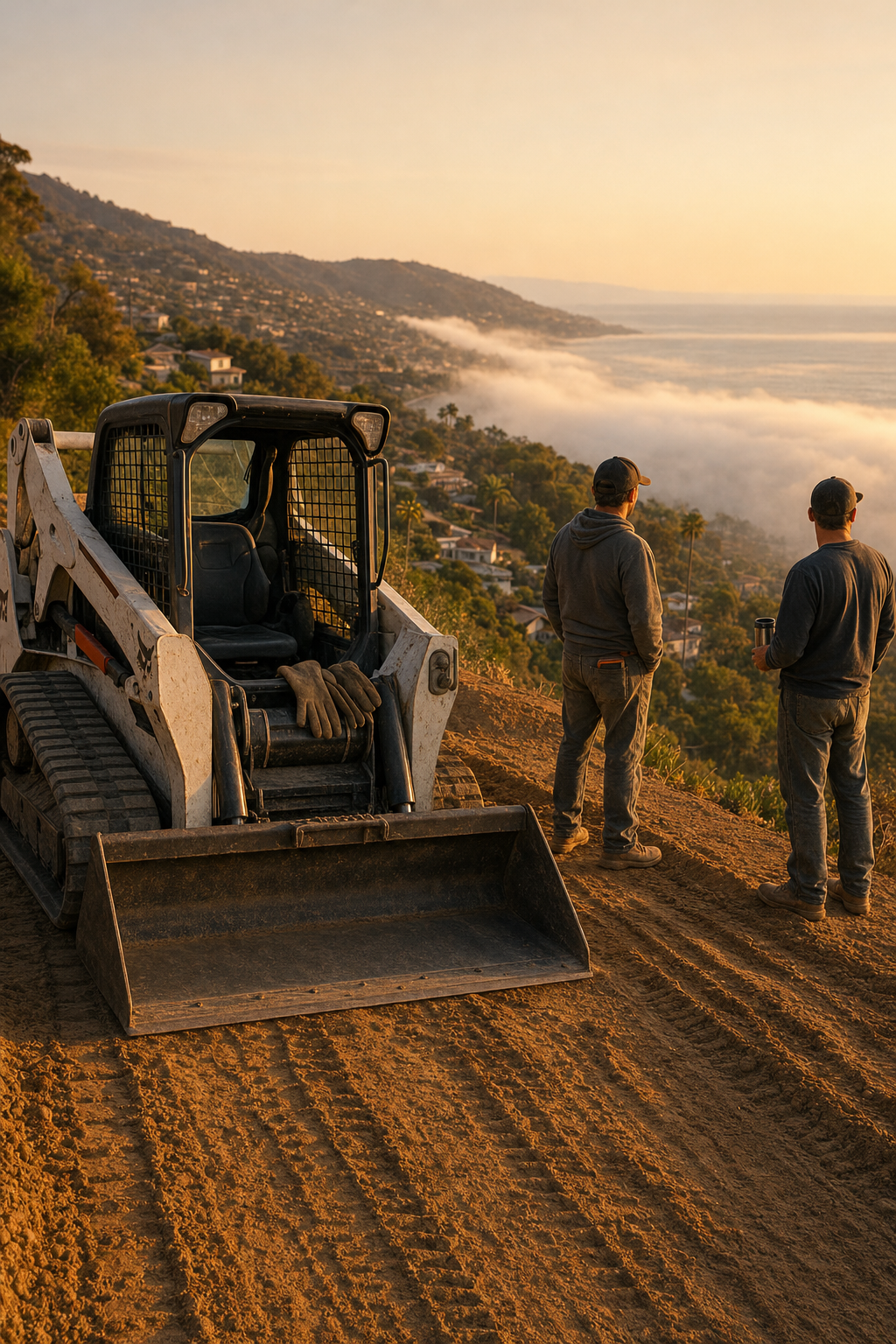
A significant portion of your budget goes toward Orange County hauling services. A typical 400 square foot concrete pool can generate upwards of 50 cubic yards of debris. Recent spikes in Orange County landfill fees for concrete recycling have increased the cost of disposal; transporting this weight requires heavy duty dump trailers and experienced operators. Access is the primary variable that can push a quote toward the higher end of the scale. In Laguna Beach, many homes are situated in canyons with narrow side yards or steep slopes. If a standard Bobcat cannot reach the site, we must use compact equipment or specialized transport methods, which increases the project timeline.
Cost Component | Estimated Budget Impact | Details |
|---|---|---|
Permits and Engineering | $500 to $1,500 | City fees, erosion control, and site inspections |
Labor and Equipment | $4,000 to $9,000 | Hydraulic breakers, Bobcats, and skilled crews |
Hauling and Landfill | $2,500 to $6,500 | Disposal fees for concrete, steel, and plumbing |
Imported Fill and Compaction | $1,500 to $4,500 | Clean structural fill and vibration compaction |
The Challenge of Expansive Clay Soil in South Orange County
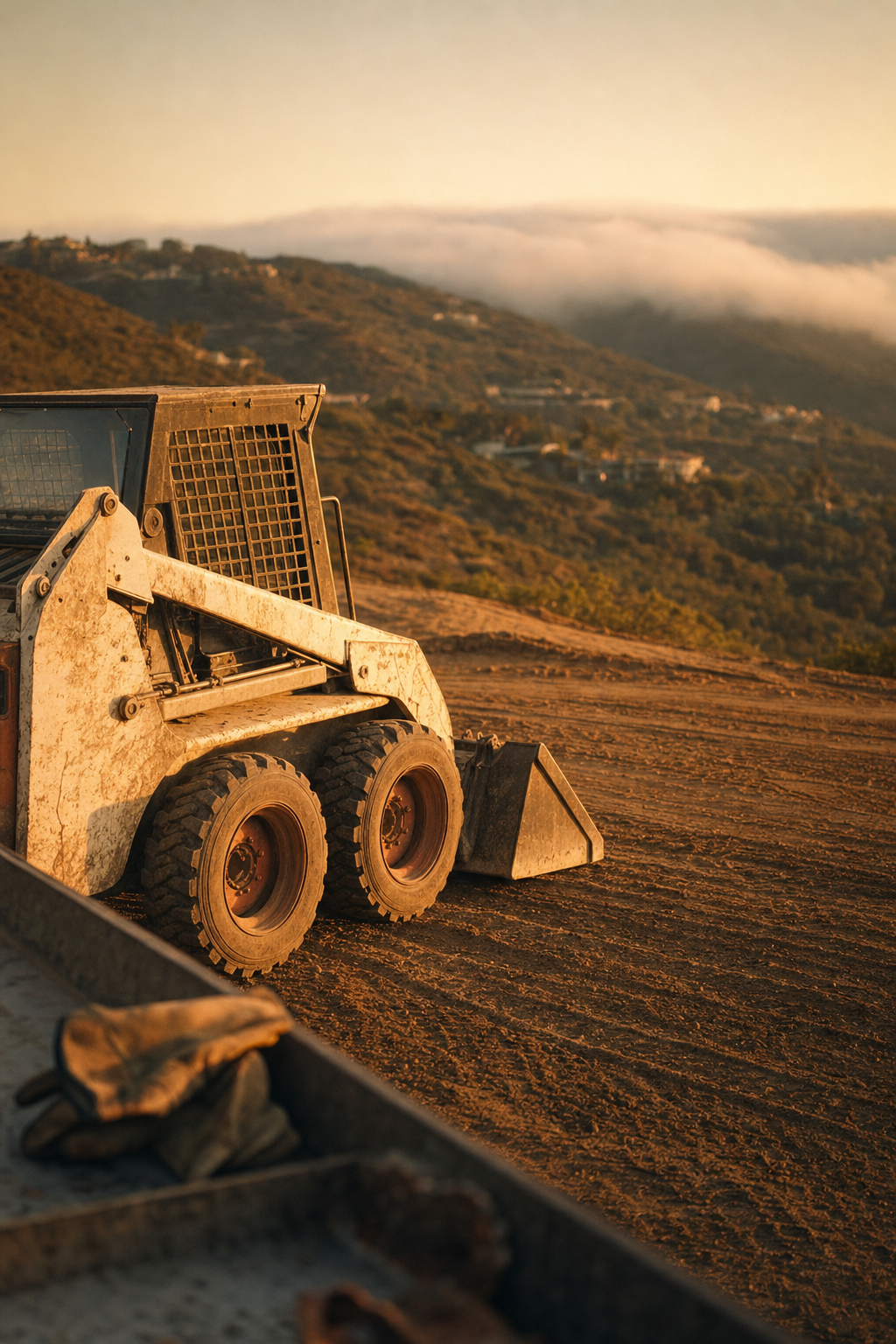
South Orange County, particularly in areas like Laguna Hills, Aliso Viejo, and Mission Viejo, presents a specific geological challenge: expansive clay soil. This material is highly reactive to moisture. When it rains, the clay particles absorb water and swell significantly; during the hot, dry summers common to our region, the soil loses that moisture and shrinks, creating deep fissures. For a pool removal Orange County project, failing to account for this constant movement leads to long term structural failure.
A common pitfall for homeowners is using "free dirt" sourced from local construction sites to fill the void. This material is rarely tested for organic content or expansive properties. If you fill a hole with unrefined clay or loose topsoil, you risk the "bowl effect." This occurs when the denser, undisturbed soil surrounding the former pool traps water within the loose backfill. The result is a subterranean sponge that causes the ground above to sink, crack, or become permanently swampy, regardless of how much you try to level the surface.
Our team addresses these risks through specialized backfill and compaction services. We do not simply dump dirt; we import specific structural fill, often a sandy loam or crushed aggregate, that offers better drainage and stability than native clay. By managing the soil composition and applying comprehensive demolition solutions that account for local geology, we ensure the yard remains level and stable. Proper moisture control during the process is vital to achieving the high density required to prevent future settlement in these clay heavy zones.
Step by Step Pool Demolition Process

Executing a successful pool removal Orange County requires a disciplined sequence to ensure the ground remains stable for decades. Our team-oriented approach begins with securing city permits and coordinating utility disconnects, ensuring gas, water, and electrical lines are safely capped before any heavy equipment enters the site.
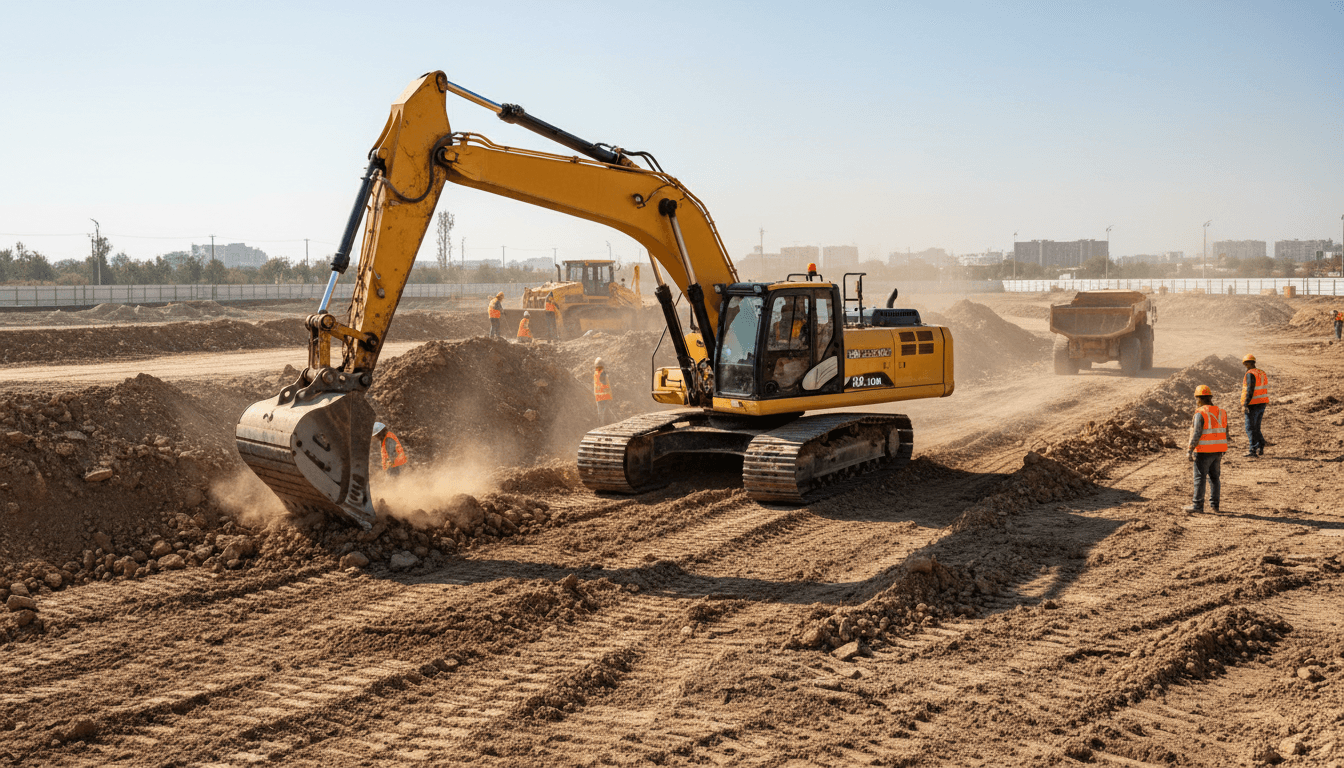
Once the site is secured, we utilize Bobcats equipped with hydraulic breakers to systematically dismantle the pool shell. For partial removals, we focus on breaking the bond beam and punching drainage holes in the floor; for full removals, every piece of reinforced gunite is extracted. This phase generates significant debris, often exceeding 50 cubic yards, which our Orange County hauling services efficiently manage using specialized dump trailers to minimize neighborhood impact.
The restoration of the void follows a strict technical protocol. We do not simply pour soil into the hole. Our crew executes backfill and compaction services by placing structural fill in precise 6 to 8 inch lifts. Each layer is moisture-conditioned and mechanically compacted before the next is added. This incremental process prevents the air pockets and voids that lead to future sinking. Finally, we facilitate independent compaction testing to verify that the soil density meets the 90 percent relative compaction standard required by local building codes. This rigorous, comprehensive demolition solutions workflow transforms a hazardous pit into a reliable, engineered piece of real estate.
Can You Build Over a Filled In Pool?
Building an ADU or home addition over a former pool site is only permissible if the pool underwent a full demolition rather than a partial fill in. Municipal building codes in Orange County generally prohibit the placement of permanent structures within eight feet of a buried pool shell. This restriction exists because the remaining concrete interferes with foundation stability and natural soil drainage, creating a high risk for structural cracking.
To transform the area into buildable land, the project must utilize comprehensive demolition solutions that extract every ounce of gunite, steel, and plumbing from the ground. Once the void is cleared, the restoration requires professional backfill and compaction services using specific engineered soil. Local jurisdictions require this fill to achieve at least 90 percent relative compaction. This density must be verified and documented by a licensed geotechnical engineer through on site testing. Without this certification and a complete removal, the site remains restricted to non structural uses like landscaping or permeable decking. When planning for pool removal Orange County, establishing these structural goals early ensures the site is prepared correctly for future construction.
Navigating Orange County Pool Removal Permits
California building codes mandate a permit for any pool deeper than 24 inches. In Orange County, municipalities like Irvine and Laguna Beach enforce strict oversight to protect soil stability and neighborhood infrastructure. Laguna Beach, known for its steep canyon terrain, often requires specific erosion control plans and stormwater management protocols to prevent sediment runoff during excavation. These requirements ensure that our comprehensive demolition solutions align with local safety standards.
Before any heavy equipment arrives, we coordinate a 'Dig Alert' notification to mark underground utility lines, preventing hazardous strikes to gas or water mains. The permitting process involves multiple site inspections. A city official typically visits to verify the drainage plan before any soil is added, ensuring the pool floor has been sufficiently perforated. Following the completion of backfill and compaction services, a final inspection verifies the ground is stable and the site is properly graded. Managing these regulatory steps is essential for a compliant pool removal Orange County project, protecting the homeowner from future code violations or liability issues.
Successfully removing a pool in Orange County requires a clear understanding of local soil conditions, especially when dealing with expansive clay. Proper backfilling and compaction are essential to maintain the integrity of your land for years to come. If you want expert help managing the technical aspects of this process, you can read more about our commitment to precision and site safety. We focus on providing reliable solutions that turn your old pool area into a functional, stable space.