Burying lines for downspout drainage Orange County protects home foundations by effectively channeling rainwater away from the structure to prevent soil saturation and cracking. These professional systems often utilize catch basins or French drains to ensure moisture is discharged safely at a distance, preserving the long-term integrity of the property.
Property owners in Orange County often overlook the damage that heavy, seasonal rainfall causes until their foundations begin to settle or crawl spaces flood. While the region enjoys sun most of the year, a single storm can send hundreds of gallons of water directly toward your home's perimeter if your downspouts are poorly managed. Professional drainage solutions are not just about aesthetics; they are critical for maintaining structural integrity and preventing soil erosion on the hillsides of Turtle Rock or Laguna Hills. In this guide, we will explore the technical benefits of burying downspout lines, compare PVC configurations to French drains, and provide specific insights for Southern California terrain to ensure your property remains dry and stable.
The Foundation Risk: Why Roof Runoff is a Hazard in Orange County
In Orange County, the most significant threat to a home's structural integrity often starts at the roofline. While our region is known for sunshine, the heavy, concentrated bursts of rain common in Laguna Beach and the surrounding canyons can quickly overwhelm standard gutter setups. The issue is rarely the roof itself, but rather where the water settles once it hits the ground.
The primary culprit is our local expansive clay soil. This earth behaves much like a sponge; it swells significantly when saturated and shrinks during the dry months. When downspouts dump water directly at the base of a home, this cycle of expansion and contraction puts immense hydrostatic pressure on the concrete. Over time, this movement leads to foundation cracks, interior drywall stress, and moisture seepage. In many older homes, the finished grade has risen over decades to sit at or above the slab edge, making it even easier for surface water to infiltrate the structure.
Many homeowners rely on simple surface splash blocks to manage runoff. In our professional experience providing Orange County drainage solutions, these are often insufficient for Southern California weather patterns. A splash block only moves water a few feet away, allowing it to migrate back toward the foundation. True protection requires a professional underground downspout drainage Orange County system. Unlike simple plastic extensions that clutter your landscape, buried lines utilize utility trenching services to pipe water completely away from the building envelope. By using expert Bobcat grading, we can ensure these lines are installed with a precise slope, directing thousands of gallons of runoff toward the street or a designated storm drain where it cannot compromise your home's stability.
Benefits of Burying Downspouts for Southern California Homeowners
Moving beyond basic surface protection, underground systems offer a more comprehensive approach to managing heavy runoff. Visible plastic extensions are not only an eyesore in high-end Laguna Beach landscapes, but they also create significant trip hazards on narrow side yards and walkways. By utilizing utility trenching services, we place these conduits entirely out of sight. This preserves the curb appeal of your property while eliminating the risk of accidental falls during routine yard maintenance.
The most critical benefit is the ability to relocate water significantly further than the industry-standard five-foot minimum. In densely developed neighborhoods like Newport Beach or Costa Mesa, lot lines are often tight. A surface splash block or short extension simply moves the problem from your foundation to your neighbor’s property or into a narrow side yard where it saturates the soil. A professionally installed downspout drainage Orange County system allows for the discharge of thousands of gallons of water directly to the street curb or a designated storm drain. Achieving this requires expert Bobcat grading to ensure the water moves efficiently away from the home. By piping the water 10, 20, or even 50 feet away, you effectively isolate your foundation from the hydrostatic pressure caused by local clay.
Feature | Surface Extensions | Buried Downspout Systems |
|---|---|---|
Discharge Distance | Typically 3 to 5 feet | 20 to 50+ feet to street/drain |
Aesthetic Impact | Highly visible; intrusive | 100% hidden underground |
Safety Risk | Potential trip hazard | Zero footprint on walkways |
Foundation Protection | Minimal; water stays near slab | Superior; removes water from building envelope |
How Deep Should Downspout Drain Pipe Be Buried in Orange County?
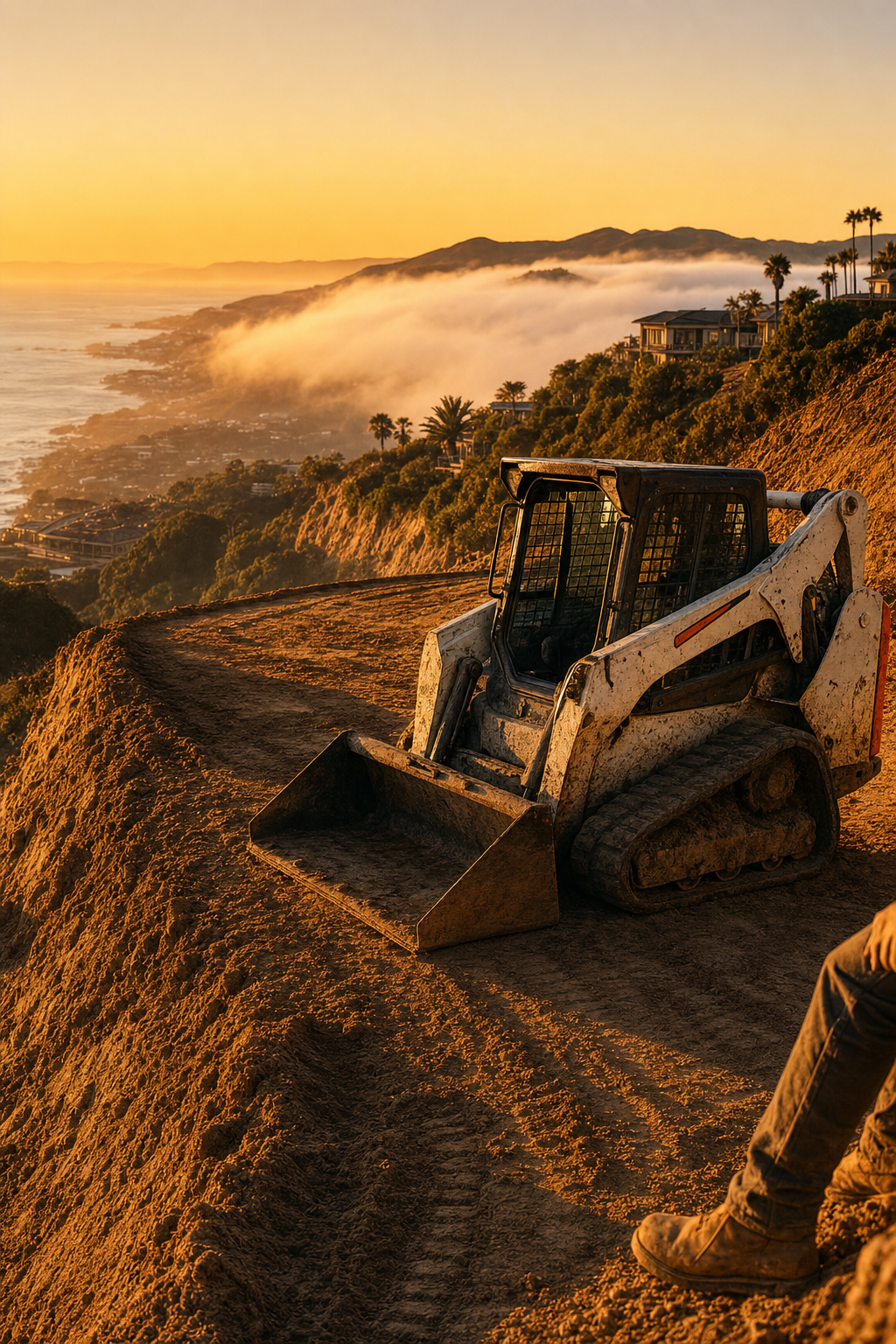
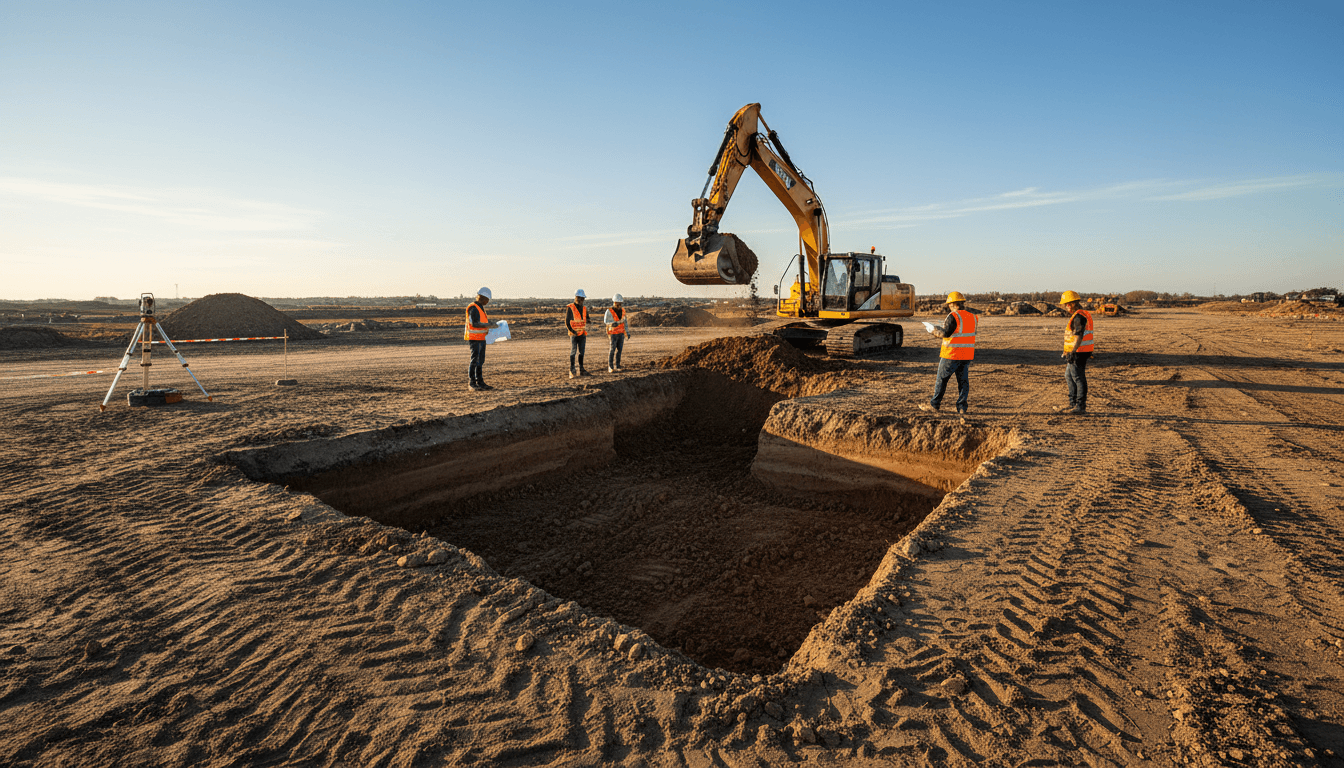
Determining the correct burial depth for a drainage system in Southern California differs significantly from regions where the ground freezes. In colder climates, pipes must sit below the frost line to prevent bursting; however, in local cities like Laguna Beach or Irvine, the primary concern is physical protection rather than temperature. We typically install pipes at a depth of 12 to 18 inches. This specific range ensures the conduit remains safe from common residential hazards such as lawn aerators, which can easily puncture shallow lines, or heavy shovel strikes during future landscaping projects. Furthermore, burying the pipe at this depth provides enough soil cover to distribute the weight of foot traffic or light machinery, preventing the pipe from crushing under pressure.
The burial depth is also heavily dictated by the necessary slope required for gravity to move water efficiently. A standard downspout drainage Orange County system requires a minimum slope of 1/4 inch per linear foot. For example, if a pipe runs 40 feet from a downspout to the street, the discharge point must be at least 10 inches lower than the starting point. When combined with the initial burial depth at the foundation, the trench often becomes deeper as it moves away from the house. Maintaining this precise grade is essential to prevent standing water within the line, which leads to silt buildup and eventual clogs.
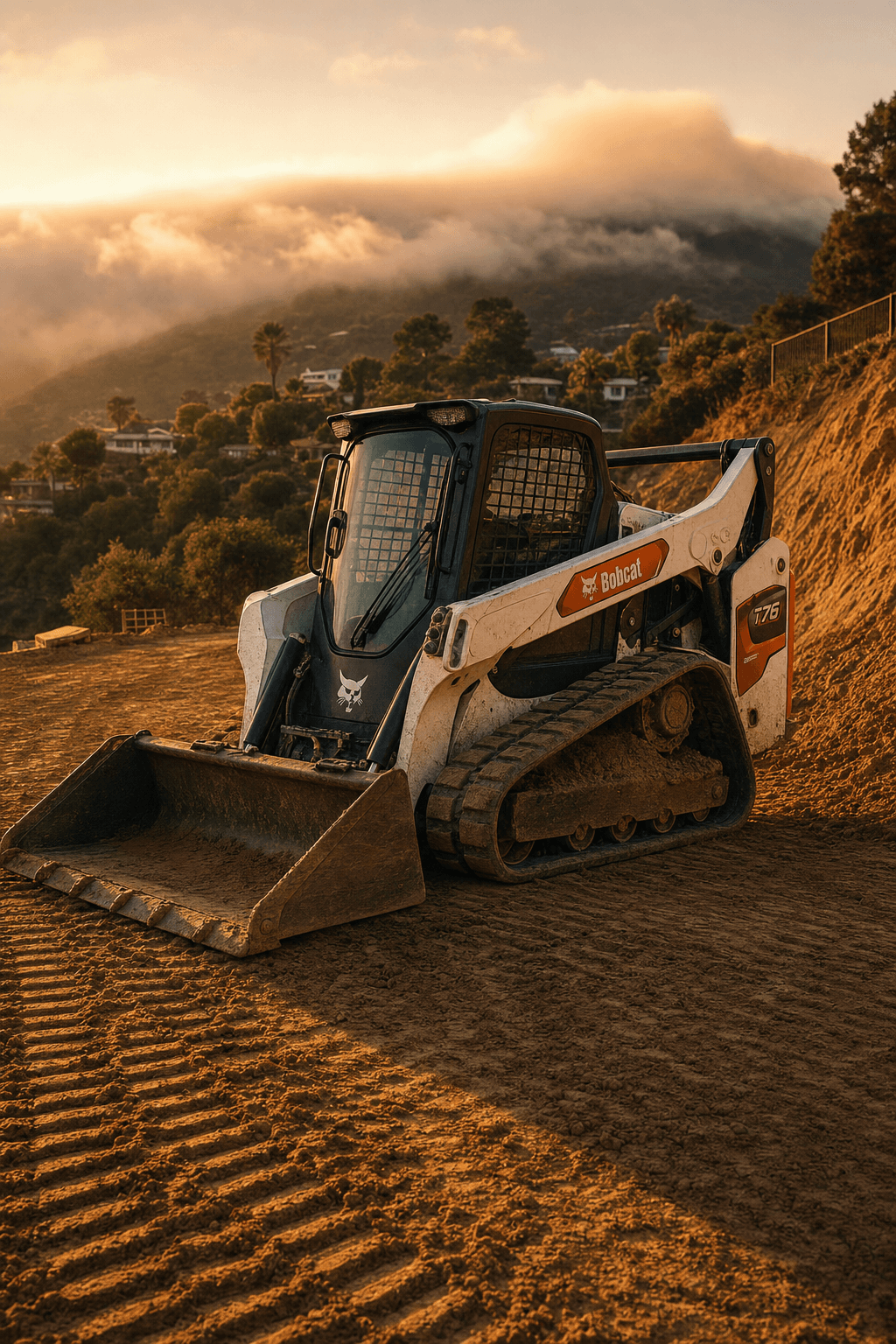
Achieving a consistent, specific grade in our region's dense clay soil is difficult with manual labor alone. We utilize expert Bobcat grading to handle the heavy excavation, ensuring the trench floor is stable and correctly pitched from the first inch to the last. These machines allow our team to perform utility trenching services with a level of precision that hand digging cannot match, especially when navigating the tight side yards common in coastal neighborhoods. This mechanical approach ensures that your Orange County drainage solutions function as a reliable, gravity-fed system that won't fail during the next heavy canyon storm.
French Drains vs Catch Basins vs Solid PVC: Which is Best for Roof Runoff?
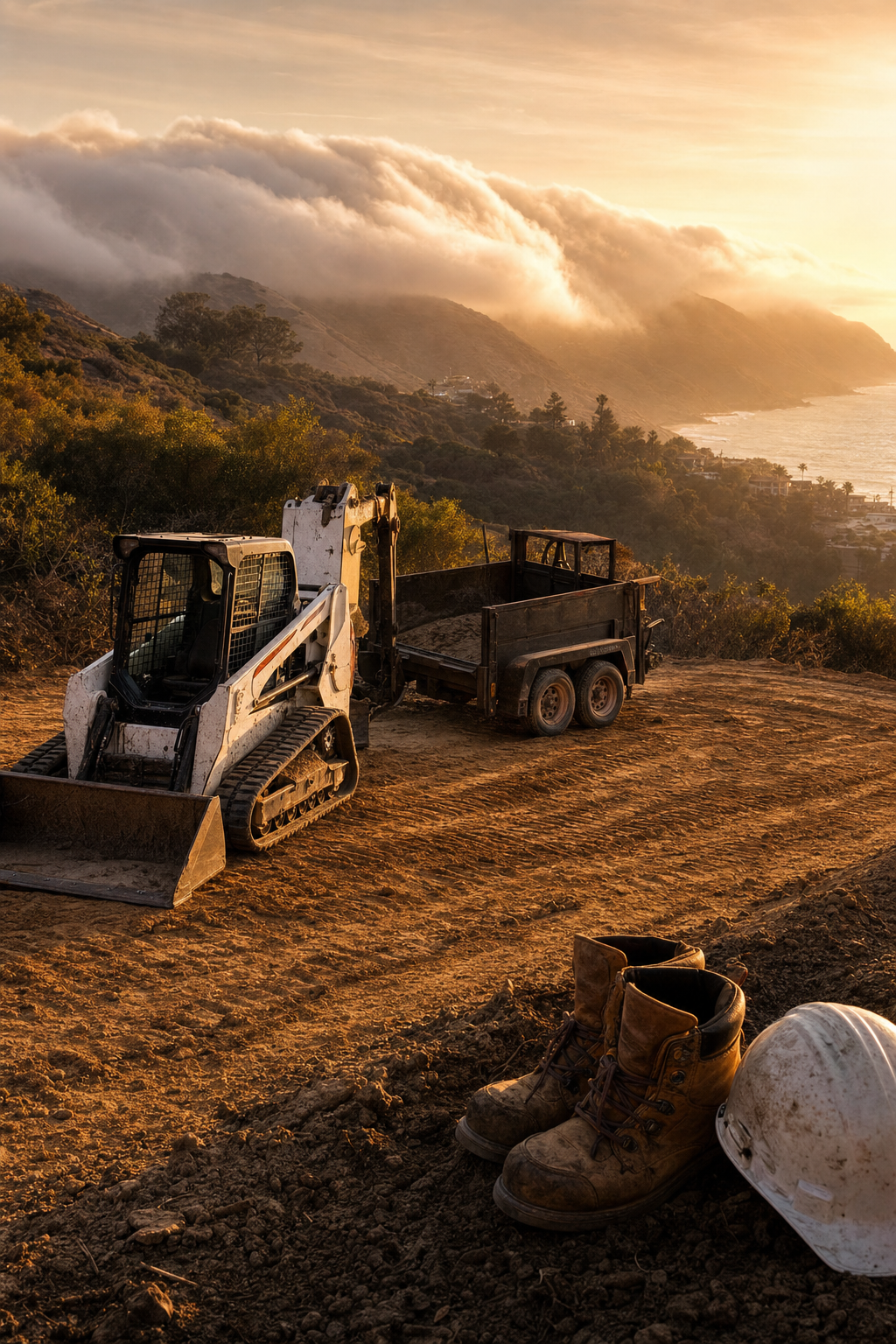
Maintaining a precise 1/4 inch per foot slope is only effective if the conduit used can sustain that grade over time. While various pipe types are available at local hardware stores, selecting the correct material is the most critical decision for long term foundation health. For a professional downspout drainage Orange County installation, we prioritize solid wall PVC over corrugated alternatives or French drain configurations.
Solid wall PVC, specifically SDR 35 or Schedule 40, is the gold standard for roof runoff because it is entirely watertight. Unlike a French drain, which utilizes perforated pipe designed to allow water to seep into the surrounding ground, a solid pipe ensures that every gallon collected from your gutters remains contained until it reaches the discharge point. In our region's expansive clay, a perforated pipe used for roof runoff would effectively inject water into the very soil you are trying to dry out. Additionally, the smooth interior walls of PVC prevent shingle grit and organic debris from snagging, whereas the ridges in flexible corrugated piping frequently trap silt and lead to stubborn clogs that are nearly impossible to snake out.
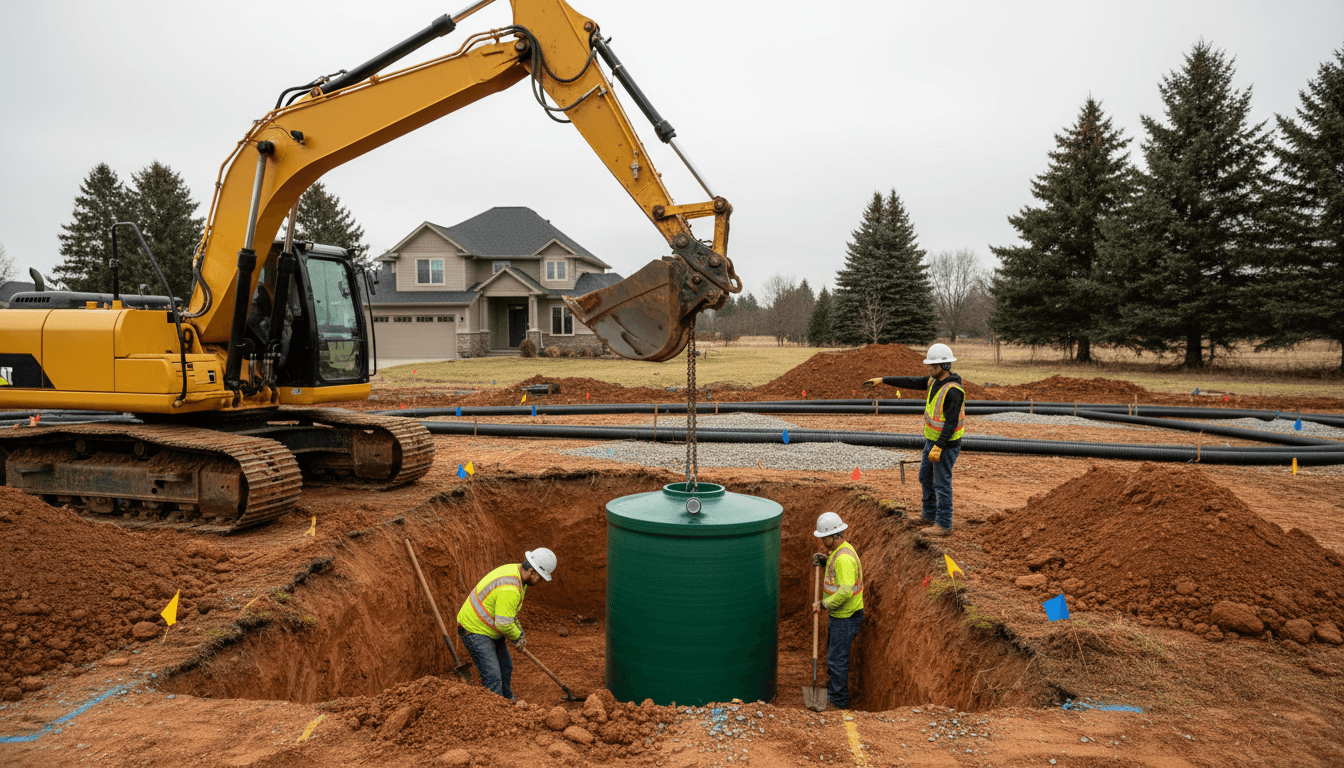
Integrating a catch basin at the transition point where the downspout meets the underground line adds a necessary layer of filtration. These basins act as a localized sump, allowing heavy sediment and debris to settle at the bottom of the tank rather than entering the horizontal drain line. This creates a convenient access point for maintenance, allowing homeowners to simply lift a grate and scoop out debris. Our team uses expert Bobcat grading to set these basins at the exact elevation needed to catch the downspout while remaining flush with your finished landscape.
System Type | Primary Function | Best Use Case | Risk for Roof Runoff |
|---|---|---|---|
Solid-Wall PVC | Transporting water long distances | Roof runoff and area drains | Minimal; high durability |
Catch Basin | Debris filtration and collection | Base of downspouts or low spots | Requires periodic cleaning |
French Drain | Lowering the water table | Saturated yards and hillsides | Saturates soil near foundation |
Corrugated Pipe | Low cost temporary drainage | Short term landscape fixes | Prone to crushing and clogs |
When we perform utility trenching services, we emphasize these rigid systems because they withstand the heavy pressure of Orange County clay. While a French drain is an excellent tool for Orange County drainage solutions involving soggy turf or rising water tables, it is fundamentally the wrong tool for managing high volume roof runoff near a building envelope.
Solving Hillside Drainage in Turtle Rock and Laguna Hills
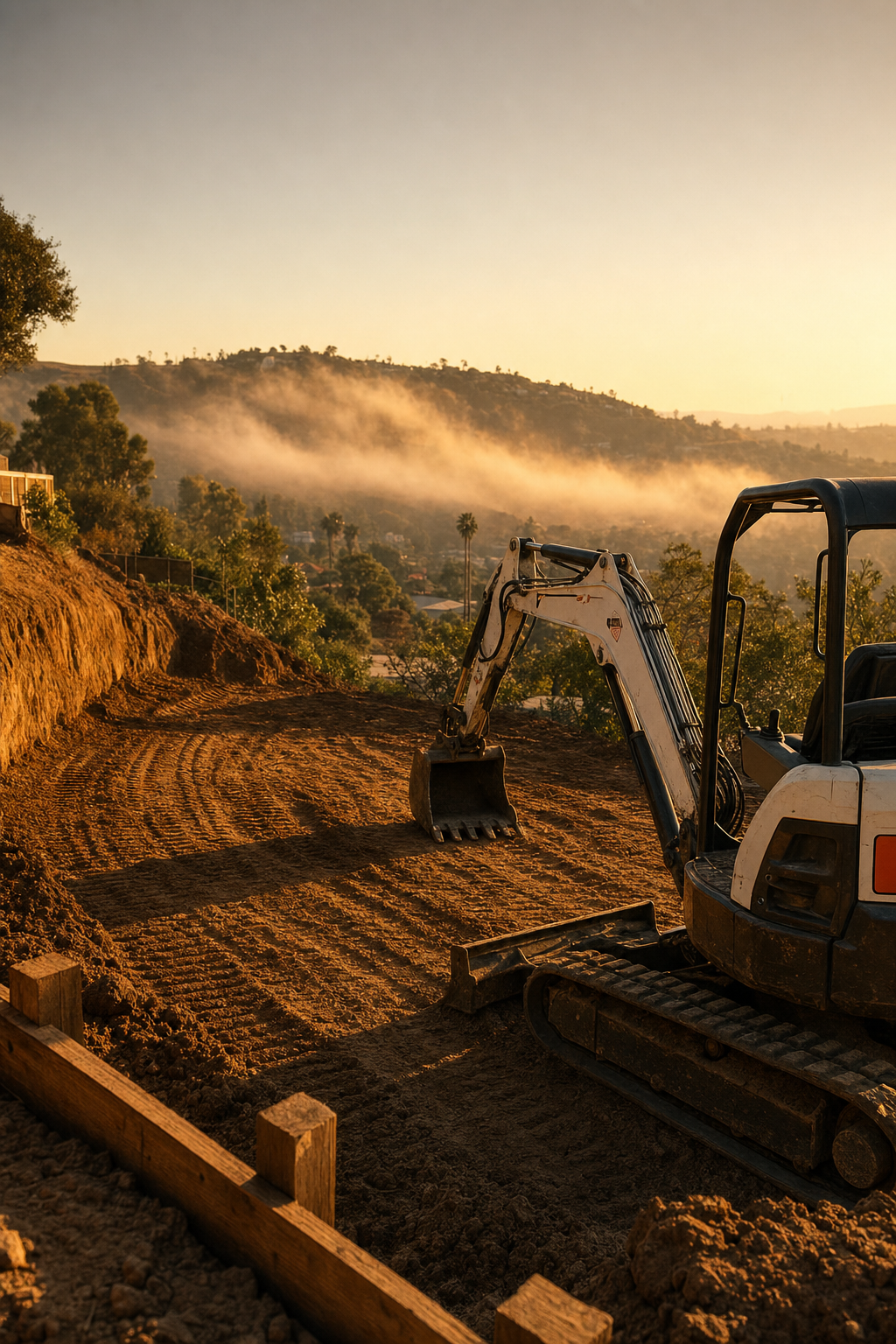
Managing water on the steep terrains of Turtle Rock, Laguna Hills, and the surrounding canyons requires a more aggressive approach than flat lot installations. In these elevated neighborhoods, improper downspout drainage Orange County does not just threaten foundations; it risks entire slope stability. Many hillside properties utilize terrace drains, the concrete V-ditches visible on slopes, and perforated subdrains hidden behind retaining walls. These components are designed to manage groundwater and surface runoff, but they can be easily overwhelmed if your roof's high-volume discharge is simply dumped at the top of a grade.
To prevent slope failure and erosion, we integrate buried downspouts into a cohesive site plan. This often involves utility trenching services to bypass terrace drains and carry water directly to the street curb or a municipal storm drain. In hilly areas like Mission Viejo or Anaheim Hills, using a dry well is generally discouraged. Concentrating water into a single underground pit on a hillside can lubricate soil layers, potentially leading to landslides. Instead, we use expert Bobcat grading to ensure pipes maintain a strict downhill trajectory to a safe termination point. By providing these specialized Orange County drainage solutions, we help homeowners maintain the structural integrity of both their residence and the land it sits upon.
Common Mistakes in DIY Downspout Burial
While protecting hillsides is complex, even flat-lot projects fail when homeowners underestimate the technical demands of excavation and material science. A frequent error in DIY installations is the use of thin-walled, flexible corrugated piping. Although inexpensive, this material lacks the structural integrity to withstand the relentless hydrostatic pressure of Orange County clay as it expands. Over time, the pipe often collapses or becomes severely misshapen under the weight of the soil, resulting in a blocked system that forces water back toward the foundation. Professional Orange County drainage solutions always favor rigid, heavy-duty PVC that maintains its shape and flow capacity regardless of soil movement.
Safety and precision are the other major hurdles for non-professionals. Failing to account for existing utility lines is a dangerous and costly oversight. Every project must begin with a "Call Before You Dig" to identify buried gas, electrical, or water lines, a critical step we integrate into our utility trenching services. Additionally, many DIYers fall into the "reverse slope" trap. Without professional surveying tools, it is easy to inadvertently create a low point in the middle of a pipe run where water stagnates and collects silt. We use expert Bobcat grading to ensure a consistent, non-wavering pitch. This level of site prep ensures the downspout drainage Orange County system carries runoff all the way to a legal termination point, such as a curb pop-out, rather than simply relocating the moisture to a different part of your yard.
Estimated Costs for Downspout Drainage Installation in Orange County
Investing in a professional system prevents five-figure foundation repairs, but understanding the immediate budget is essential for planning. While national averages for drainage work are often quoted lower, Southern California homeowners should expect costs between $12 and $25 per linear foot for a high-quality downspout drainage Orange County installation. This range accounts for the higher cost of premium materials like solid-wall PVC, specialized aggregate for bedding, and the rising fees for soil disposal at local facilities.
The primary factor driving these costs is the method of excavation. Homeowners often assume a general landscaper is the most affordable choice, but relying on manual labor in Orange County’s dense clay can actually inflate the final bill due to the sheer number of man-hours required. In contrast, hiring a specialist focused on Orange County drainage solutions is often more cost-effective. By utilizing expert Bobcat grading and dedicated dump trailers, we can complete utility trenching services with surgical precision in a fraction of the time. This mechanical efficiency reduces labor overhead and ensures the project is graded correctly the first time, providing a more reliable system at a competitive price point.
Installation Factor | Manual Labor (Generalist) | Mechanical Excavation (Specialist) |
|---|---|---|
Est. Cost per Foot | $20 - $35 | $12 - $25 |
Equipment Used | Shovels, pickaxes, manual trenchers | Bobcats, dump trailers, laser levels |
Speed of Completion | Slow; labor-intensive | Fast; high-efficiency |
Trench Consistency | Variable; prone to slope errors | Precise; machine-leveled grade |
Protecting your foundation through proper downspout drainage is an essential investment for any Orange County homeowner. By burying lines correctly, you can prevent soil erosion and maintain the structural integrity of your property for years to come. While some people choose to manage these projects independently, the technical requirements can sometimes be complex. If you would like expert assistance to ensure your system functions perfectly, our team is here to guide you. You can read more about us to see how our experience can benefit your next drainage project.