Standard utility trenching depths typically range from 18 to 24 inches for electrical conduits, while gas and water lines often require deeper placement to meet California building codes. Contractors must call 811 at least two working days before beginning any excavation projects to ensure compliance with local Orange County safety regulations.
Trenching seems simple until an inspector halts your project or a bucket teeth catch a live line. In Orange County, the difference between a compliant project and a costly violation often comes down to just a few inches of cover. Precision in utility burial depth is not a suggestion; it is a critical safety and regulatory requirement that protects your infrastructure from the shifting clay soils typical of our region. This guide provides a definitive look at the current California codes and specific local mandates for electrical, gas, and water lines. We will examine the specific burial requirements for different materials, explain the nuances of the joint trench rule, and share expert insights on managing the rocky terrain found throughout the Irvine and South County hillsides. You will leave with the clarity needed to ensure your next site work project meets every standard.
Why Precision Matters in Utility Trenching Depths
At Orange County Site Work Services, we have spent over 20 years providing excavation and trenching services throughout Laguna Beach and the surrounding coastal areas. Getting utility trenching depths right the first time is a matter of safety, long term utility protection, and legal compliance. While the National Electrical Code (NEC) provides a general foundation for these projects, California and Orange County often enforce specific local amendments that override generic national guidelines.
Precision is critical because shallow trenching introduces unnecessary hazards to a property. A line buried too close to the surface is vulnerable to damage from routine grading and site preparation or even simple residential landscaping projects. Even though frost heave is rarely a concern in our Mediterranean climate, soil shifting and heat expansion still pose risks to shallow lines. Accidental strikes from a shovel or a tiller can lead to catastrophic utility failure or injury. Professional execution ensures that every inch of cover meets the stringent requirements designed to keep these vital systems protected for decades. Adhering to these standards is also a key component of effective Orange County drainage solutions, as proper utility placement prevents interference with water management systems.
Summary of Standard Burial Depths for Underground Utilities
Standardizing utility trenching depths requires understanding the technical distinction between the trench floor and the "minimum cover." Minimum cover refers to the vertical distance from the top of the utility pipe or conduit to the final, finished grade of the soil. In Southern California, strictly adhering to these minimums ensures that subsequent grading and site preparation or routine landscaping does not compromise the underlying infrastructure.
Utility Type | Protection Method | Minimum Cover Requirement |
|---|---|---|
Electrical | Direct Burial Cable | 24 Inches |
Electrical | PVC (Rigid Non-Metallic) | 18 Inches |
Electrical | Rigid Metal Conduit | 6 Inches |
Natural Gas | Service/Secondary Lines | 18 to 24 Inches |
Potable Water | Residential Supply | 12 to 18 Inches |
Sewer / Waste | Gravity Flow Lines | Dictated by slope (minimum 12 inches) |
Direct burial cables lack the physical armor of a conduit, necessitating the deepest placement at 24 inches for safety. Conversely, rigid metal conduit offers significant structural protection, allowing for a shallower 6 inch burial in specific residential applications. For wet utilities like sewer lines, the starting depth is often a byproduct of the required "fall" needed for proper drainage. Our team utilizes specialized equipment to ensure every excavation and trenching services project accounts for these variables, preventing future utility strikes or code violations.
Electrical Conduit and Direct Burial Depth Requirements

Compliance with the California Electrical Code (CEC) ensures that high-voltage lines remain safely isolated from surface activity. The most common requirement for residential excavation and trenching services involves direct burial cables, such as Type UF, which lack a protective outer pipe. These must be placed at a minimum of 24 inches. This depth is standard when running power to distant landscape lighting or irrigation controllers where conduit is not utilized.
When we install rigid non-metallic conduit, such as Schedule 40 or 80 PVC, the requirement drops to 18 inches. This is the most frequent configuration for modern Orange County residential projects, including running power to a new detached Accessory Dwelling Unit (ADU) or a pool pump house. The PVC provides a physical barrier that allows for slightly shallower placement than exposed cable. For specialized scenarios where deep digging is physically impossible, rigid metal conduit (RMC) or intermediate metal conduit (IMC) allows for a 6-inch burial. However, RMC is typically reserved for short runs or specific architectural constraints because it is significantly more labor-intensive to install and thread.
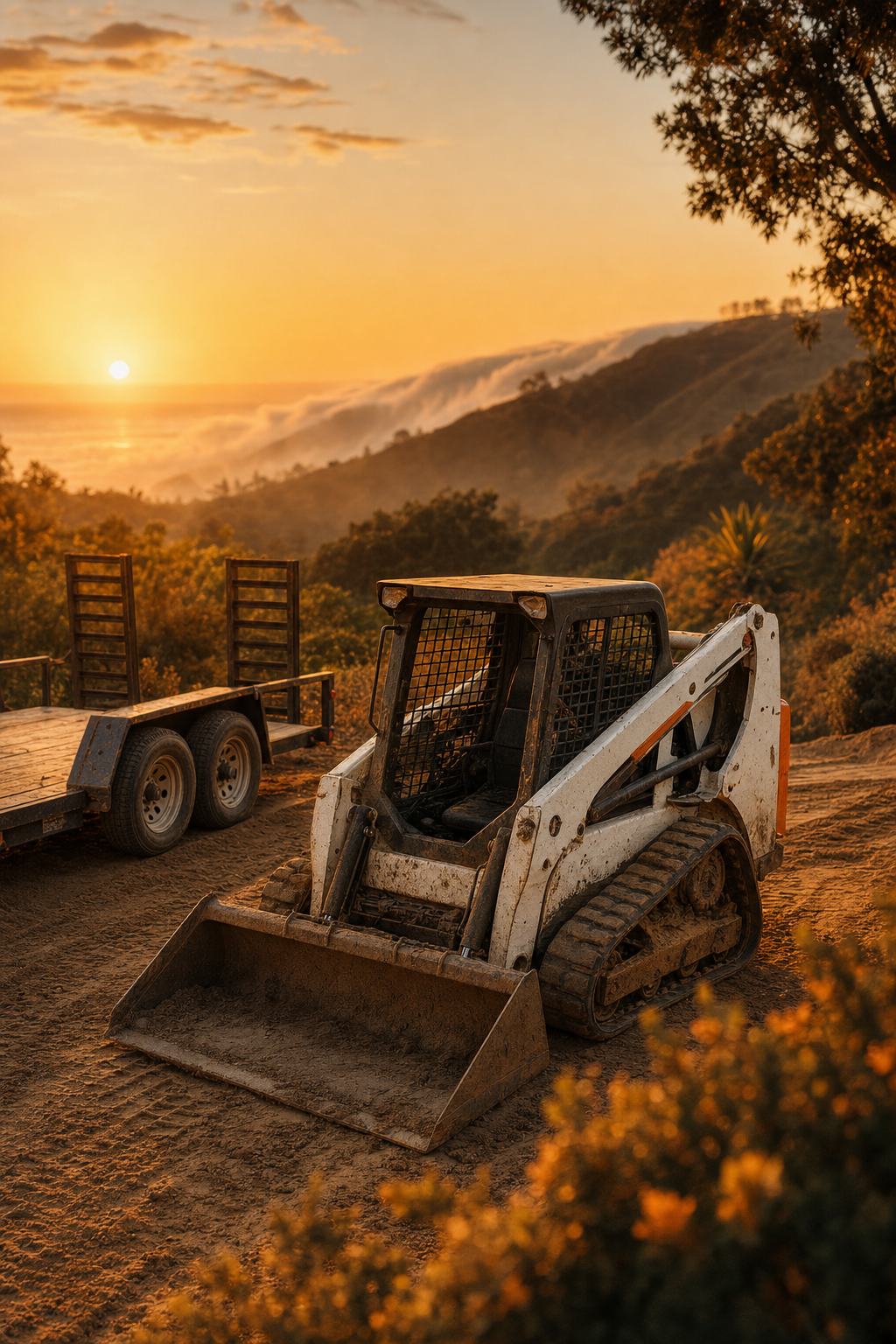
Achieving these exact utility trenching depths in the compact properties of Laguna Beach or Newport Coast requires specialized equipment. Hand digging 24 inches deep through compacted soil is rarely efficient or accurate. We utilize Bobcat machines equipped with narrow trenching attachments to maintain precise depth control in tight side yards. This precision prevents the line from being snagged during future grading and site preparation or while installing Orange County drainage solutions nearby. Maintaining a uniform floor at the correct depth is essential for preventing the conduit from sagging or stressing joints over time.
Natural Gas Line Burial Standards in Orange County
Gas line safety is a primary concern for any residential project, as a breach can lead to immediate hazards. In Orange County, the standard residential gas service line requires a minimum of 18 inches of cover. While this meets the baseline code, our team often recommends a 24 inch depth for added protection against future grading and site preparation or heavy landscape renovations. This extra buffer is particularly important for main service lines that connect the meter to the street, where soil pressure and foot traffic might be higher.
For secondary lines, such as those fueling outdoor kitchens, fire pits, or pool heaters, the 18 inch rule still applies. A critical detail often missed by DIY enthusiasts is the installation of a yellow 14 gauge tracer wire alongside non metallic piping. Since modern gas lines are typically made of high density polyethylene, they cannot be detected by standard locating equipment without this wire. We also install bright yellow warning tape approximately 12 inches above the pipe during the backfilling process. This provides a visual warning for anyone digging in the area later. Precise excavation and trenching services ensure these safety layers are positioned correctly, maintaining the necessary utility trenching depths while preventing interference with existing Orange County drainage solutions.
Water and Sewer Line Depth and Slope Specifications
Managing "wet utilities" requires a shift in strategy from simple depth requirements to hydraulic performance. For potable water lines, the California Plumbing Code mandates a 12 inch minimum cover. However, in our local experience across South Orange County, we typically install these lines at 18 to 24 inches. This deeper placement protects against the thermal expansion common in our sun-drenched coastal environment and provides a safety buffer during future grading and site preparation.
Sewer and waste lines operate on different principles. While they must maintain a minimum depth of 12 inches, their actual utility trenching depths are primarily governed by "fall," or the slope required for gravity flow. The standard requirement is 1/4 inch of drop per linear foot of pipe. For a long run from a backyard ADU to the main street connection, this can result in a significantly deeper trench at the discharge end. Precise calculation is necessary; if the slope is too shallow, solids will settle and cause blockages, while a slope that is too steep allows water to outrun the solids, leading to the same result.
The prevalent clay soil found in Laguna Beach and surrounding canyons adds another layer of complexity. Highly expansive clay exerts immense pressure as it hydrates and dries. Without proper bedding, such as a four inch layer of sand or fine gravel, pipes can shift or shear at the joints. Our excavation and trenching services include careful over-excavation to allow for this bedding material, which acts as a shock absorber for the pipe. This level of technical detail is as vital for sewer lines as it is for Orange County drainage solutions, ensuring the long-term integrity of the system despite the challenging local geology.
The Joint Trench Rule: Can You Mix Utilities in One Ditch?
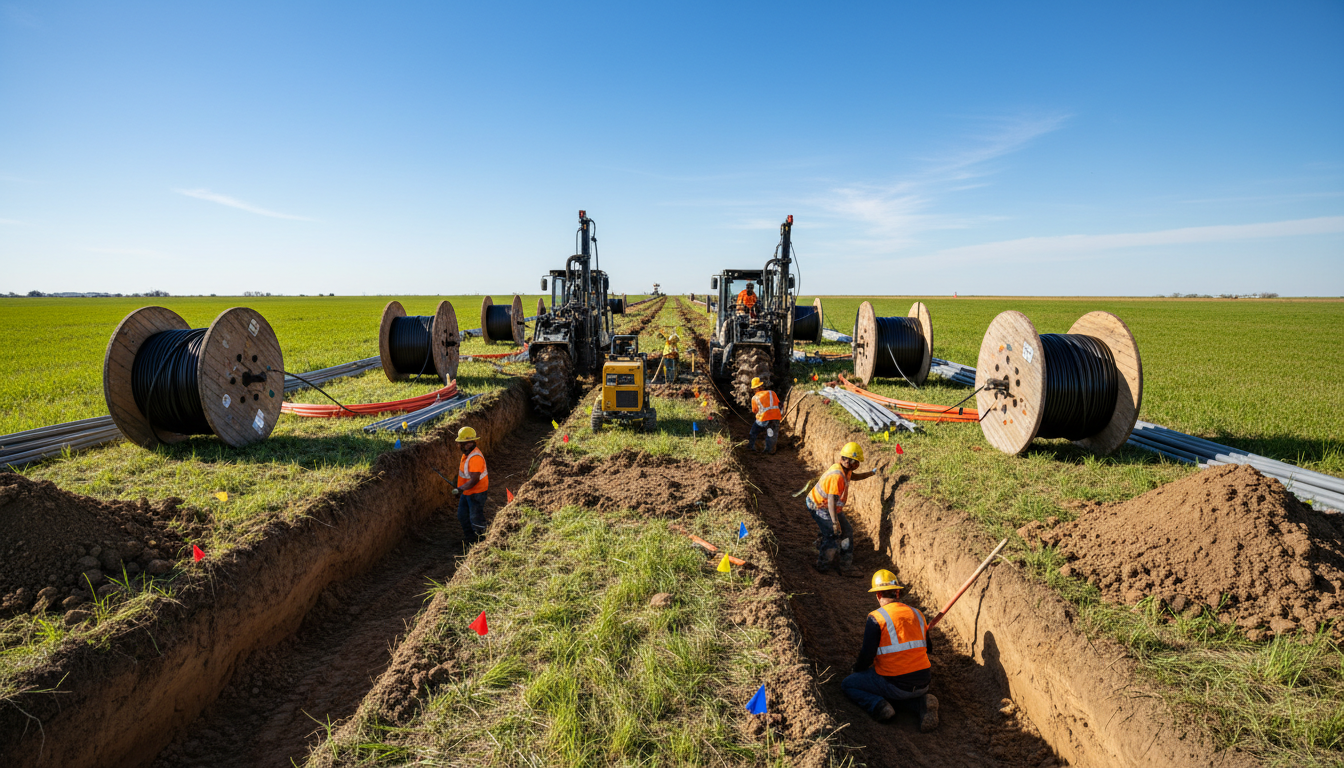
Efficiently managing space on a construction site often leads to the question of whether gas lines and electrical conduit can occupy the same ditch. The answer is yes, provided that specific horizontal and vertical separation requirements are met. This practice, known as a joint trench, is common in residential developments where easement space is limited. California utility providers generally require a minimum of 12 inches of horizontal separation between dry utilities, such as electrical and gas, and wet utilities, like potable water or sewer lines.
When mixing these services, we follow a strict hierarchy to prevent one utility from compromising another. The 5 4 3 2 1 rule is a standard contractor shorthand for maintaining a safe vertical stack. While actual burial depths vary by project, the order usually places the deepest lines, such as sewer and water, at the bottom, followed by gas, then electrical, and finally telecommunications at the shallowest level. Maintaining these distinct utility trenching depths within a single excavation prevents accidental damage during future maintenance. For example, if a gas line needs repair, a technician must be able to dig without immediately severing a communication cable or electrical line located directly above or beside it.
In the tight lots found in Laguna Beach, professional excavation and trenching services must account for these clearances carefully. Mixing water and electrical in the same trench is permissible, but we often ensure the water line is separated by a 12 inch horizontal bench or shelf to prevent leaks from undermining the electrical conduit bedding. This structured approach is also vital for property owners planning grading and site preparation or new Orange County drainage solutions, as it provides a predictable map of where high risk utilities are located throughout the property.
Navigating Orange County Clay Soil and Rocky Terrain
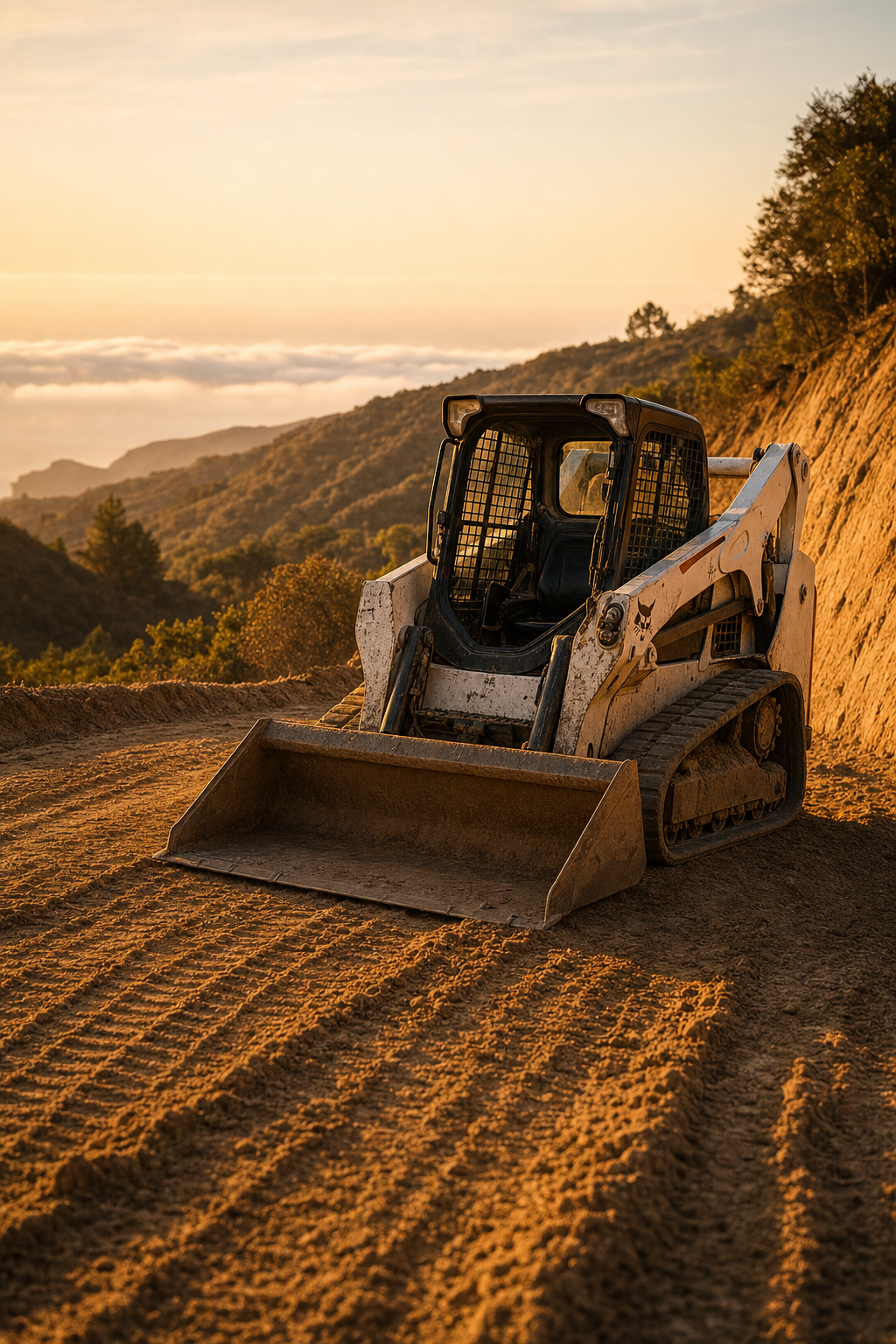
The geological landscape of Laguna Beach, Newport Coast, and the surrounding Canyons presents unique challenges for underground infrastructure. This region is predominantly characterized by expansive clay, often classified as Type A soil. These soils undergo significant volume changes, expanding when saturated and shrinking during our dry summer months. Such movement creates a volatile environment for buried pipes, where excessive pressure can lead to joint failure or lateral shearing. Maintaining consistent utility trenching depths in these conditions requires more than just meeting a code minimum; it requires a strategy to stabilize the pipe environment.
To mitigate the risks of expansive soil, we utilize specific bedding techniques during excavation and trenching services. We over-excavate the trench to provide space for a four inch foundation of sand or fine gravel. This bedding acts as a buffer, distributing soil pressure evenly and allowing for minor ground movement without compromising the utility. In the rocky terrain typical of the Canyons, manual digging is frequently insufficient. We deploy Bobcat equipment equipped with specialized rock teeth or hydraulic trenching attachments to navigate through compacted strata and hidden boulders. This mechanical precision ensures that the trench floor remains level, providing a stable base that complements future grading and site preparation and protects the integrity of nearby Orange County drainage solutions.