Retaining wall site preparation Orange County grading drainage prevents structural failure by mitigating hydrostatic pressure and ensuring a stable, level foundation for the masonry. These procedures are critical for managing local soil conditions and directing water runoff away from the structure to maintain long-term stability.
Many Orange County property owners invest significant capital in beautiful masonry only to watch their retaining walls lean, crack, or fail entirely after a single heavy rain season. These costly structural issues rarely stem from the quality of the stone or block itself; instead, they are almost always the result of poor site preparation and neglected drainage. In our local landscape, where hillside stability and expansive soils are constant challenges, the long term success of your project depends entirely on the precision of your initial grading. This article provides a comprehensive look at the technical requirements for a lasting installation. You will learn about managing hydrostatic pressure, the critical role of excavation standards, and the specific grading protocols necessary to navigate Orange County building permits while ensuring your wall stands the test of time.
The Foundation of Every Successful Retaining Wall
While the finishing stone or decorative blocks of a retaining wall capture the eye, they are merely the skin of the structure. The actual success of the build depends on the invisible elements: the comprehensive earthwork and grading occurring beneath the surface and behind the wall. Professional retaining wall site preparation Orange County grading drainage experts understand that a wall is only as stable as the soil supporting it.
Effective site preparation is a multi-step process that begins with precise excavation and soil testing. In Orange County, soil conditions vary wildly within just a few miles. Homeowners in Laguna Beach often contend with sandy coastal soils that lack cohesion and shift easily under load. Conversely, projects further inland frequently encounter expansive clay, which swells when wet and shrinks when dry, exerting immense pressure on a wall's base. At Orange County Site Work Services, we leverage about our 20 years of experience to identify these specific geological challenges before the first block is ever set.
Proper site preparation involves more than moving dirt. It requires a strategic approach to:
Excavation: Removing organic material and unstable topsoil to reach a load-bearing surface.
Soil Testing: Determining the weight-bearing capacity and moisture retention of the native earth.
Grading: Sculpting the surrounding terrain to direct runoff away from the structure.
Failure to address these foundational components is the leading reason why walls lean, crack, or eventually fail. By focusing on the bones of the project, we ensure the structural integrity of the project matches its visual appeal. This technical preparation sets the stage for the grading work required on the region's many sloped properties.
Hillside Lot Preparation and the Role of Grading
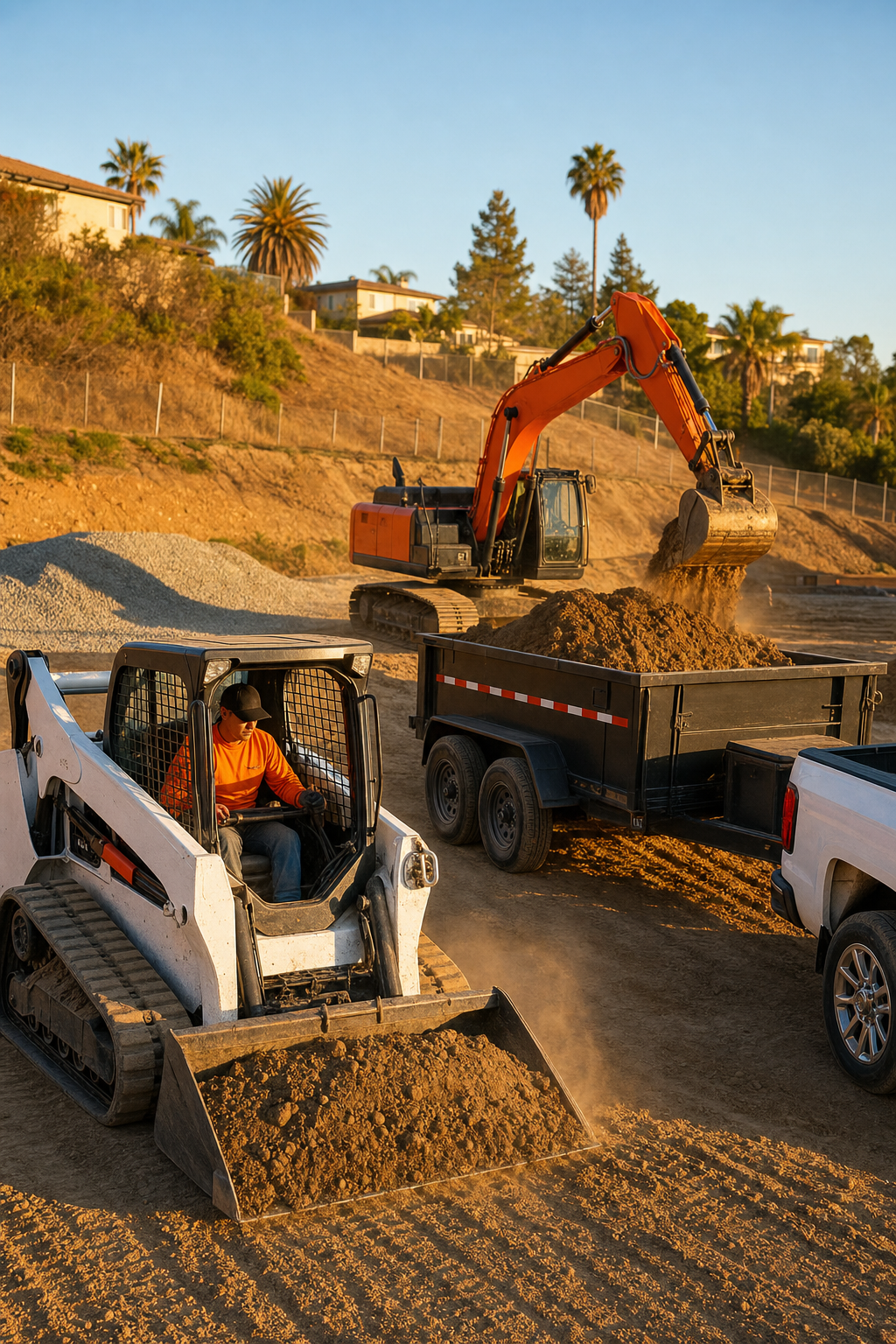
Hillside developments in regions like Laguna Beach and the surrounding canyons present unique structural demands that flat lots simply do not. When working on a slope, the objective of comprehensive earthwork and grading is to stabilize the hillside before the first retaining block is ever placed. According to the Orange County Grading Manual, specific standards apply when slopes are modified; notably, a vertical height threshold of 3 feet for cuts or fills often triggers the need for precise engineering and specialized permits. This standard exists because improperly managed slopes can lead to mass wasting or catastrophic soil failure during heavy rain events.
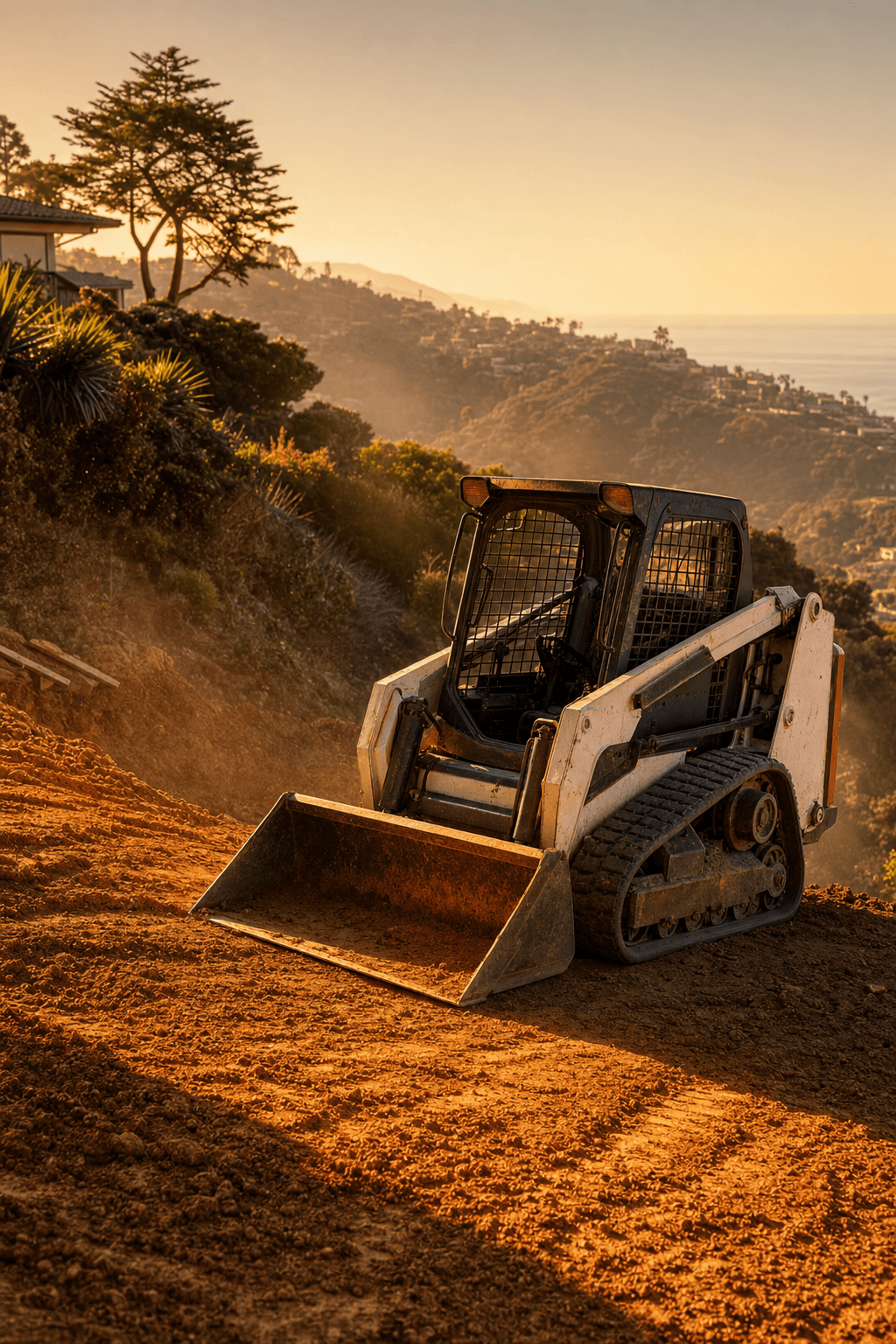
Effective hillside preparation utilizes cut and fill grading techniques to reshape the land. We carefully remove soil from the cut side of the slope and use it to build up the fill area, ensuring that all fill material is compacted to specific density standards to prevent future settling. This process creates a stable bench or terrace for the structure. It is critical to key the wall into the natural ground, which is the undisturbed, stable earth beneath the surface layer of topsoil. By anchoring the structure into this natural ground, we ensure that the weight of the slope is properly distributed rather than simply leaning against the new wall.
Beyond structural stability, grading on a hillside serves as the first line of defense against erosion. By sculpting the land to divert surface water away from the face of the wall, we reduce the volume of moisture that saturates the backfill. When managing a hillside project, the retaining wall site preparation Orange County grading drainage experts perform must account for the surcharge, which is the extra pressure exerted by the sloping earth above the structure. This proactive approach to specialized drainage services ensures that the soil remains cohesive. At Orange County Site Work Services, we apply about our 20 years of experience to evaluate the slope angle and soil type, determining the exact volume of earth that must be moved to create a safe, level build site.
The Critical Importance of Drainage and Hydrostatic Pressure
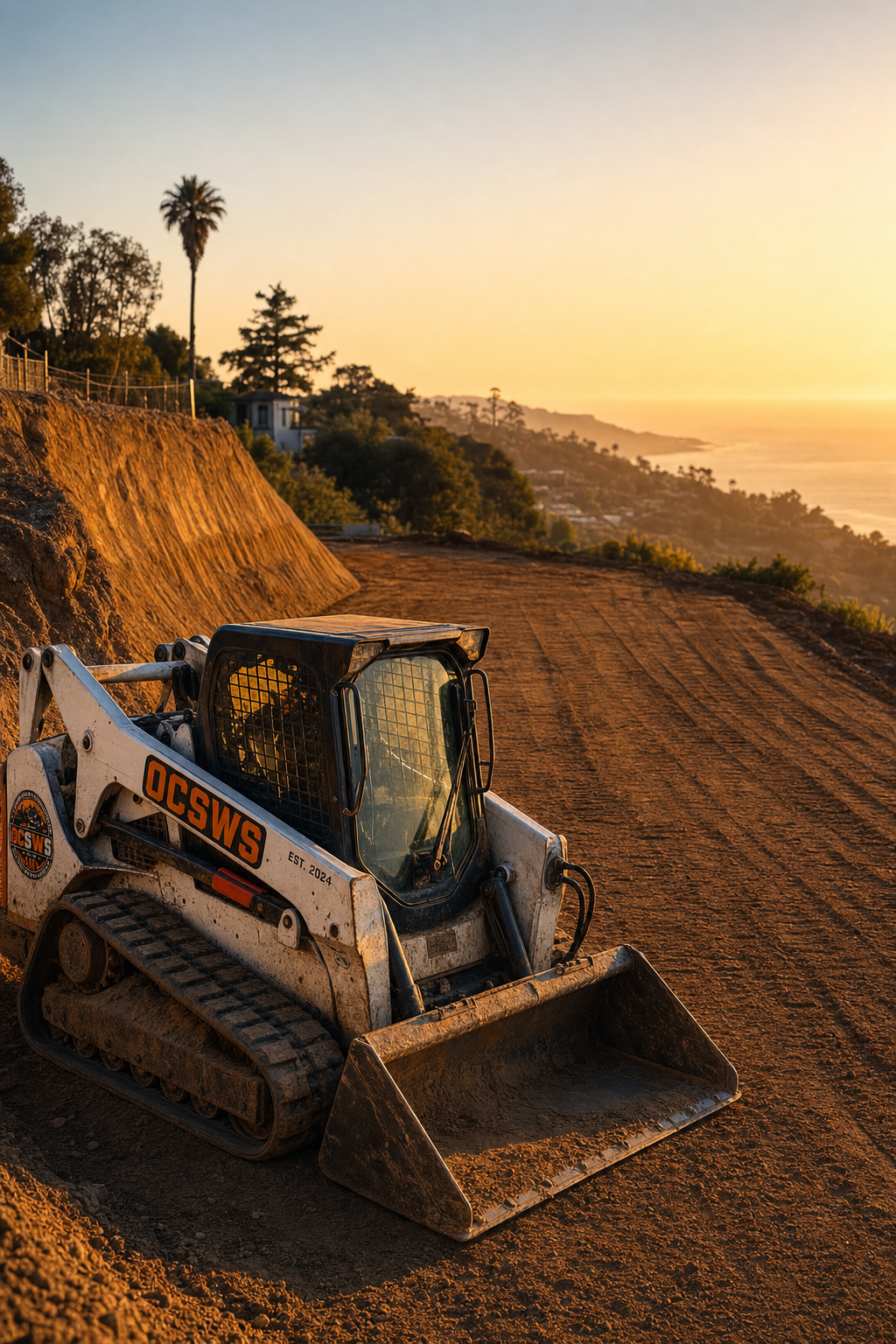
Even the most precisely graded hillside will eventually fail if the site work does not account for the weight of trapped water. The number one cause of retaining wall failure is poor drainage, which leads to a phenomenon known as hydrostatic pressure. When groundwater or rain runoff saturates the soil behind a wall, that water exerts a massive amount of lateral force. Unlike soil, which has some internal friction to hold itself together, water is heavy and pushes outward with immense power. Without a way to escape, this pressure can easily exceed the structural limits of even a heavily reinforced wall, causing it to buckle, tilt, or collapse entirely.
To combat this, we implement specialized drainage services that go beyond surface level solutions. A professional drainage system consists of several integrated components designed to relieve this pressure before it builds up. The process begins with the installation of a French drain, which is a perforated pipe placed at the bottom of the wall footing. This pipe is surrounded by a substantial layer of clean drainage rock backfill. We typically use angular, crushed stone rather than rounded river rock because it provides more voids for water to move through while maintaining better structural stability for the soil above.
Local building codes recognize these risks and mandate specific preventative measures. For instance, Dana Point building standards for wall drainage provisions require specific measures to ensure that water is diverted away from the wall foundation to prevent saturated footings. These standards often dictate the use of filter fabric to prevent fine silt from clogging the drainage rock, as well as the strategic placement of weep holes. Weep holes are small openings through the face of the wall that allow any water trapped in the drainage zone to exit freely if the main pipe is overwhelmed.
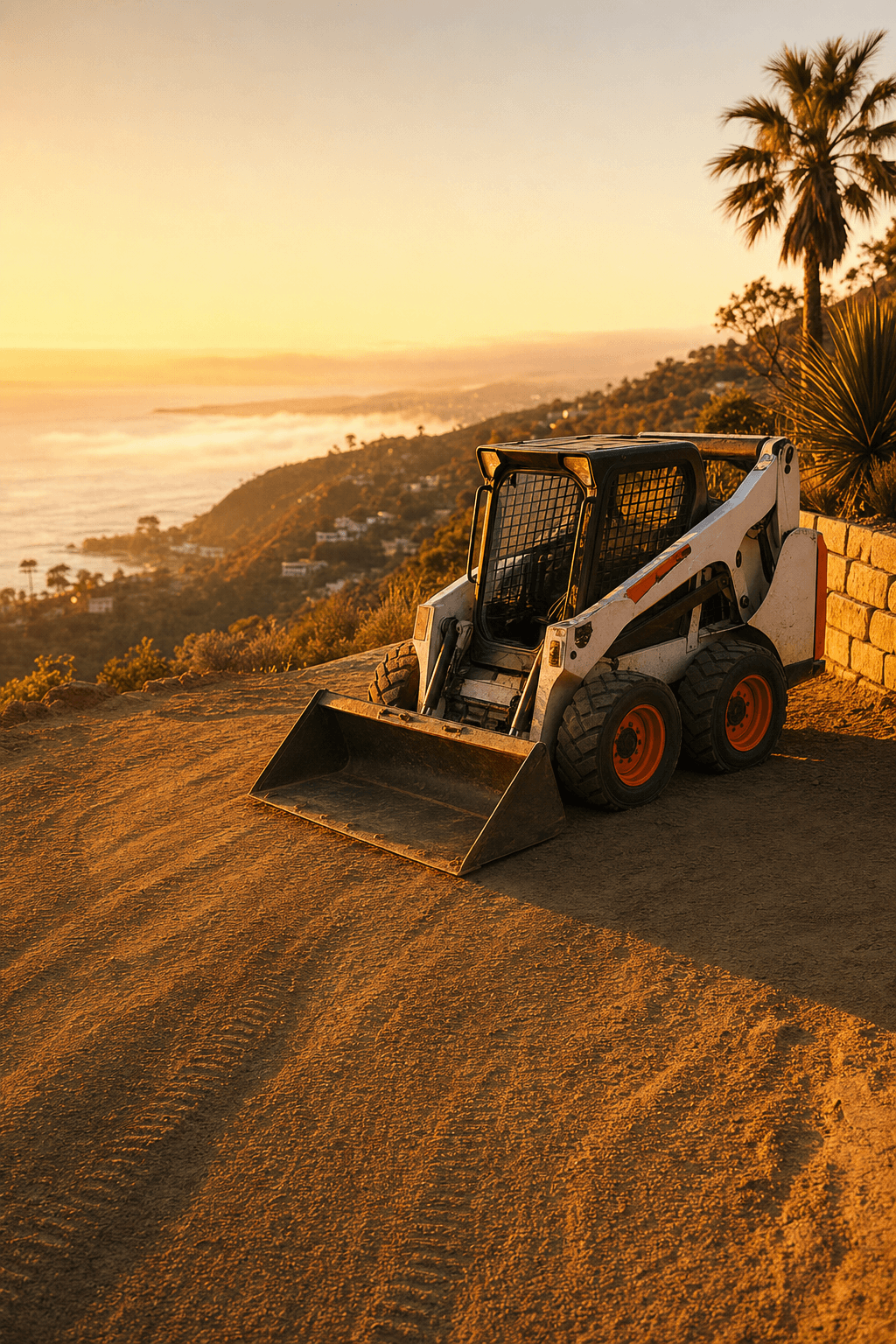
Managing these materials requires the right equipment and a team oriented approach. At Orange County Site Work Services, we utilize our Bobcats and dump trailers to excavate the necessary drainage trenches and haul in the large volumes of gravel required for effective comprehensive earthwork and grading. With about our 20 years of experience, we have learned that cutting corners on drainage is never an option. Proper retaining wall site preparation Orange County grading drainage ensures that water has a clear, unobstructed path to a safe outlet, protecting the longevity of the structure against the heavy rains that occasionally sweep through our coastal canyons.
Common Retaining Wall Drainage Mistakes to Avoid
Even with high quality materials, improper installation techniques can lead to early structural failure. One of the most frequent errors we see involves using native soil as backfill. While it is tempting to reuse the dirt excavated from the site, many Orange County soils contain high concentrations of clay. These materials retain moisture and expand significantly when wet, which creates the very hydrostatic pressure the wall is meant to resist. At Orange County Site Work Services, we emphasize comprehensive earthwork and grading that replaces this native earth with clean, angular drainage rock to ensure water moves freely.
Another critical oversight is the omission of filter fabric. Without a geotextile barrier between the soil and the drainage stone, fine particles eventually migrate into the gravel and clog the perforated pipe. This process turns a functional drainage system into a solid block of mud over time. Our specialized drainage services ensure that every layer is protected to maintain long term water flow.
Finally, improper outlet placement can render the entire system useless. Drainage pipes must have a clear path to daylight or be integrated into a municipal storm system. Terminating a pipe too close to the wall footing or in a low spot on the property causes water to pool, saturating the foundation. With about our 20 years of experience, we have refined our retaining wall site preparation Orange County grading drainage protocols to ensure water is not just collected, but effectively moved off the property. This attention to detail prevents the base from shifting, a topic closely related to how deep a wall must be set.
Excavation and the One Third Rule for Wall Stability
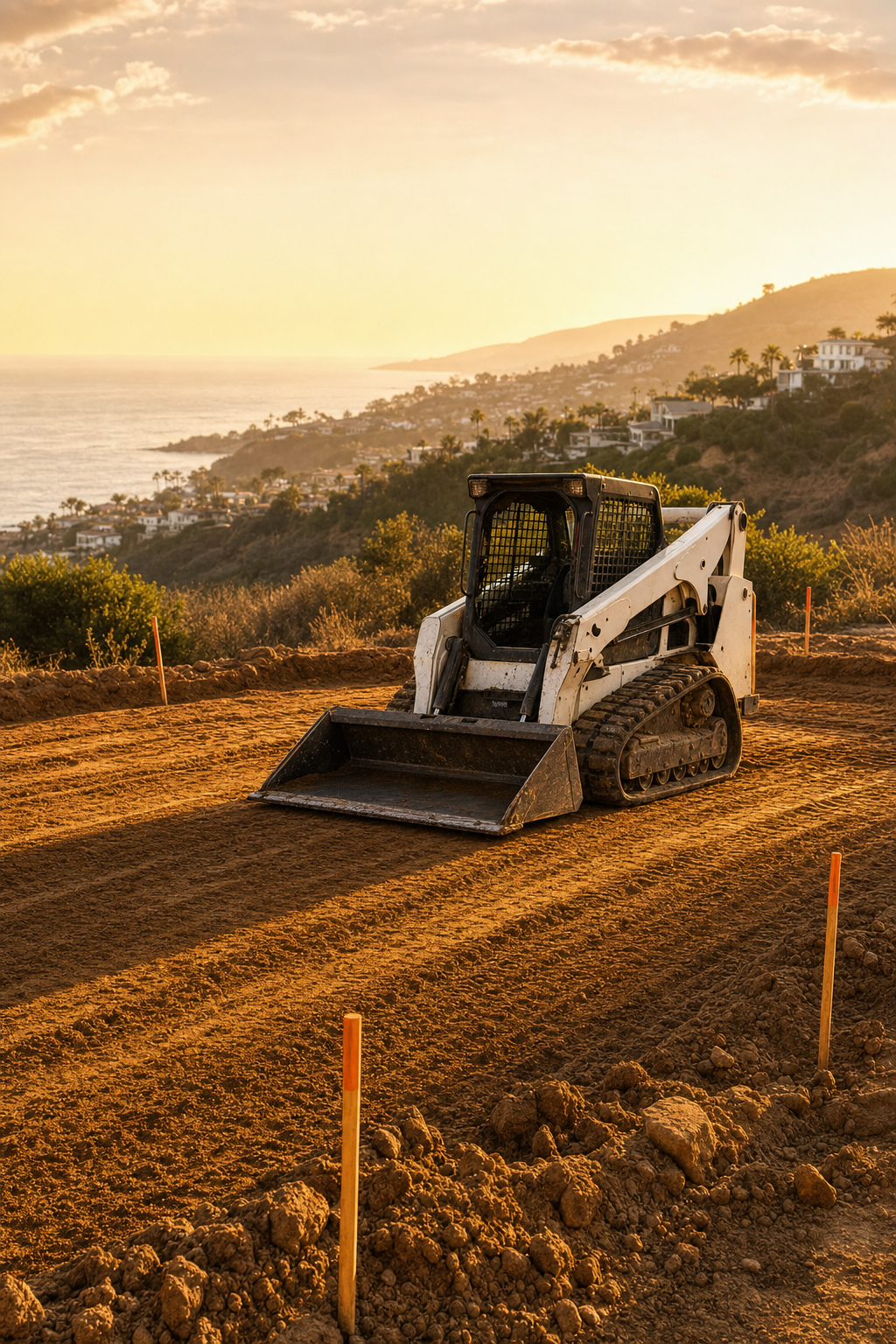
The physical stability of a retaining wall is determined by its relationship with the ground it occupies. Even with perfect drainage, a wall built entirely on top of the soil is prone to structural failure. This is why we adhere to the one third rule of wall stability. This technical principle dictates that for a gravity wall to remain secure, a significant portion of its total height, often up to one third, should be buried below the finished grade. This embedment creates a pivot point that prevents the base of the wall from kicking out under the lateral weight of the soil it retains.
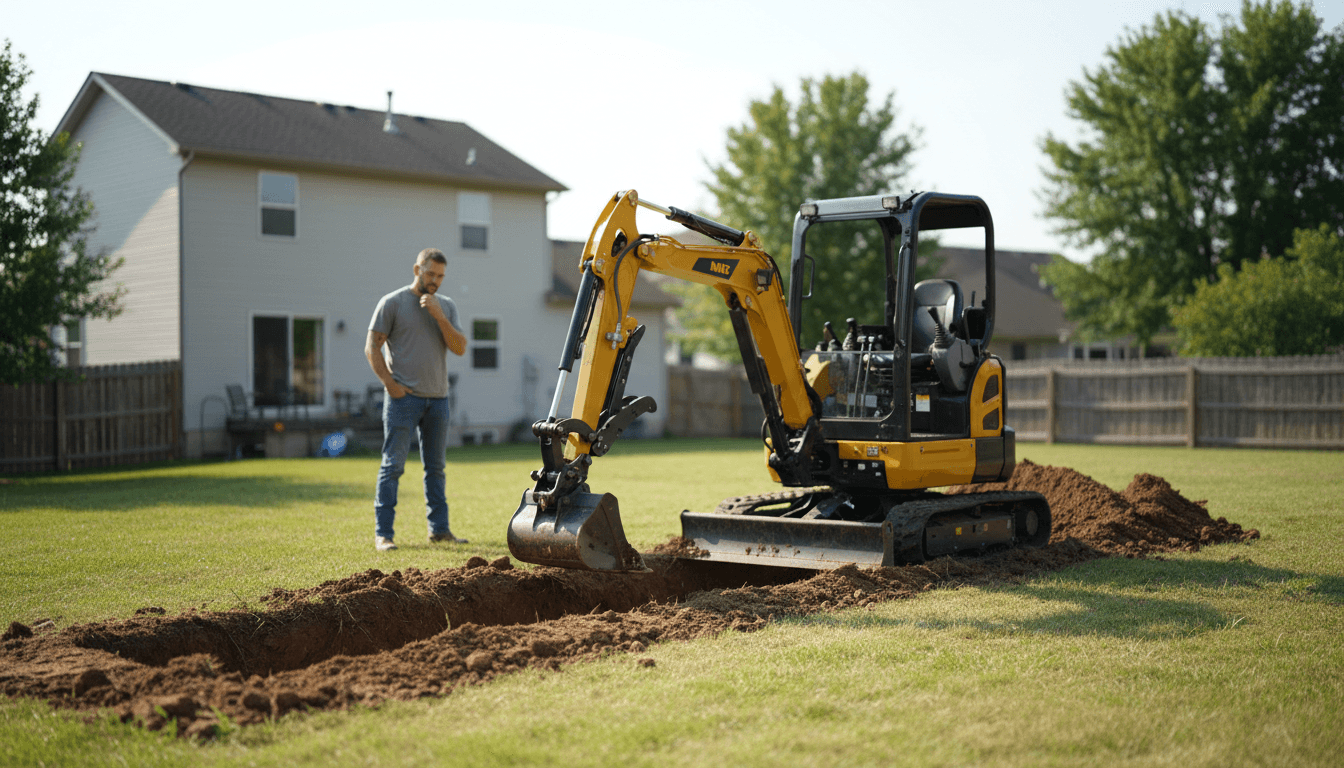
Achieving this depth requires precise excavation. In many Orange County residential neighborhoods, particularly in the hillside lots of Laguna Beach, space is at a premium. We utilize specialized equipment, such as Bobcats and compact excavators, to perform comprehensive earthwork and grading in tight access areas where larger machinery cannot maneuver. This allows us to dig a clean, level trench to the exact specifications required by the wall’s height and load, while also carving out the necessary paths for specialized drainage services.
Once the trench is excavated, the focus shifts to the sub-base. We never place wall materials directly onto native soil. Instead, we install a thick, compacted sub-base of crushed stone or angular gravel. This layer acts as a bridge, distributing the wall's weight evenly to prevent differential settling, which is a major cause of unsightly cracking. Drawing on about our 20 years of experience, we understand that retaining wall site preparation Orange County grading drainage relies on this hidden foundation. A properly compacted base, combined with correct embedment depth, ensures the structure remains vertically aligned despite the region's geological stresses.
Navigating Orange County Retaining Wall Permits and Standards
Stability achieved through precise excavation and burial must also align with local legal standards to ensure long term safety. In Orange County, the general rule is that any wall exceeding 4 feet in height, measured from the bottom of the footing to the top of the wall, requires a formal permit from the building department or OC Public Works. However, this threshold often drops if the wall supports a surcharge. A surcharge refers to any additional weight placed above the wall, such as a driveway, a swimming pool, or a steep slope. Even a shorter wall may require engineering and permitting if it is critical to the structural integrity of the property or sits near a property line.
The OC Public Works Grading Manual serves as the primary reference for these standards. It mandates that comprehensive earthwork and grading be documented and performed to specific tolerances. Because Orange County is located in a high seismic zone, these permits are not just bureaucratic hurdles; they ensure the wall includes the necessary steel reinforcement and footing dimensions to withstand ground movement during an earthquake.
Site work and grading must be part of the permitted plan rather than an afterthought. A professional submittal must detail how specialized drainage services will manage water flow to prevent erosion on neighboring lots. Utilizing about our 20 years of experience, we ensure that every phase of retaining wall site preparation Orange County grading drainage meets these rigorous local codes. Properly permitted site work protects the property owner from liability and ensures the structure is recognized as a safe, legal improvement to the land.
The Site Work Advantage: Why Professional Grading Matters
Choosing the right team for the initial phase of construction determines if a wall stands for decades or fails after the first heavy rain. A general handyman often lacks the heavy equipment required to move tons of earth or the technical knowledge to manage soil compaction. Professional comprehensive earthwork and grading requires specialized machinery like Bobcats for precision trenching and dump trailers for efficient hauling of export materials. These tools allow us to achieve a level of compaction and depth that manual labor simply cannot match.
During retaining wall site preparation Orange County grading drainage becomes a heavy lifting task rather than a landscaping chore. We focus on the "bones" of the project, ensuring the sub-grade is stable and the drainage lines are pitched correctly to move water away from the foundation. While a generalist might focus on the aesthetic placement of blocks, our team prioritizes the subterranean elements that prevent the wall from bowing or sinking. With about our 20 years of experience, we recognize that the final structure is only as reliable as the earth it sits on. By providing specialized drainage services and expert grading, we provide a stable platform that allows masonry and landscaping teams to do their best work on a foundation that will not shift.
A stable retaining wall begins long before the first stone is placed. Proper site preparation and precise grading are the silent guardians of your landscape; they protect your property from erosion and structural failure. While understanding these fundamentals is a great first step, successful execution requires specialized equipment and local expertise. If you want expert help navigating the complexities of your next project, you can learn more about our commitment to quality craftsmanship. Our team ensures every foundation is built to last.