Effective yard grading and drainage solves clay soil water issues by sloping the ground at least one inch per foot away from foundations to prevent pooling. Combining this surface leveling with subsurface solutions like French drains ensures runoff moves efficiently and protects properties from saturation; this comprehensive approach addresses the root cause of landscape flooding. This strategy is essential for managing dense soils and maintaining structural integrity across Orange County lots.
In Orange County, heavy rain often leaves homeowners battling stagnant pools and soggy turf that refuses to dry. This standing water is more than a nuisance; it often indicates a failure in the landscape's underlying structure, specifically caused by our region's dense clay soil. Proper site preparation and precise grading are the only permanent remedies to protect your foundation and preserve your outdoor living space. Simply smoothing out the surface is rarely enough to fix deep-seated drainage issues. In this guide, we will explore why local soil holds water so stubbornly and how professional grading techniques address the problem at its source. You will learn about specialized equipment like Bobcat loaders, the optimal timing for regrading projects, and what to expect regarding costs for a professionally engineered solution.
The Orange County Clay Challenge: Why Your Yard Holds Water
Orange County homeowners often face a unique geological hurdle that dictates how their property handles water. From the flatlands of Irvine to the rolling slopes of Laguna Hills, much of our region is built on heavy, expansive clay soil. Unlike the sandy or loamy soils found in some coastal stretches or river valleys, clay consists of incredibly fine particles that pack together tightly. This creates a dense, nearly impermeable layer that functions more like a waterproof barrier than a natural filter.
When it rains, even during a light Southern California drizzle, the surface of this soil quickly saturates and seals shut. Once this happens, water has nowhere to go but up, resulting in persistent puddles that can sit for days. This saturation is particularly problematic in areas like Laguna Beach or the local canyons, where unmanaged runoff can lead to soil instability. Effective yard grading and drainage requires a strategy that accounts for this hardpan reality. Simply leveling a lot often creates a stagnant pool; instead, comprehensive earthwork and grading must work in tandem to create a directed path for water. At Orange County Site Work Services, we understand that managing clay requires both surface sculpting and subsurface relief to ensure your yard remains functional and dry.
Understanding Yard Grading and Drainage: More Than Just Leveling Dirt
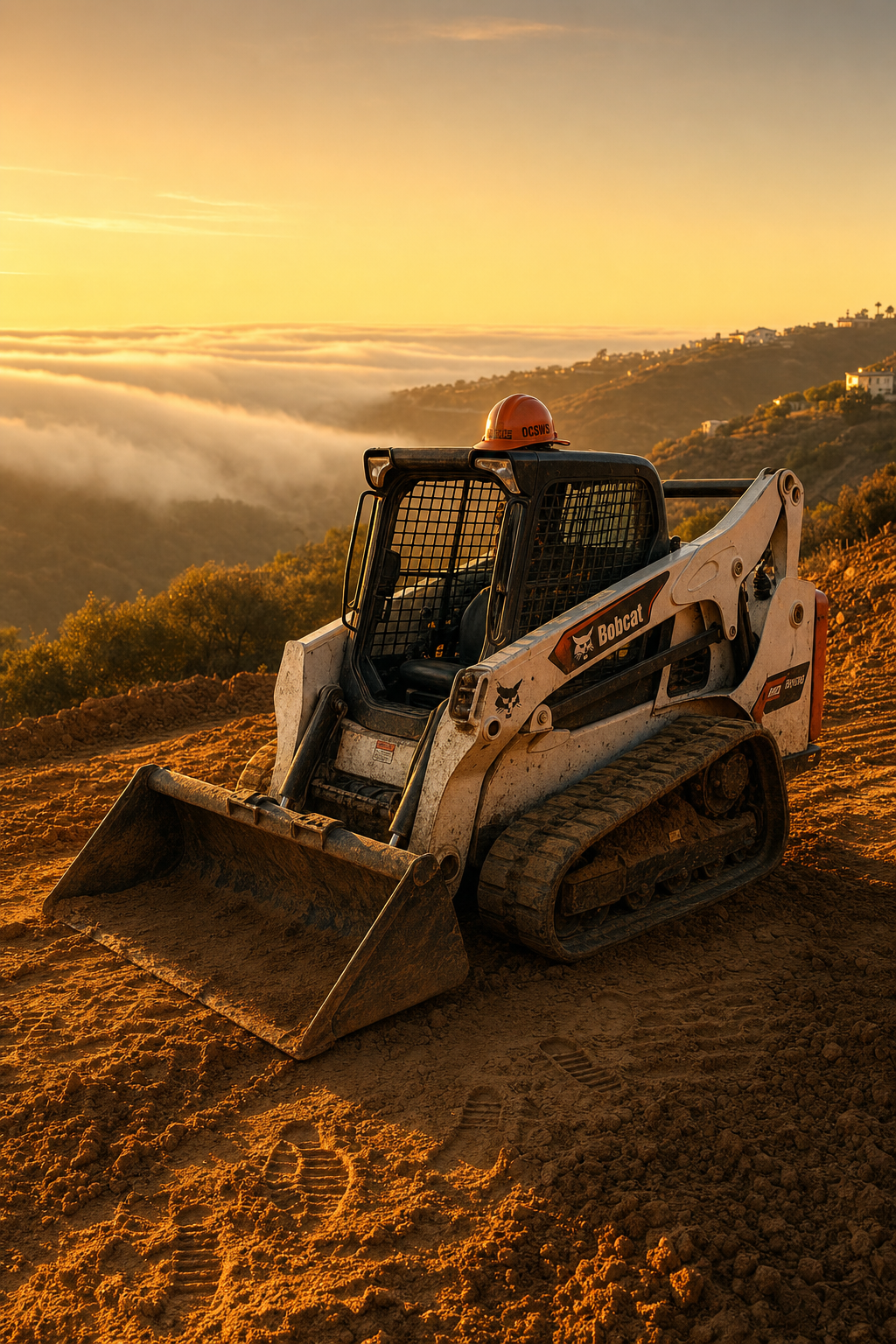
Building on the reality of clay soil, successful yard grading and drainage is often misunderstood as simply making a property flat. In the professional site work field, grading is the process of sculpting the land to create a deliberate and functional slope. A perfectly level yard is actually a liability in Southern California. Without a calculated pitch, water remains stationary or, worse, migrates toward the structure, where it can cause long term damage.
To ensure the safety of a home, site work must adhere to the International Residential Code (IRC) R401.3. This standard requires the ground to slope away from the foundation walls with a minimum 6 inch fall within the first 10 feet. On many local residential lots, we aim for a 1 inch per foot rule for that initial 10 foot perimeter. This specific gradient provides enough velocity for runoff to overcome the surface tension of compacted clay and reach a designated collection point or drainage system.
Without this precise pitch, gravity eventually forces water into the path of least resistance. On Orange County properties, this often means water seeping into crawlspaces, saturating concrete slabs, or compromising the structural integrity of the foundation. Achieving this level of precision requires more than just moving dirt around; it requires expert Bobcat grading to ensure the subgrade is correctly contoured before any landscaping or surface finishes are applied. Proper yard grading and drainage acts as the first line of defense, ensuring that your property's topography works for you rather than against you.
Why Grading Alone Often Fails in OC Clay Soil
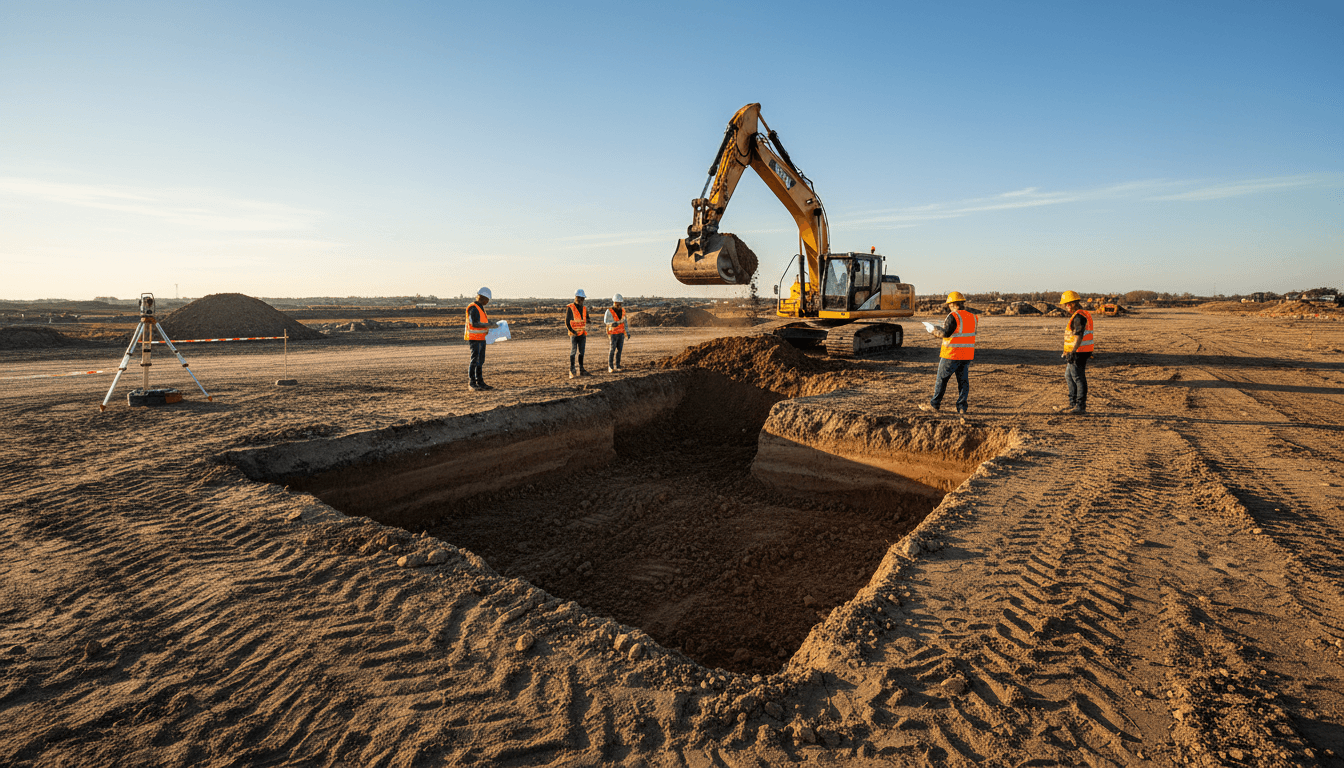
Moving dirt to establish a slope is only half the battle when dealing with the heavy clay common in cities like Irvine and Mission Viejo. While a correct pitch is the foundation of any site work project, grading alone frequently falls short because of the way clay reacts to pressure and moisture. During the process of comprehensive earthwork and grading, heavy machinery can inadvertently compress the fine clay particles into a dense layer known as hardpan. This compressed shelf acts as a subterranean floor that prevents water from percolating into the deeper ground, even if the surface appears correctly contoured.
Homeowners often ask why their yards still flood after a grading project. The answer usually lies in soil saturation and the lack of a managed exit point. Once our local clay becomes saturated, it loses its ability to absorb even a fraction of an inch of additional rain. If the grading plan simply moves water from the foundation to a low spot in the middle of the lawn without providing a way for that water to leave the property, the result is a swampy mess rather than a dry yard. Without a dedicated Orange County drainage solution to receive the runoff, you are merely relocating the puddle rather than eliminating the problem.
Effective site work in Southern California requires a dual approach. Surface grading must be supplemented with subsurface solutions that handle the water the clay cannot absorb. If your property lacks a natural outlet, such as a street curb or a storm drain, even the most precise expert Bobcat grading will eventually be overcome by total soil saturation. To ensure long term stability, the redirected water must be captured and moved through a controlled system, preventing it from sitting on the hardpan and undermining your landscape.
Critical Drainage Solutions for Clay Soil Properties
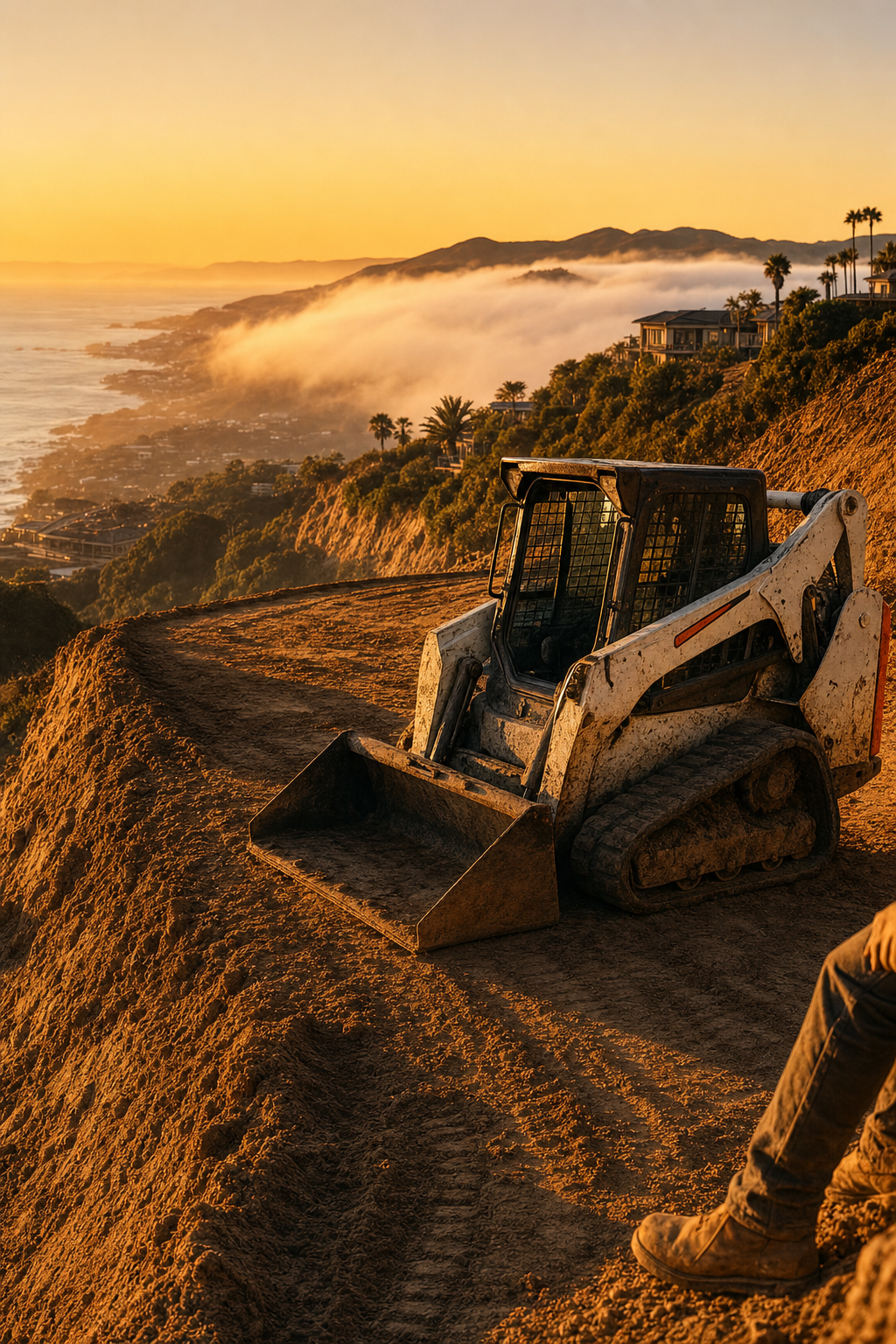
Since grading alone cannot overcome the impermeable nature of local clay, we integrate specific Orange County drainage solutions to provide a complete water management system. These methods ensure that once the soil reaches its saturation point, the excess water has a mechanical or structural path out of the yard rather than sitting stagnant.
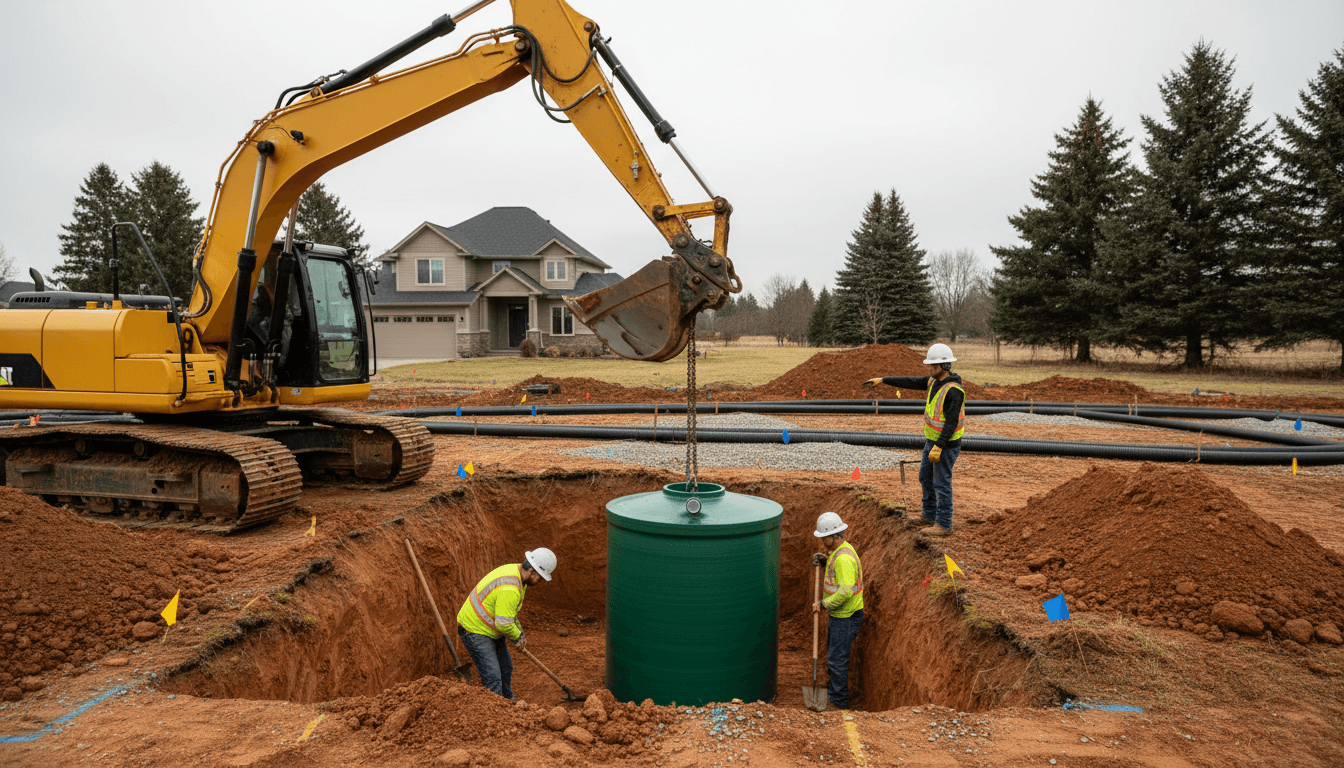
French Drains for Subsurface Relief: A French drain is the primary tool for managing water that has already soaked into the top layer of soil but is blocked by the hardpan below. We install a perforated pipe buried in a trench filled with clean gravel or rock. This system collects the subsurface water that clay soil cannot absorb and redirects it toward a discharge point. It effectively lowers the water table under your landscape, preventing the mushy ground that often persists for days after a Southern California storm.
Surface Drains and Catch Basins: For properties that experience heavy runoff during intense rain events, surface drains and catch basins are essential. These systems use grates placed at the lowest points of the graded area to capture large volumes of water immediately. Unlike a French drain, which works slowly over time, catch basins are designed for rapid evacuation. This is particularly important for protecting hardscapes and patios where water can pool against the house foundation.
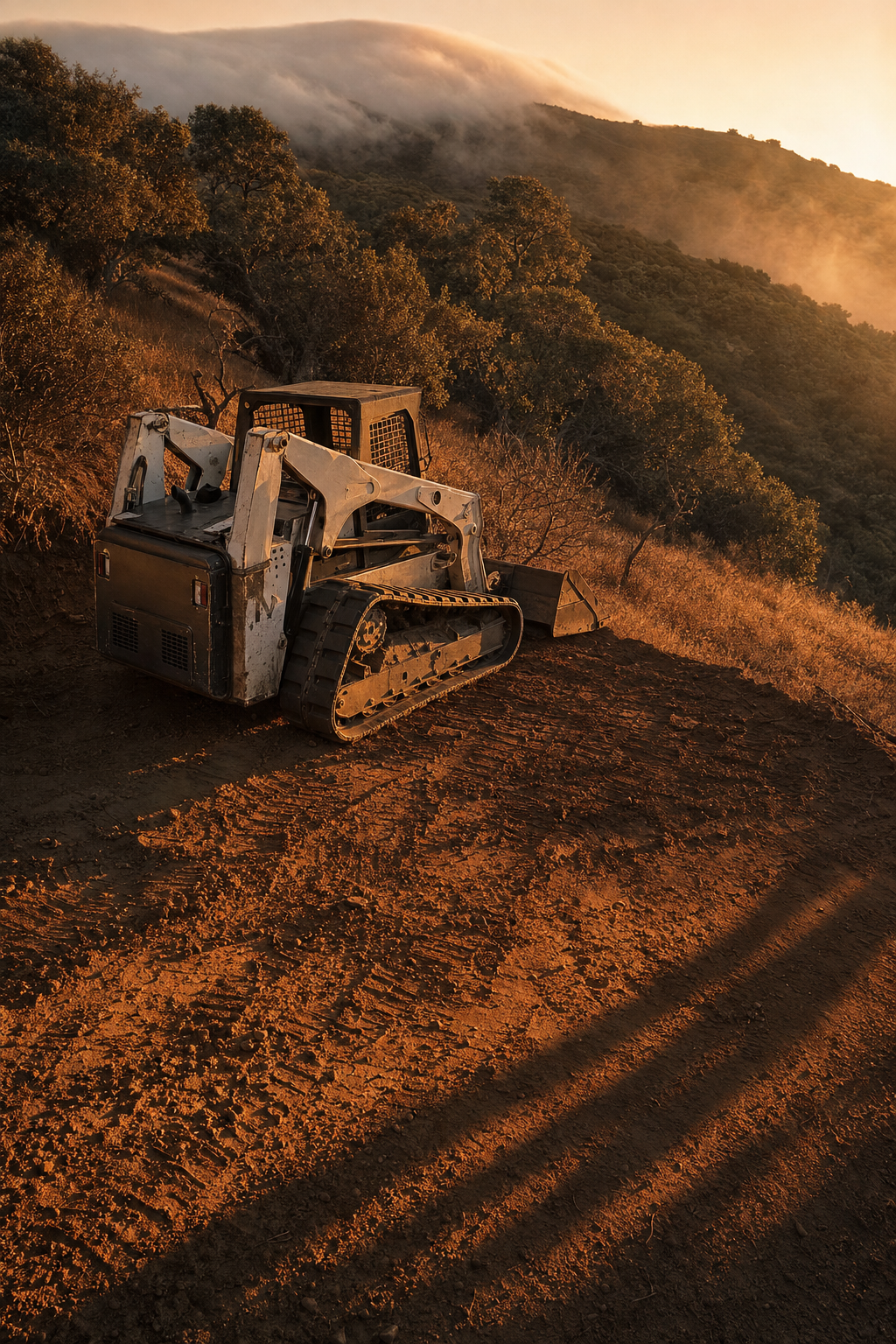
Swales and Dry Creek Beds: In hilly areas like Laguna Beach or the local canyons, a swale offers a naturalistic way to combine comprehensive earthwork and grading with aesthetic landscaping. By creating a wide, shallow channel lined with stones or river rock, we create a dry creek bed that guides runoff safely around the property. These systems are critical for preventing slope erosion; by slowing down and directing the water, we stop it from carving deep gullies into the hillside or undermining retaining walls. Using expert Bobcat grading, we ensure these swales maintain a consistent pitch that keeps water moving toward the street or a dedicated storm system. This integrated approach to yard grading and drainage ensures your property remains stable even during heavy winter rains.
The Professional Grading Process: Using Bobcats and Specialized Equipment
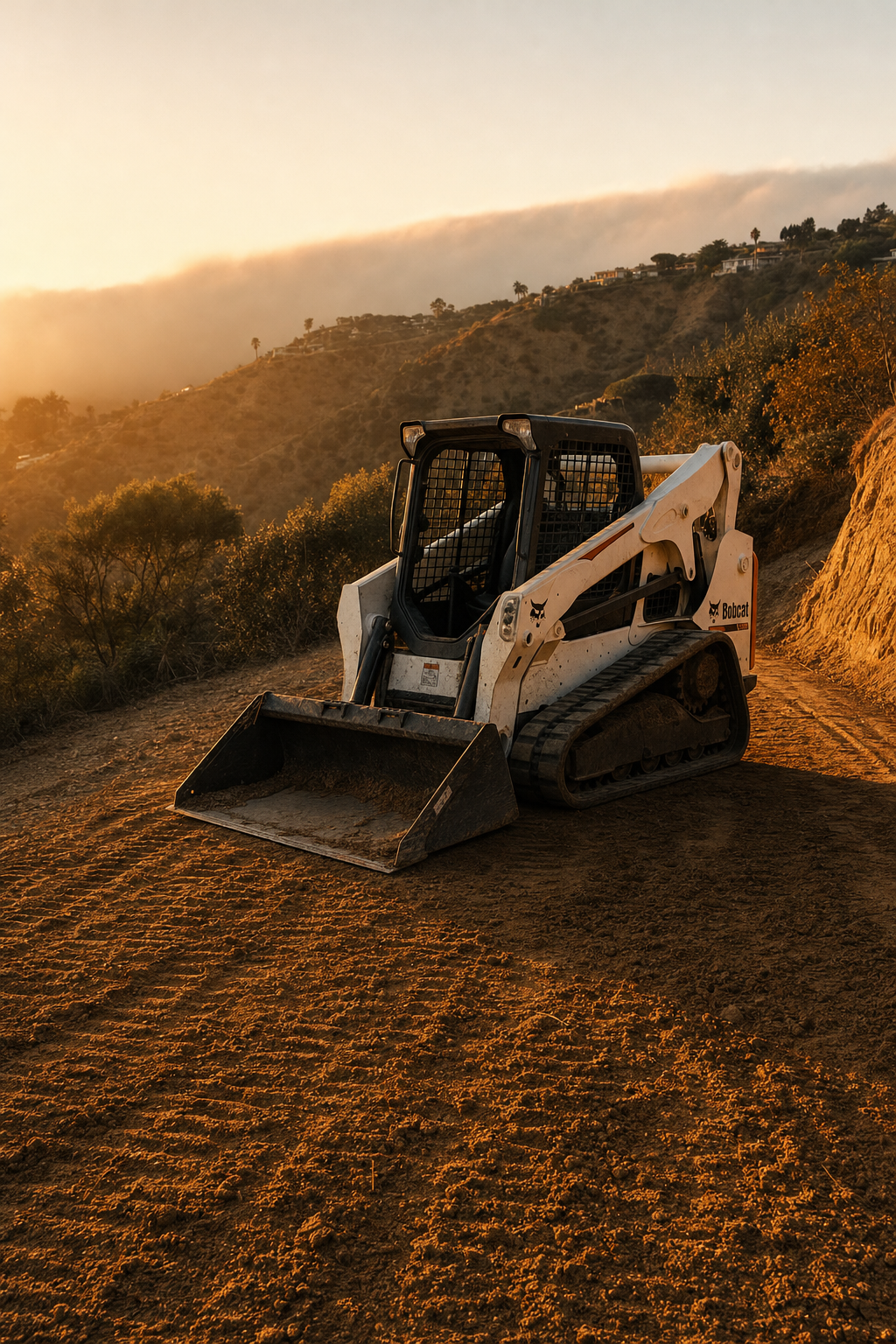
Successful yard grading and drainage depends on a level of precision that manual labor simply cannot achieve. When homeowners attempt to regrade a property using only a shovel and wheelbarrow, they often create micro-depressions. These small, uneven low spots become "birdbaths" where water collects, exacerbating the clay soil issues prevalent across Orange County. Professional site work requires mechanical leverage to move significant volumes of earth while maintaining a consistent, calculated pitch that gravity can follow.
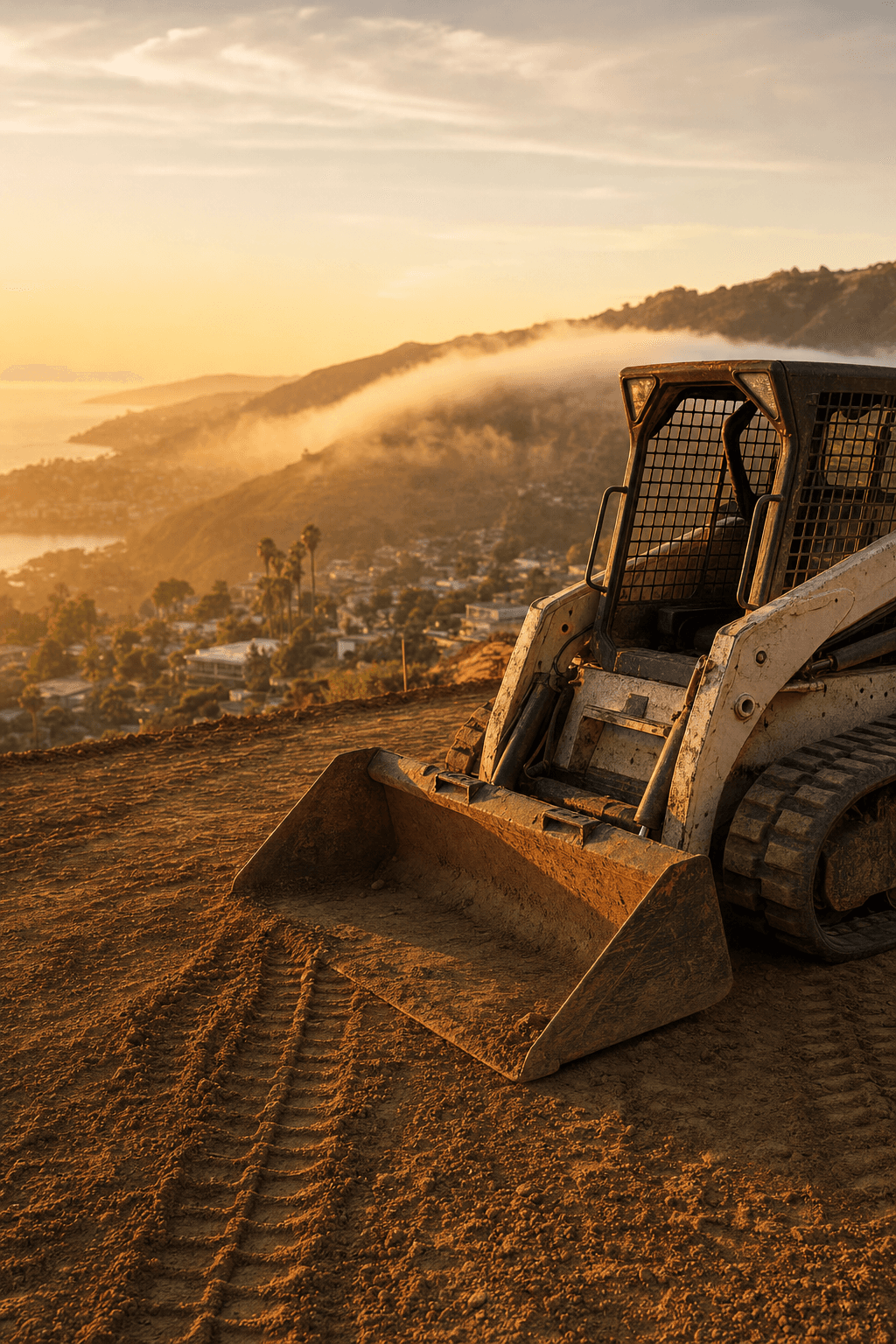
We utilize specialized equipment, primarily Bobcats, to execute expert Bobcat grading. These machines allow our team to scrape away the exact amount of topsoil needed to establish the necessary slope without over-compacting the subgrade into an impermeable shelf. Proper equipment usage ensures that the soil is firm enough to prevent settling but not so compressed that it creates a new hardpan layer.
Many properties in Laguna Beach and newer developments in Irvine present unique challenges due to limited side-yard clearance. Our team specializes in tight access solutions, using compact loaders that can navigate narrow walkways and gates where larger machinery cannot reach. This ensures that even the most restricted backyard receives comprehensive earthwork and grading that meets IRC standards. By using dedicated equipment like dump trailers and compact Bobcats, we efficiently manage soil exports and imports, ensuring the finished grade is uniform and structurally sound.
When Is the Best Time to Regrade Your Yard in Southern California?
Timing is critical for yard grading and drainage in Southern California. The most effective window for these projects is during the dry summer and early fall, specifically from June through September. Working with Orange County clay is significantly easier when the moisture content is low. Dry soil allows for the precision required to establish a 1 inch per foot slope, whereas wet clay becomes heavy, sticky, and difficult to compact properly.
Scheduling your comprehensive earthwork and grading before the autumn rains arrive ensures your property is protected against the first major storm of the season. If you wait until the rainy season begins in late October, the soil often becomes too saturated for expert Bobcat grading. At that point, heavy machinery can cause more damage than good by rutting the landscape. By completing site work in the summer, you provide ample time for the ground to settle and for any newly installed drainage systems to be tested and ready for the winter months. This proactive timing is the best way to avoid the emergency calls that homeowners in Laguna Beach and the surrounding canyons often have to make during the first big atmospheric river.
Estimated Cost to Regrade a Yard for Drainage in Orange County
Estimating the investment for yard grading and drainage in Orange County requires looking at the specific site conditions. For a standard lot requiring minor surface adjustments, homeowners often see rates starting between $1.00 and $2.00 per square foot. These figures represent the baseline for simple redistribution of soil. When dealing with heavy clay or significant water pooling, costs increase as the scope shifts to comprehensive earthwork and grading.
Several local factors influence the final quote for a professional project:
Cost Factor | Description | Impact on Quote |
|---|---|---|
Accessibility | Tight side yards or canyon slopes requiring compact equipment. | Increases labor hours. |
Soil Export | The necessity of hauling heavy clay off-site to make room for drainage rock. | Adds transportation and disposal fees. |
Drainage Hardware | Installation of French drains, catch basins, or solid PVC lines. | Adds material and trenching costs. |
Projects involving expert Bobcat grading and soil export are more labor-intensive but provide the only long-term fix for saturated lots. Total acreage also plays a role, as larger properties might require more extensive Orange County drainage solutions to reach a viable discharge point. Investing in a correctly engineered slope now prevents the far greater costs associated with foundation repair and water damage later.