Effective Orange County drainage solutions clay soil typically combine French drains for subsurface groundwater and catch basins to manage surface runoff. These systems prevent yard pooling by directing moisture away from home foundations where dense clay tends to trap it; professional grading ensures water flows efficiently toward proper discharge points.
If you live in Orange County, you have likely dealt with the frustration of water pooling in your yard long after the clouds have cleared. Our local landscape is dominated by dense, expansive clay soil that holds onto moisture like a sponge, leading to potential foundation issues and unusable outdoor spaces. Understanding how to mitigate these specific drainage challenges is essential for protecting your property value and long term structural integrity. In this guide, we will analyze the most effective drainage solutions for our unique geological conditions, including French drains, catch basins, and sophisticated hillside management strategies. You will also gain insights into the necessity of professional grading and a realistic breakdown of installation costs for the 2026 season. By the end, you will have the expert knowledge needed to transform your saturated lot into a stable, dry environment.
Why Orange County Clay Soil Requires Specialized Drainage Solutions
Orange County is home to some of the most challenging geological conditions in California, primarily due to the prevalence of adobe clay. This type of soil is characterized by its high plasticity and expansive nature. Unlike sandy or loamy soils found in other regions, adobe clay acts like a sponge that holds onto water for extended periods. When the winter rains hit cities like Laguna Beach and Mission Viejo, this clay expands significantly; this exerts lateral pressure against foundation walls. Conversely, during hot, dry summers, the clay shrinks and pulls away from the structure, often leaving large fissures in the ground.
Developing effective Orange County drainage solutions clay soil requires addressing two distinct issues: surface water pooling and subsurface saturation. Surface pooling is immediately visible, manifesting as standing water that can drown landscaping or seep into crawlspaces. However, subsurface saturation is often more dangerous because it remains hidden. In dense clay environments, water cannot percolate naturally into the lower strata of the earth. Instead, it creates a bathtub effect where the soil around your home stays saturated long after the rain stops, leading to mold, wood rot, and foundation settlement.
Standard drainage advice from national websites often suggests simple gravel pits or dry wells, but these methods frequently fail in local conditions. Without specialized Grading and Drainage in Orange County to redirect water, these pits just store moisture where it causes the most damage. Using professional Excavation and Trenching Orange County to create exit paths for this trapped water is the only way to ensure long term property stability.
French Drains: The Gold Standard for Subsurface Water in Clay
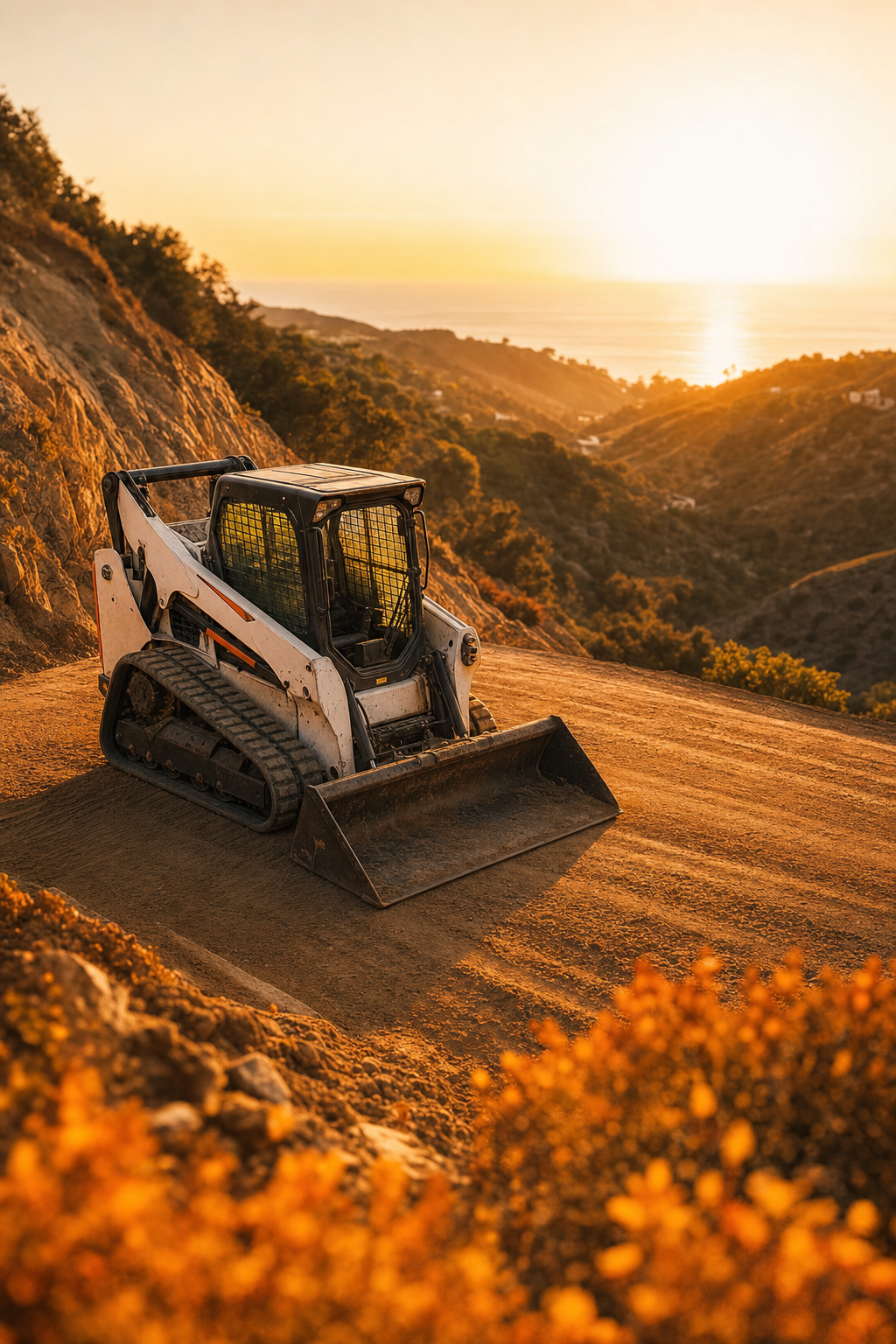
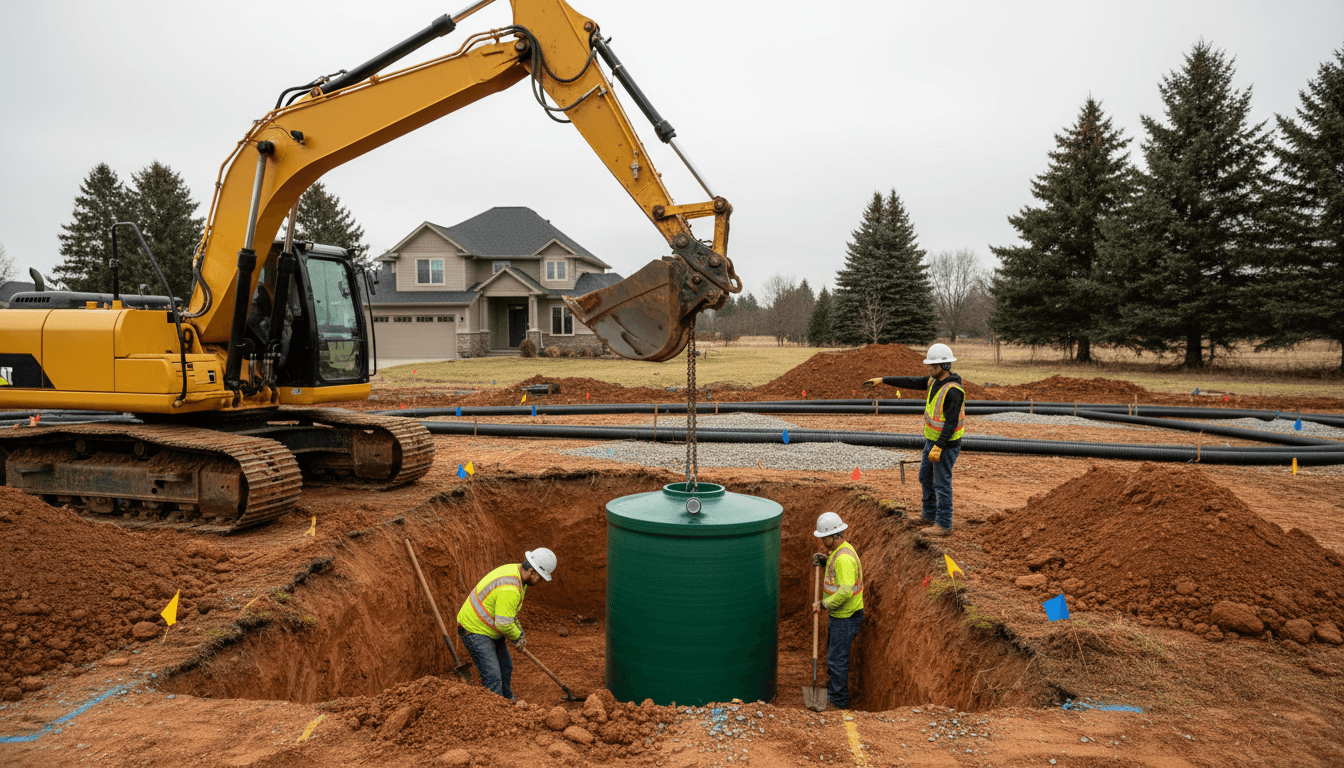
To mitigate the invisible threat of subsurface saturation, French drains remain the most effective tool in a contractor’s arsenal. A French drain consists of a sloped, gravel filled trench containing a perforated pipe. In the dense clay found in Laguna Beach, these systems act as a pressure relief valve. As groundwater builds up against the clay, it seeks the path of least resistance, which is the gravel channel. The water enters the perforated pipe and is carried away by gravity before it can exert pressure on your foundation or seep into your crawlspace.
The most common failure point for these systems in Southern California is the infiltration of fine silt. Because clay particles are microscopic, they easily migrate into the gravel and eventually clog the pipe if not properly shielded. Using a high quality, non-woven filter fabric is non-negotiable for any Orange County drainage solutions clay soil project. This fabric acts as a permanent barrier, allowing water to pass through while keeping clay solids out. Many low cost installations fail within a few years because they use thin, woven liners or omit the fabric entirely, leading to a system that is effectively choked by the very soil it was meant to manage.
Another critical error is the "trench to nowhere," where a drain is installed without a viable exit point. A French drain is only as good as its discharge. In residential areas, this typically requires a curb core, which is a professionally drilled hole through the street curb that allows water to daylight into the gutter. If a curb core is not feasible due to elevation, the system must be tied into a dedicated storm drain or a large scale dry well located far from the structure. Professional Excavation and Trenching Orange County ensures that the trench maintains a consistent downward slope, typically at least one percent, so that water never sits stagnant in the pipe.
Catch Basins vs Swales: Managing Surface Runoff in Heavy Rain
While French drains manage the water you cannot see, surface runoff during heavy Southern California storms requires a distinct strategy. In Orange County, where dense clay prevents rapid absorption, water often moves as sheet flow across the landscape or pools in low lying depressions. Choosing between catch basins and swales depends entirely on the topography of your property.
Catch basins are localized collection points topped with a grate. These are ideal for low spots in a lawn or at the base of a driveway where water naturally gathers and needs to be evacuated quickly through a buried pipe. Because catch basins handle high volumes of water in a small area, they are often the first line of defense in tight side yards common in Laguna Beach.
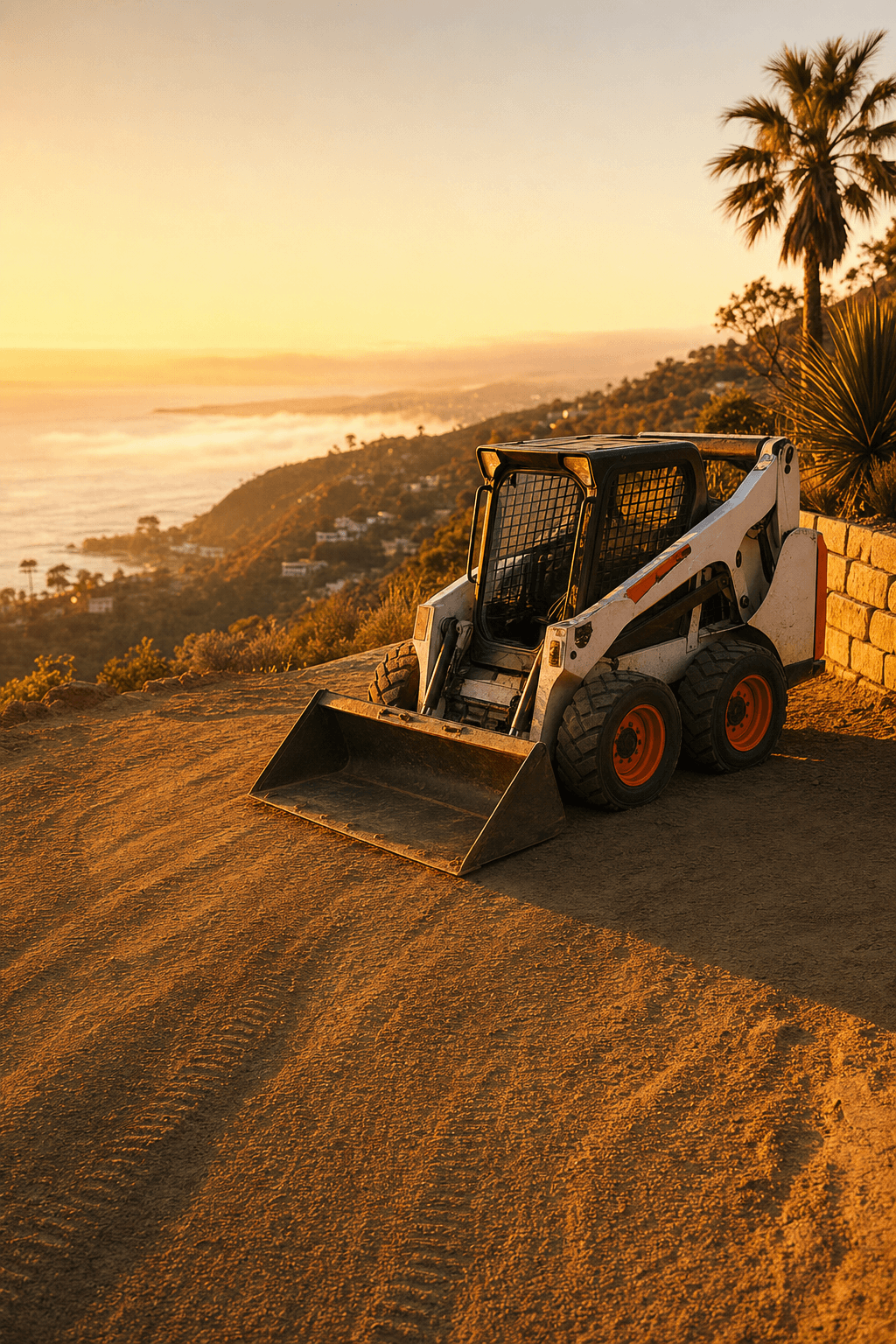
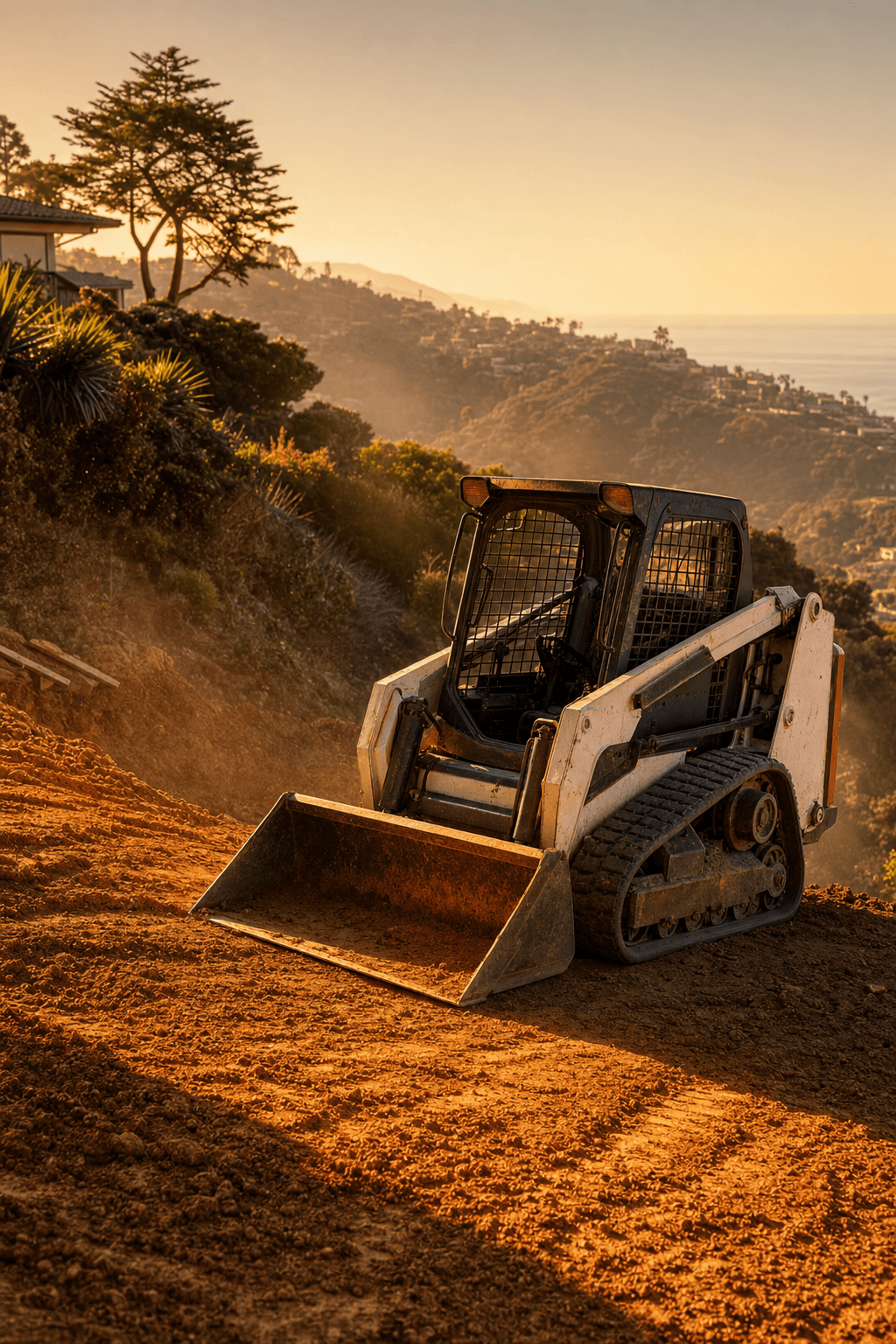
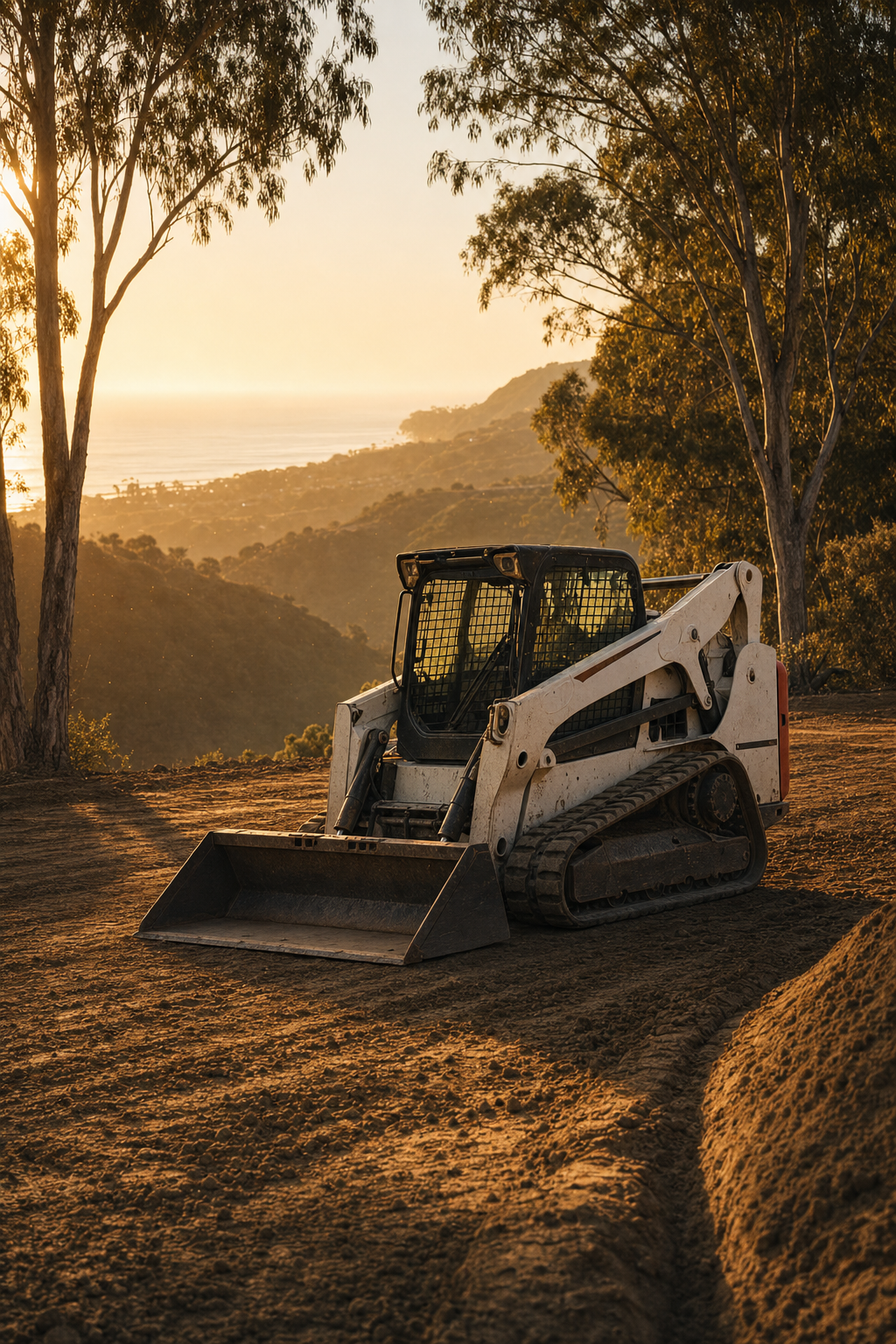
Swales, or dry creek beds, are shallow, broad channels designed to redirect water across a larger area. When our team performs Excavation and Trenching Orange County, we use Bobcat equipment to cut these channels with a precise pitch. By lining a swale with river rock or boulders, you create a functional landscape feature that guides sheet flow toward a safe discharge point without the need for extensive underground piping.
Feature | Catch Basin | Swale (Dry Creek Bed) |
|---|---|---|
Primary Goal | Fast collection in low spots | Directing sheet flow |
Appearance | Discrete grate | Natural stone feature |
Maintenance | Cleaning debris from basin | Clearing leaves from rocks |
Best Use | Patios, driveways, small yards | Large slopes, expansive lawns |
Homeowners frequently ask if a swale is better than a French drain. The two systems solve different problems. A swale is a surface solution that prevents water from sitting on your lawn. A French drain is a subsurface solution that pulls water out of the saturated ground. Robust Grading and Drainage in Orange County usually involves both to manage the unique challenges of local adobe. Effective Orange County drainage solutions clay soil rely on using swales to move the bulk of the storm runoff, while French drains handle the hidden moisture that threatens foundations.
Hillside Drainage Solutions for Orange County Coastal Properties
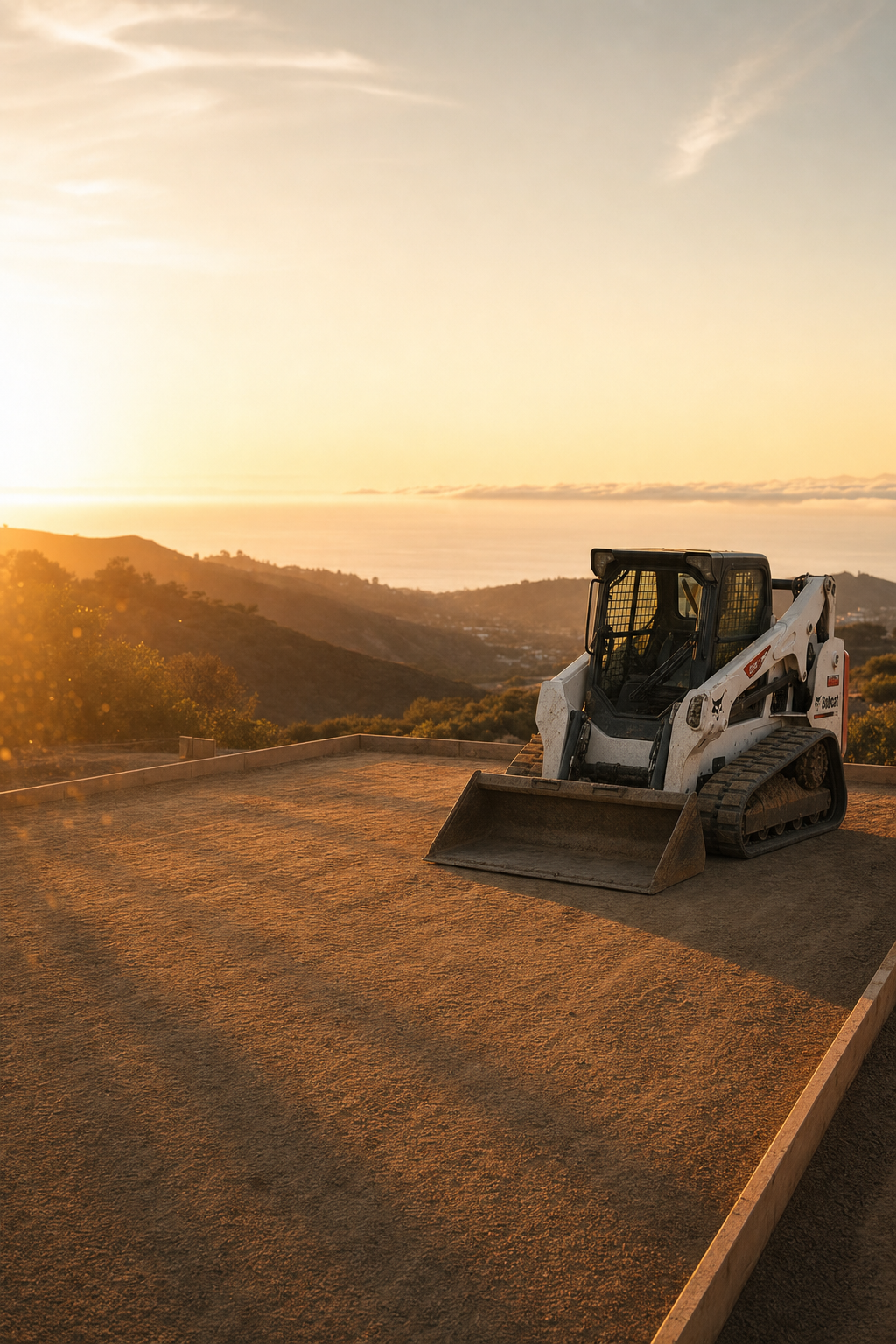
Managing water on a vertical plane presents a different set of engineering challenges, particularly in coastal areas like Laguna Beach where steep grades meet expansive clay. When heavy rains hit, gravity accelerates runoff, transforming sheet flow into a high velocity force that can trigger mudslides or severe slope erosion. Effective Orange County drainage solutions for hillside homes clay soil focus on breaking the momentum of water before it reaches the bottom of the property.
Interceptor drains, often called V-ditches or brow ditches, are installed at the top or across the face of a slope. These act as a first line of defense, capturing uphill runoff and diverting it into a controlled piping system before it can saturate the hillside. For multi leveled properties, terrace drains are used to manage water on each flat section, preventing the waterfall effect where moisture cascades from one tier to the next, gaining weight and power as it descends.
Properly executing these systems requires precise Excavation and Trenching Orange County to ensure that the drains are mechanically anchored into the stable substrate. DIY hillside drainage often fails during Super El Niño events because the pipes are either too shallow or not securely fastened; this causes the entire system to wash away with the moving soil. Professional installation ensures that the drainage infrastructure stays put when the clay becomes fully saturated and heavy, providing the structural integrity needed to protect coastal investments against the unique geological pressures of the region.
The Role of Professional Grading and Slope Requirements
Gravity remains the most dependable component of any drainage strategy. While pipes and basins are essential, they perform best when the land itself is contoured to move water. In Orange County, building standards typically require a minimum 5% slope away from the foundation for the first ten feet of horizontal distance. This translates to a six inch drop, ensuring that surface water does not pool against the concrete slab where it can cause the adobe clay to expand and exert pressure.
Professional Grading and Drainage in Orange County functions as the primary defense, while mechanical systems act as the secondary support. By using specialized Bobcat equipment, our team can reshape the terrain to ensure gravity does the heavy lifting before water ever reaches an inlet. This process involves stripping back topsoil and precisely cutting the underlying clay to create positive flow.
When Excavation and Trenching Orange County is performed correctly, the land is sculpted into a series of subtle high and low points that direct water toward discharge areas. Relying solely on pipes without proper grading creates a system prone to failure; if the ground slopes toward the house, the pipe must work against the natural flow of water, often leading to silt accumulation and eventual blockages. Proper site work ensures the property remains dry by design, not just by plumbing.
French Drain Installation Orange County Cost: What to Expect in 2026
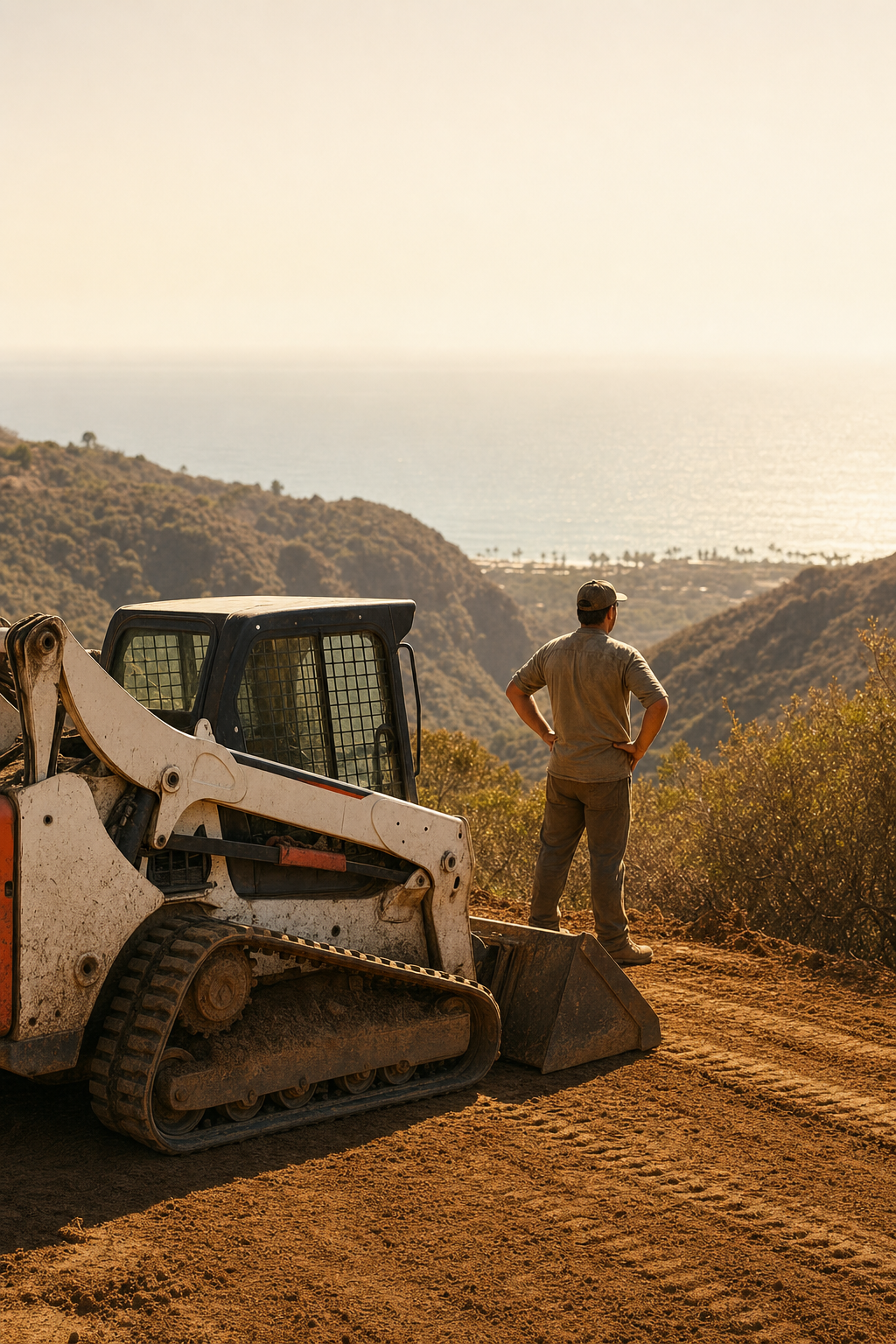
Proper Excavation and Trenching Orange County is a labor intensive process, especially when dealing with the high density clay found in Laguna Beach and Mission Viejo. For 2026, homeowners should budget between $60 and $120 per linear foot for a professionally engineered French drain system. A complete residential solution typically ranges from $15,000 to $20,000 depending on the property size. While a $3,000 quote might seem attractive, these low cost estimates usually omit critical components such as the discharge point, non-woven filter fabric, or the necessary restoration of your yard.
Heavy clay soil significantly increases the project cost compared to regions with sandy soil. The physical effort required to cut through compacted adobe is higher, often necessitating specialized equipment like a Bobcat rather than manual labor. Furthermore, clay expands when disturbed, which increases the volume and weight of the debris that must be hauled away. Because clay provides no natural drainage, we must remove the native soil entirely and replace it with clean drainage rock; this adds to both material and hauling expenses.
Cost Driver | Description | Impact on Budget |
|---|---|---|
Depth and Length | Deeper trenches require more excavation time and gravel backfill. | High |
Discharge Point | Drilling a curb core or tying into a storm drain requires precision. | Moderate |
Site Access | Narrow side yards that prevent equipment access require manual digging. | Moderate |
Restoration | Replacing sod is straightforward; rebuilding a concrete patio is not. | Variable |
When Vetting a Site Work Contractor, ensure the proposal includes specific details on how they will manage the discharge. Cutting corners on the exit point or the quality of the filter fabric in an Orange County drainage solutions clay soil project leads to premature system failure. A properly installed system designed for local conditions typically offers a functional lifespan of 30 to 40 years, providing long term protection for your foundation.
Managing drainage in clay heavy terrain requires a careful balance of grading and specialized installations. Ensuring these systems work correctly is the best way to safeguard your property from water damage. If you want expert help with your next project, reaching out to a professional can save you significant time and effort. You can read more about our background and approach to Orange County landscapes. We specialize in providing tailored solutions that address the unique soil challenges found throughout our local communities.