An Orange County grading permit is mandatory for projects moving over 50 cubic yards of soil, establishing building pads, or altering existing drainage and slopes. Applicants must submit detailed plans for mass, rough, or precise grading to OC Development Services to ensure compliance with local excavation codes and safety standards. This authorization ensures that land development remains stable and meets all environmental requirements for both residential and commercial sites.
For developers and homeowners in Southern California, the realization that moving more than fifty cubic yards of dirt triggers a complex regulatory process often comes too late. Navigating Orange County grading permit requirements can feel like an exercise in bureaucratic frustration, especially when project timelines and significant capital are on the line. Securing the correct approval is not just about compliance; it is the foundational step that protects your investment from costly stop-work orders, drainage failures, and legal liabilities. Understanding the nuances of local codes ensures your site work remains on schedule and within budget. This guide breaks down the critical components of the permitting process, including the specific distinctions between mass and precise grading. You will learn how to navigate the online application portal, estimate current fee structures, and manage the essential bond requirements necessary to move your project forward successfully.
What is an Orange County Grading Permit and Why Does It Matter?
An Orange County grading permit is more than just a piece of paperwork; it is a critical regulatory tool managed by OC Development Services to ensure land development is safe and sustainable. At its core, this permit authorizes the movement of earth, including excavation, filling, and stockpiling, while strictly regulating how that movement affects the surrounding environment. Because Orange County features diverse terrain from the steep hillsides of Laguna Beach to the expansive coastal canyons, these regulations prevent improper water runoff that can damage neighboring properties or cause severe soil erosion.
While the California Building Code (CBC) provides the foundational standards for earthwork across the state, Orange County enforces specific local ordinances that address our unique geological challenges. These local rules ensure that any land disturbance maintains the integrity of the soil and protects the local watershed. Failing to secure the proper permit can lead to stop-work orders, heavy fines, and long-term liability for drainage failures. With over 20 years of experience in the local construction field since 2004, our team understands the nuances of these requirements. We provide comprehensive earthwork and grading solutions that align with county standards, ensuring every project maintains geological stability from the first scoop of dirt to the final sign-off. As Orange County excavation and drainage experts, we focus on the technical details that keep your site compliant and your property secure.
The 50 Cubic Yard Rule: Do You Need a Grading Permit?
Determining if your project requires an Orange County grading permit often starts with a single number: 50 cubic yards. Under the standard California Building Code and OC Development Services ordinances, moving less than 50 cubic yards of soil typically qualifies for an exemption. To put this in perspective, 50 cubic yards is roughly equivalent to five full loads in a standard ten wheel dump truck. If your excavation or fill exceeds this volume, a permit is legally mandatory before any equipment touches the dirt.
However, the volume of soil is not the only factor. Local regulations include several triggers that override the 50 cubic yard exemption. A permit is required regardless of volume if the work alters an existing drainage path or impacts a natural watercourse. This is particularly relevant in areas like the Laguna Beach hillsides or Newport Coast, where even minor soil movement can lead to significant runoff issues for properties located downhill. If the earthwork could potentially redirect water onto a neighbor’s lot, the county must review the plans to ensure compliance with regional drainage standards.
Stability and slope are also critical metrics. If your project involves creating a cut or fill slope steeper than five units horizontal to one unit vertical (5:1), the county requires oversight to prevent erosion. For homeowners considering a backyard refresh, regrading a flat lawn or installing permeable pavers often falls under the exemption, provided the natural flow of water remains unchanged. If the project involves structural retaining walls or significant contour changes to the land, contact our team for a site evaluation. Our experience with specialized Bobcats and dump trailers allows us to navigate these regulations efficiently while keeping your project within legal boundaries.
Mass, Rough, and Precise: Understanding the Three Types of OC Grading Permits
Navigating the technical categories defined by OC Development Services is essential once you determine that your project exceeds the 50 cubic yard threshold. The county categorizes permits based on the project stage and the level of topographical detail required. Understanding these distinctions helps property owners coordinate with their engineers and contractors to avoid sequencing errors.
Permit Type | Primary Purpose | Common Residential Application |
|---|---|---|
Mass Grading | Large-scale clearing and major earthwork. | New subdivision development or raw land prep. |
Rough Grading | Establishing basic land shape and building pads. | ADU construction or home additions. |
Precise Grading | Final elevations, drainage, and structure locations. | Major landscape overhauls, pools, and hardscaping. |
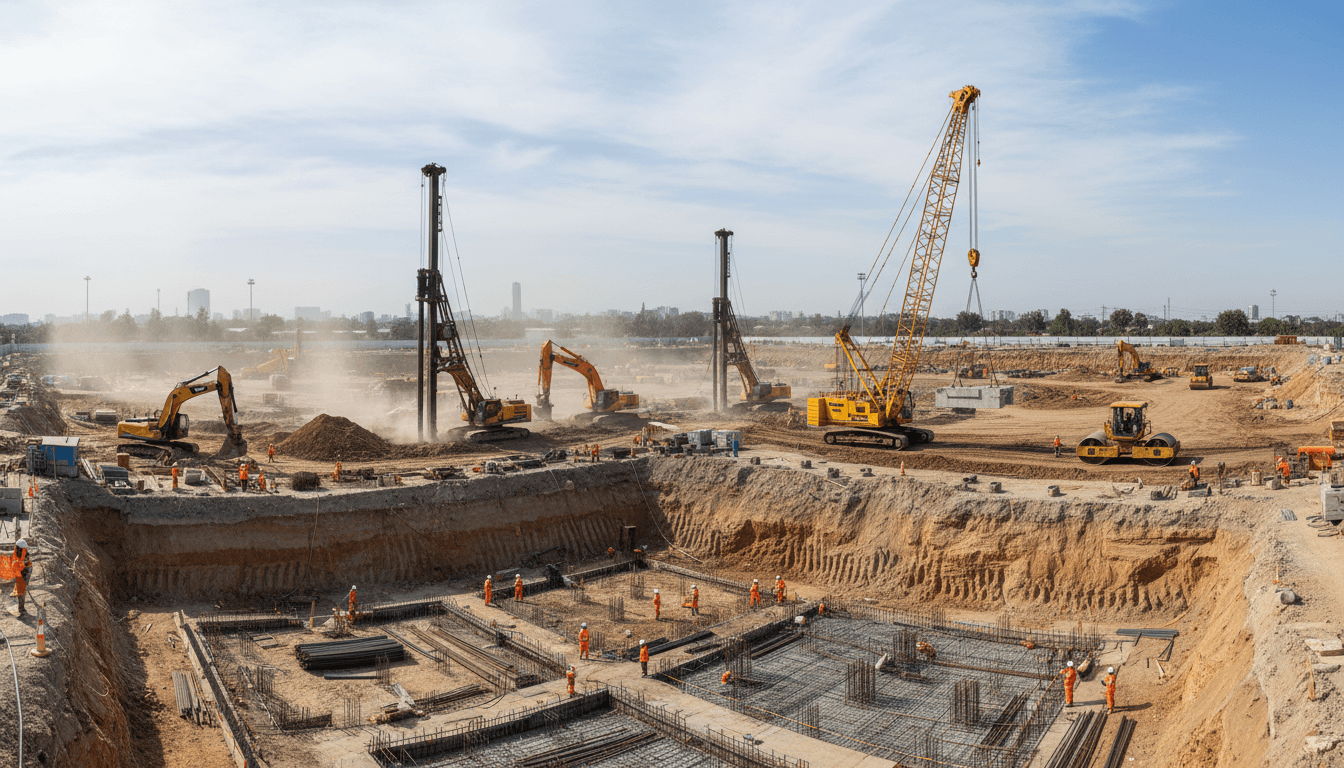
Mass grading is typically reserved for large-scale site preparation. It involves clearing vegetation and performing major earth-moving to prepare a broad area for future development. While less common for individual backyard renovations, mass grading is the first step in converting raw land into buildable lots.
Rough grading is the permit most frequently encountered during the early stages of ADU construction or significant building additions. It focuses on establishing the basic contours of the land and creating level building pads. The goal here is to ensure the structural footprint is stable and at the correct preliminary elevation before foundations are poured.
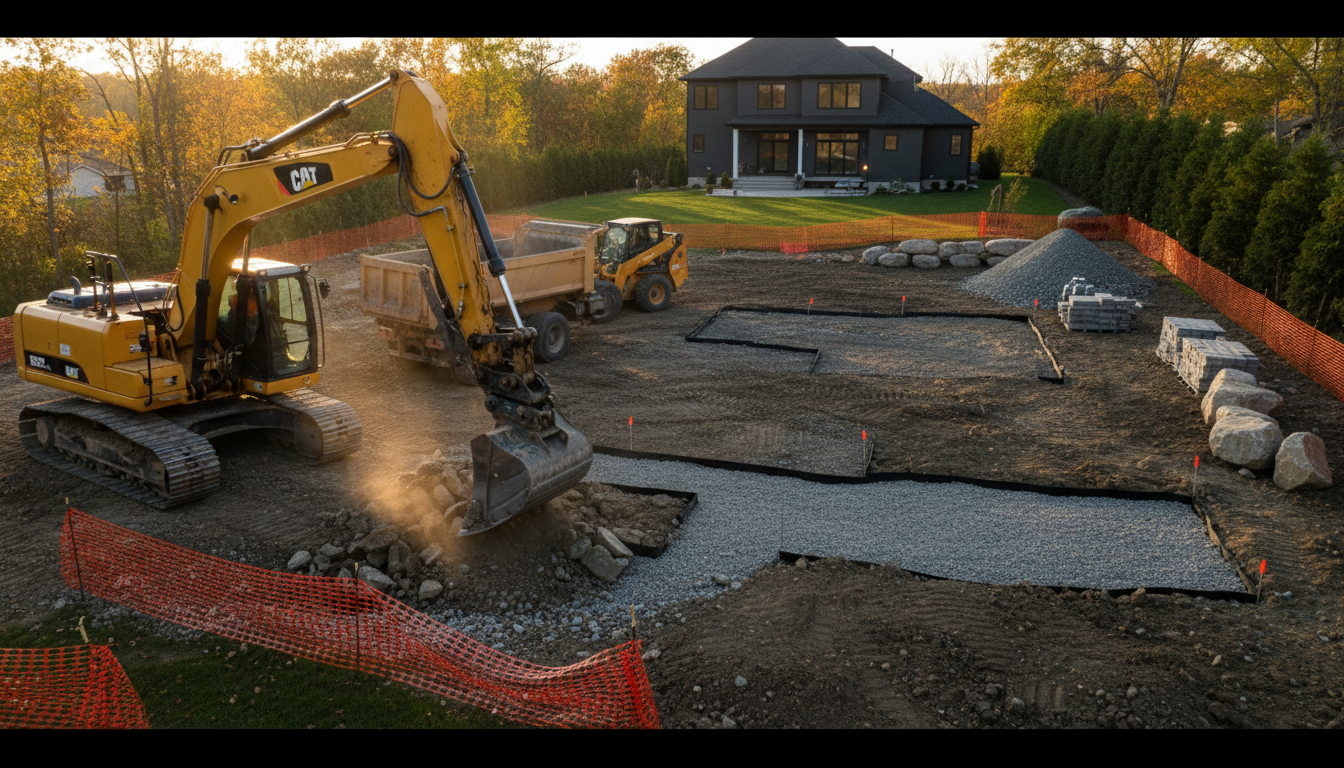
Precise grading is the final, most detailed permit required by the county. It governs the finished surface elevations, the specific location of structures, and critical drainage flow patterns. Precise grading ensures that every slope and swale directs water away from foundations and toward approved discharge points. For homeowners planning a major landscape overhaul or a pool installation, a precise grading plan is vital to prevent long-term drainage issues.
Our team uses specialized Bobcats and dump trailers to execute these plans with high accuracy. If you are unsure which permit your project requires, contact our team for a site evaluation. We provide comprehensive earthwork and grading to ensure your site meets the exact specifications of your approved precise grading plan.
How to Navigate the Orange County Permit Portal and Application Process
Securing an Orange County grading permit requires navigating the myOCeServices portal, the official digital hub for OC Development Services. The process begins by creating a registered account and selecting the appropriate application type based on your project scope. A successful submittal relies on a complete technical package. At a minimum, you must provide detailed site plans and a topographic survey that accurately depicts the current land elevations. For projects on the sensitive slopes of Laguna Beach or Newport Coast, a soils report from a licensed geotechnical engineer is often mandatory to address slope stability and seismic risks.
After uploading your documents and paying the initial intake fees, the county begins its technical review. Residents should plan for an initial review timeline of approximately 15 business days. It is common for the county to request revisions or clarifications to ensure the plan adheres to specific local drainage codes. These corrections typically take about 10 business days for the county to process once you have re-submitted the updated files. Our team understands that these regulatory delays can impact your build schedule. We work closely with property owners to ensure the physical site is ready for the work defined in these plans. If you need assistance preparing your site for these requirements, contact our team for a site evaluation to discuss how our comprehensive earthwork and grading solutions can support your project. As Orange County excavation and drainage experts, we provide the precision needed to satisfy these rigorous county standards.
Orange County Grading Permit Costs and Bond Requirements
Budgeting for an Orange County grading permit involves two primary financial layers: administrative fees paid to OC Development Services and the mandatory Grading Permit Bond. The county calculates processing fees through a combination of plan check reviews and inspection costs. These fees are almost always scaled based on the total volume of earth moved. A project involving 500 cubic yards will naturally carry higher oversight costs than one at the 60 cubic yard mark because of the increased technical review time required by county engineers.
The Grading Permit Bond is a distinct requirement that functions as a financial guarantee for the public and the municipality. This surety bond ensures that the earthwork is completed according to the approved engineering plans. If a project is abandoned or leads to hazardous site conditions, the bond provides the funds necessary for the county to step in and stabilize the land. The required bond amount typically reflects a percentage of the total estimated cost of the grading work, including erosion control and drainage installation.
Fee Component | Basis of Calculation |
|---|---|
Plan Check Fee | Total volume of earth (cubic yards) |
Inspection Fee | Complexity and project duration |
Grading Permit Bond | Total estimated construction cost |
Securing these bonds requires working with a surety company that evaluates the scope of the earthwork. We leverage our 20 years of experience to help homeowners understand these logistical costs early in the planning phase. If you need a clear picture of the site requirements for your project, contact our team for a site evaluation. Our use of efficient equipment like Bobcats and dump trailers helps streamline the comprehensive earthwork and grading process, ensuring the physical work matches the bonded plans exactly.
Common Exemptions: What You Can Do Without a Permit in California
Understanding the financial obligations of a project is essential, but it is equally important to know when an Orange County grading permit is unnecessary. Certain low-impact activities are generally exempt under California Building Code and local ordinances. These include minor excavations for post holes, well shafts, or exploratory trenches for soil testing. Basic gardening, routine land maintenance, and agricultural activities that do not alter the overall drainage flow typically do not require oversight from OC Development Services.
Small-scale fills and cuts often qualify for exemptions if they do not exceed 50 cubic yards. For instance, a fill that is less than one foot deep and placed on flat ground is usually exempt. Property owners should be cautious when installing low retaining walls. While walls under three feet might not trigger a grading permit in specific zones, they may still require a separate hardscaping or building permit to ensure structural safety. It is critical to differentiate between the movement of soil and the construction of the feature itself. If you are unsure if your project requires documentation, contact our team for a site evaluation to ensure you remain compliant without over-permitting simple improvements. Our team provides comprehensive earthwork and grading expertise to help you identify these boundaries early.
Why Hiring a Professional for Site Work Prevents Permit Delays

Hiring a professional ensures that the physical movement of earth aligns perfectly with the technical requirements of your Orange County grading permit. Inexperienced operators often overlook subtle elevation changes or drainage swales specified in a precise grading plan. These minor discrepancies lead to failed inspections and the issuance of "stop work" orders, which halt all construction activity and inflate project timelines. Our team utilizes specialized Bobcats and dump trailers to execute these tight tolerances, ensuring every cubic yard moved serves the approved engineering design.
Securing a final sign-off from the county inspector is the ultimate goal. This verification confirms the site is stable and protects the property's long-term insurability by meeting local drainage codes. As Orange County excavation and drainage experts, we focus on getting the work done correctly the first time to avoid the cost of remedial grading. If you are ready to start your project with a team that respects the technicalities of the law, contact our team for a site evaluation to discuss our comprehensive earthwork and grading solutions.
Navigating the grading permit process in Orange County requires attention to detail, from understanding specific zone requirements to managing costs effectively. Getting your site work right from the start ensures a smoother construction journey and helps avoid costly delays. If you want expert help managing these complexities, our team is ready to assist. You can learn more about our experience with local regulations and site preparation. We are here to ensure your project begins on solid ground with every permit properly in place.