Effective retaining wall drainage Orange County requires a dedicated system to counteract expansive clay soils that exert heavy hydrostatic pressure when wet. Property owners should install a perforated collector pipe and at least 12 to 18 inches of crushed stone backfill to ensure water flows away from the structure. This combination prevents soil expansion and wall failure by providing a clear path for moisture to exit.
Orange County homeowners often watch in frustration as a newly constructed retaining wall begins to lean or crack after a single season of rain. This failure is rarely due to the block or stone; instead, it is a direct result of the expansive clay soils that define our local landscape. When these clays saturate, they exert immense hydrostatic pressure that can topple even the most robust structures. At Orange County Site Work Services, we know that effective water management is the only way to protect your investment. In this guide, we examine the critical physics of drainage. We cover why standard gravel backfill often falls short, the technical precision required for perforated pipe placement, and the necessity of geotextile filtration. Whether you are managing a two-foot garden border or a major hillside excavation, understanding these site-specific drainage requirements is essential for long-term structural stability.
The Physics of Failure: Why Orange County Clay Topples Retaining Walls
Retaining wall failure in Southern California often traces back to the unique characteristics of our local geology. In regions like Irvine, Mission Viejo, and Laguna Niguel, the soil is dominated by heavy, expansive clay. This material behaves differently than the sandy soils found closer to the coast. When dry, this clay exerts a predictable lateral pressure of roughly 30 to 35 pounds per square foot (psf) per foot of depth. However, the chemistry of clay allows it to absorb and hold immense amounts of water, causing it to swell and dramatically increase in weight.
A common question we encounter is, "Why does a retaining wall fail?" The answer rarely lies in the weight of the dry earth itself. Instead, the culprit is hydrostatic pressure. When the clay becomes saturated after a heavy winter storm, its weight can spike to 80 or 90 psf. Because the water cannot escape through the dense clay quickly, it creates a hydraulic jack effect. This trapped water exerts force in all directions, essentially pushing against the back of the structure with thousands of pounds of unintended pressure.
Proper retaining wall earthwork and drainage is designed to mitigate this specific physical threat. Without a clear path for water to exit, the lateral thrust on a 4 foot wall can jump from a manageable 250 pounds per linear foot to over 700 pounds. This force is often enough to cause the wall to slide off its base or tilt forward until the structural integrity is lost. Understanding this shift from dry weight to hydraulic force is the first step in designing effective retaining wall drainage Orange County projects that stand up to the local environment.
Backfill Standards: Why 12 Inches of Gravel is Not Enough for Local Soils
While generic building guides often suggest a one foot column of gravel behind a wall, applying that standard to retaining wall drainage Orange County projects is often insufficient. In the expansive clays found throughout South County, a narrow sliver of rock is easily overwhelmed. We recommend a minimum of 18 to 24 inches of clean, angular drainage aggregate, specifically ASTM No. 57 or 3/4 inch crushed stone. This wider drainage chimney provides a robust buffer against swelling clay, ensuring water has enough volume to drop quickly to the collection pipe before it can exert pressure on the wall face.
Material selection is just as critical as the volume of the backfill. Some installers opt for rounded pea gravel or river rock because it is easier to handle, but these materials lack structural integrity. Rounded stones act like ball bearings; they roll against each other and lack the mechanical interlock needed to support a load. Angular crushed stone, however, wedges together to form a stable, permeable mass. This interlocking quality is vital for maintaining the grading and site preparation standards necessary for long-term stability in hilly terrain like Laguna Beach.
Backfill Material | Lateral Thrust (4' Wall) | Drainage Performance | Structural Interlock |
|---|---|---|---|
Saturated Clay | ~700 lbs/LF | Poor (Retains Water) | None (Expansive) |
Rounded Pea Gravel | ~350 lbs/LF | Moderate | Low (Rolls) |
Clean Crushed Stone (3/4") | ~250 lbs/LF | Excellent (Rapid) | High (Mechanical) |
By replacing heavy clay with a 24 inch zone of clean stone, the lateral thrust on a typical 4 foot wall drops from approximately 700 pounds per linear foot to a manageable 250 pounds. This significant reduction in force is the primary defense against wall rotation. Our team focuses on using exclusively clean, angular aggregate to guarantee this rapid permeability, ensuring that retaining wall earthwork and drainage systems function as intended even during the heaviest Southern California rain events.
Perforated Drain Pipe Placement: Avoiding the Floating Pipe Mistake
The effectiveness of the gravel chimney depends entirely on the placement of the perforated collector pipe. A frequent error in local landscape construction is floating the pipe several inches or even a foot into the gravel backfill. When a pipe is suspended too high, water pools at the bottom of the trench, saturating the footer and the base of the wall before the water level ever reaches the perforations. For a lasting retaining wall earthwork and drainage system, the pipe must be placed at the absolute bottom of the excavation, resting directly on a leveled trench bench behind the first embedded block course.
Proper orientation is equally critical. The perforated pipe should be installed with the holes facing downward. This allows water to rise into the pipe from the bottom, where it is then carried away by gravity. To ensure constant movement and prevent sediment from settling and clogging the line, maintain a 1 to 2 percent slope, approximately one-eighth to one-quarter inch per foot, toward the discharge point.
For the final retaining wall drainage pipe outlet installation, the system must have a clear exit strategy. In many Orange County properties, the pipe is daylighted by passing it through the face of the wall via a specialized wall emitter or by wrapping it around the end of the wall into a decorative rock bed. If the property grade does not allow for simple daylighting, the perforated line should transition to a solid Schedule 40 or SDR-35 pipe and be routed directly to a catch basin or the street's storm drain system. This ensures that the water collected from the Orange County drainage solutions doesn't simply soak back into the soil at the edge of the structure.
The Burrito Wrap: Using Geotextiles to Prevent Drainage Blinding
Even with a perfectly placed pipe and high-quality stone, the system will fail if the surrounding clay is allowed to mix with the gravel. This process, known as blinding, occurs when microscopic clay particles migrate into the voids of the drainage stone during rain events. Over time, these fines act as a binder, turning your permeable gravel chimney into a solid, water-resistant mass. Because clay possesses an angle of internal friction that can drop significantly when wet, maintaining the purity of your drainage zone is a structural necessity.
To prevent this, we utilize a 4 to 6 oz non-woven geotextile fabric. This specific weight of fabric is thick enough to filter out silt while remaining porous enough to allow water to pass through freely. We implement the "burrito wrap" method, where the fabric is laid down in the excavated trench before any stone is added, extending up the back of the earth cut and the back of the wall. Once the pipe is set and the gravel is installed, the excess fabric is folded over the top of the stone to create a fully enclosed drainage cell.
Feature | Non-Woven Geotextile (4-6 oz) | Woven Filter Fabric |
|---|---|---|
Water Flow | High Permeability | Lower Permeability |
Soil Separation | Excellent for Fines and Silt | Limited Filtering of Fines |
Primary Use | Drainage and Filtration | Soil Stabilization and Roads |
When clients ask for the best drainage solution for clay soil, the answer always involves this separation layer. The filter fabric is just as critical as the pipe itself. Without it, the retaining wall earthwork and drainage system will eventually suffocate under the weight of migrating sediment, regardless of the quality of the primary Orange County drainage solutions. Proper use of geotextiles ensures that every retaining wall drainage Orange County project we handle maintains its permeability for the life of the structure.
Weep Holes vs. Drain Pipes: Do You Need Both?
Once the geotextile and gravel are in place, the focus shifts to how the collected water exits the system. We often encounter the search for "retaining wall drainage weep holes" from property owners wondering if they can skip the buried pipe. The reality in Southern California is that you need both. Think of the perforated drain pipe as the primary sewer system for your wall, while the weep holes act as the pressure relief valves. In the expansive clay of Irvine or Mission Viejo, a drain pipe carries the bulk of the water to a designated outlet, but weep holes provide an essential secondary exit if the pipe ever becomes overwhelmed or restricted.
Weep holes alone are rarely sufficient in local clay because they tend to clog quickly without a robust internal gravel chimney. When we install them, we typically space them every 4 to 6 feet along the base of the wall, just above the finished grade. To prevent the unsightly soil staining that often plagues Orange County drainage solutions, we utilize wall emitters or place small pockets of clean gravel directly behind the hole. This ensures that the water exiting the wall is filtered and clear, protecting the face of your masonry while maintaining the structural balance of the retaining wall drainage Orange County project. Using this dual exit approach is a standard part of professional retaining wall earthwork and drainage plans, ensuring that no single point of failure can lead to a buildup of hydrostatic pressure.
Drainage Component | Primary Function | Necessity in Clay Soil |
|---|---|---|
Perforated Pipe | Large volume transport (Sewer) | Mandatory |
Weep Holes | Hydrostatic pressure relief (Valve) | Highly Recommended |
Gravel Pocket | Filtration and anti-staining | Mandatory for aesthetics |
Does a 2 Foot Retaining Wall Need Drainage in Orange County?
Property owners frequently ask, "does a 2-foot retaining wall need drainage?" When working with Orange County’s expansive clay, the answer is a firm yes. Even at a height of only 24 inches, a wall can be overwhelmed by hydrostatic pressure during a heavy rain event. When our local clay becomes saturated, its angle of internal friction can drop below 20 degrees, causing it to exert a heavy, liquid-like force against the structure. Without a dedicated drainage path, this pressure can easily cause a short wall to buckle or "kick out" at the base.
Most cities in the region, including Irvine and Laguna Niguel, follow a "3-foot rule" where walls under a certain height do not require a formal building permit. However, regulatory thresholds should not dictate engineering standards. Skipping Orange County drainage solutions on a short wall is a common mistake that leads to costly repairs later. Proper grading and site preparation requires that every wall, no matter how small, includes a perforated pipe and gravel backfill to protect the property’s overall retaining wall earthwork and drainage integrity. Building it correctly the first time prevents the soil from swelling and shifting the footer, which is essential for maintaining a level landscape in our coastal hills.
Excavation Best Practices for Hillside Walls
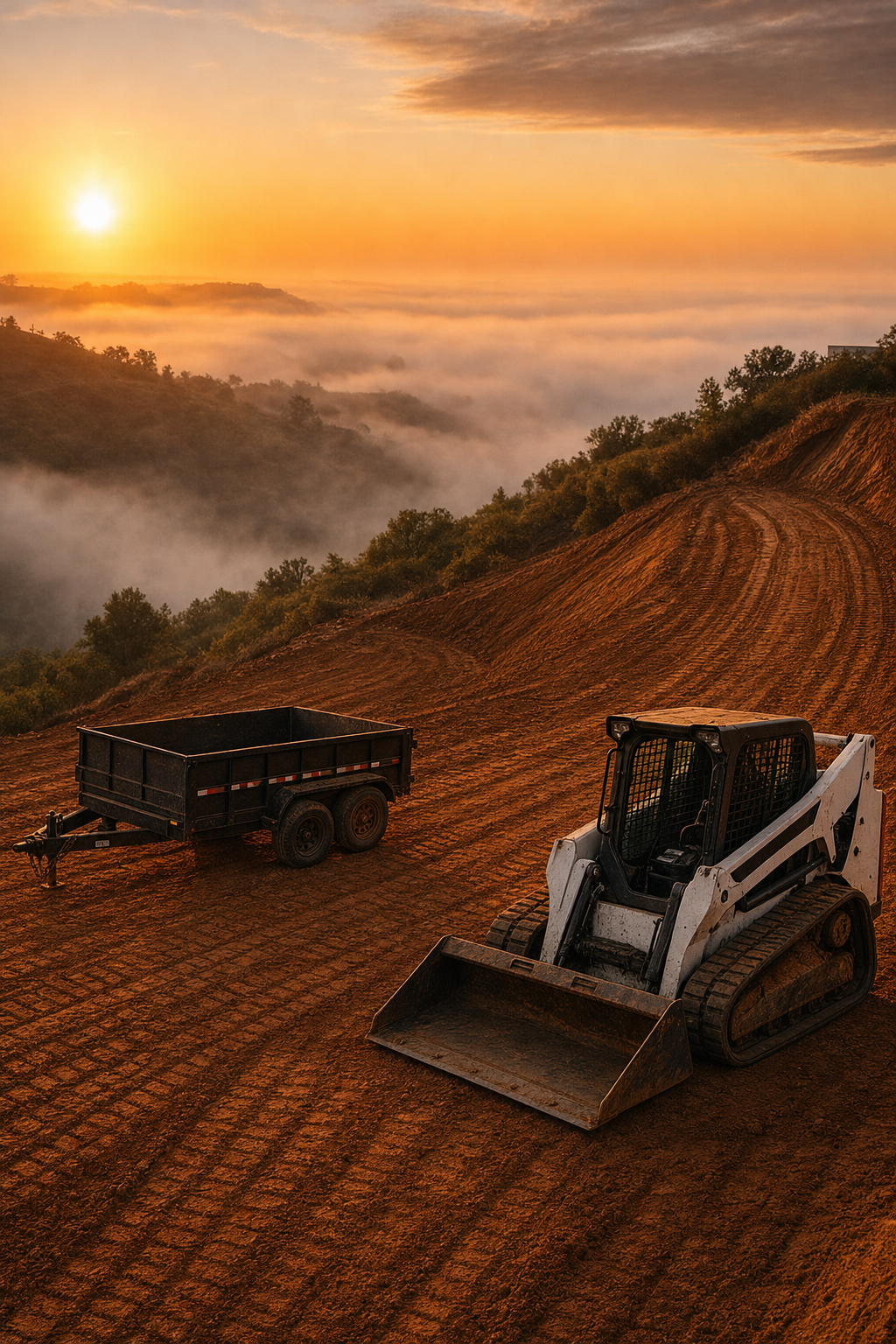
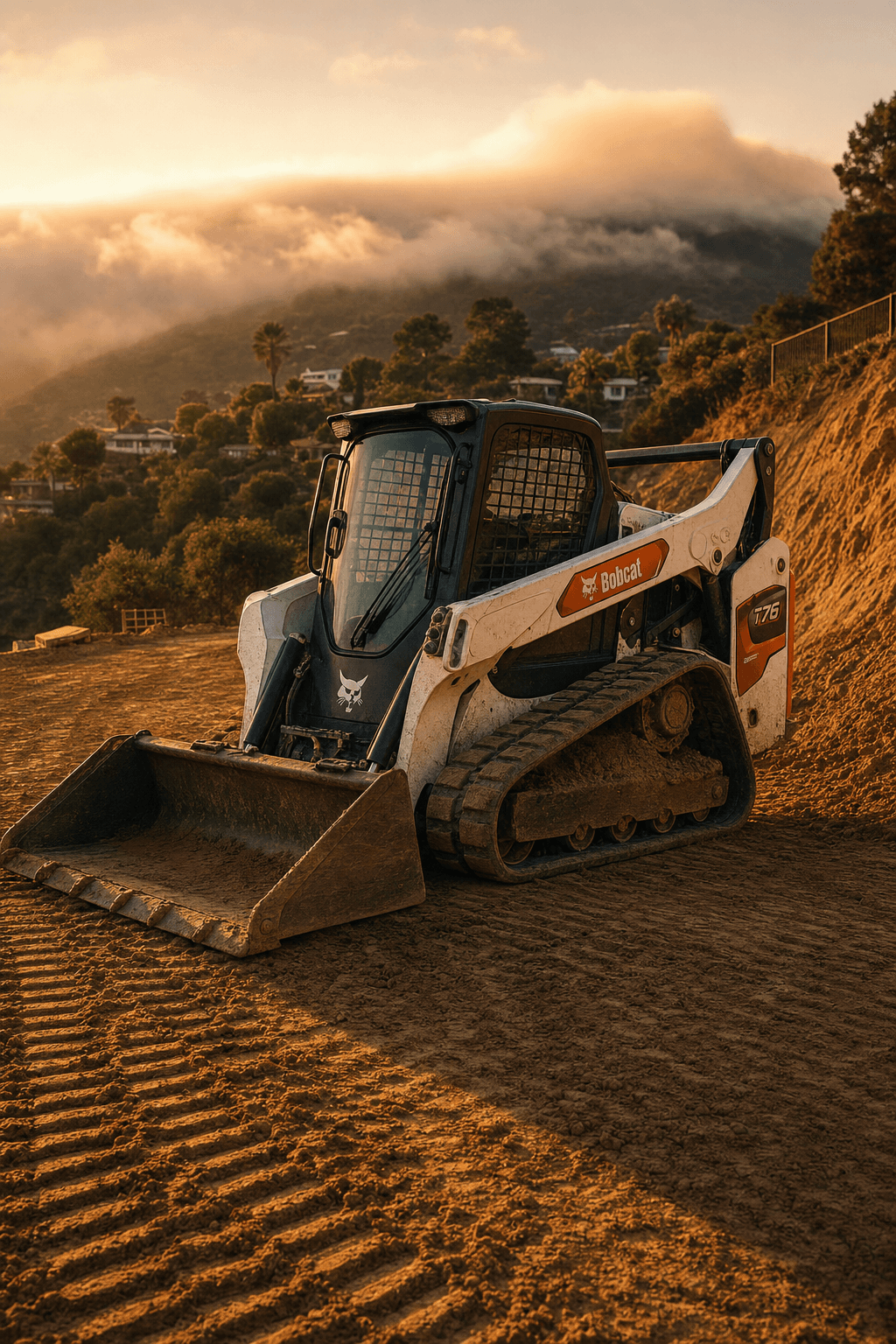
In the steep canyons of Laguna Beach and the hillside lots of South County, the foundation of a wall is only as stable as the ground beneath it. Successful grading and site preparation requires cutting a level bench directly into the virgin, undisturbed soil. Placing a wall on loose fill or uncompacted topsoil is a primary cause of structural failure because the fill lacks the shear strength to resist the downhill pressure of expansive clay. By excavating into the hillside to create a solid step, we ensure the wall’s footer rests on material that has been naturally consolidated over time.
Timing is everything when excavating these hillside benches. Working on saturated clay is both dangerous and technically unsound. When wet, our local clay becomes slick and loses its internal friction. Attempting to cut a bench into a water-logged slope can trigger localized slope failure or cause heavy equipment to slide. We wait for the soil to reach an optimal moisture content where it can be cleanly cut and compacted. This careful approach to retaining wall earthwork and drainage protects both the crew and the property’s long-term integrity.
Once the bench is established, integrating professional Orange County drainage solutions is the final priority. The back of the excavation cut should be slightly sloped toward the gravel chimney to prevent water from pocketing against the virgin soil face. This ensures that as the hillside sheds water, moisture is immediately captured by the drainage system and directed away from the structural footing, maintaining the stability of the retaining wall drainage Orange County project for years to come.