An Orange County soils report site work analysis identifies subsurface conditions like expansive clay that can compromise structural foundations if left unaddressed. These reports determine the specific grading, overexcavation, and replacement requirements necessary to transform native land into a safe, buildable pad compliant with local building codes.
Starting a construction project in Orange County often begins with a sense of momentum until the geotechnical investigation reveals hidden subsurface challenges. For many developers, the discovery of expansive clay or unstable strata can feel like a setback that threatens both the timeline and the budget. However, your soils report is more than a regulatory hurdle; it is the essential roadmap for ensuring your structure remains stable in our local terrain. Ignoring these findings leads to structural failure; understanding them allows for precise site preparation. In this guide, we will break down the complexities of Orange County geotechnical data and explain the remediation processes required for a buildable pad. You will learn how we transform raw site data into actionable strategies, including overexcavation, soil replacement, and compaction testing, to move your project from a paper report to a solid foundation.
Why an Orange County Soils Report is the Foundation of Your Project
In Orange County construction, a soils report is officially known as a geotechnical investigation. While many property owners initially view it as a bureaucratic permit hurdle, our team treats it as the essential blueprint for comprehensive earthwork and grading solutions. This document is not merely a formality; it is a specialized analysis of what lies beneath the surface of your property, providing the data necessary to navigate the diverse geology found from the Laguna Beach coastline to the Irvine hills.
The Orange County Grading Manual, published by OC Public Works, establishes the rigorous standards that govern every shovel of dirt we move. These guidelines ensure that site work meets specific safety and structural requirements for the region. It is important to differentiate between a simple percolation test, which primarily measures how quickly water drains for septic or storm systems, and a full geotechnical report. A full investigation covers seismic hazards, soil strength, and the presence of groundwater.
The OC Building Official typically requires a formal report for new builds, ADUs, and even pool removals to prevent future structural failure. This document is the primary guide for Orange County soils report site work, dictating how we must prepare the ground. For our crew, the report translates into specific instructions for excavation depth and soil stabilization, ensuring the pad is stable enough to support your investment for decades.
Decoding the Data: What is Included in a Geotechnical Investigation
A geotechnical investigation provides a detailed technical profile of the subsurface conditions. The core of this document consists of boring logs, which are records from drill rigs that sample the earth at various depths to identify soil strata. The report also maps groundwater levels, essential for planning professional excavation and trenching, and evaluates seismic hazards such as liquefaction potential.
Two metrics in the report carry the most weight for our grading crew:
Metric | Description | Practical Impact |
|---|---|---|
Bearing Capacity | The soil’s ability to support structural loads without failure or excessive settlement. | Determines footing width and if the soil can support the heavy equipment used for site work. |
Expansion Index (EI) | A numerical value (0 to 130+) representing the soil's potential to swell when wet. | High EI values require us to remove larger volumes of material to reach stable, non-expansive layers. |
In coastal Laguna Beach or the hills of Irvine, the report often identifies specific geological units like the Monterey Formation or the San Pedro Formation. The Monterey Formation is notorious for expansive siliceous shale that requires heavy remediation. These findings dictate the specific volume of earth we must move. If the report identifies low-strength marine sands or high-expansion clays, it outlines exactly how many feet of the native soil must be hauled away and replaced with imported, engineered fill. This data ensures the Orange County soils report site work is calculated based on physics rather than guesswork. By decoding these logs, our team can determine if your site requires specialized drainage solutions or if we can proceed with standard grading procedures.
The Challenge of Expansive Clay in Orange County Soil
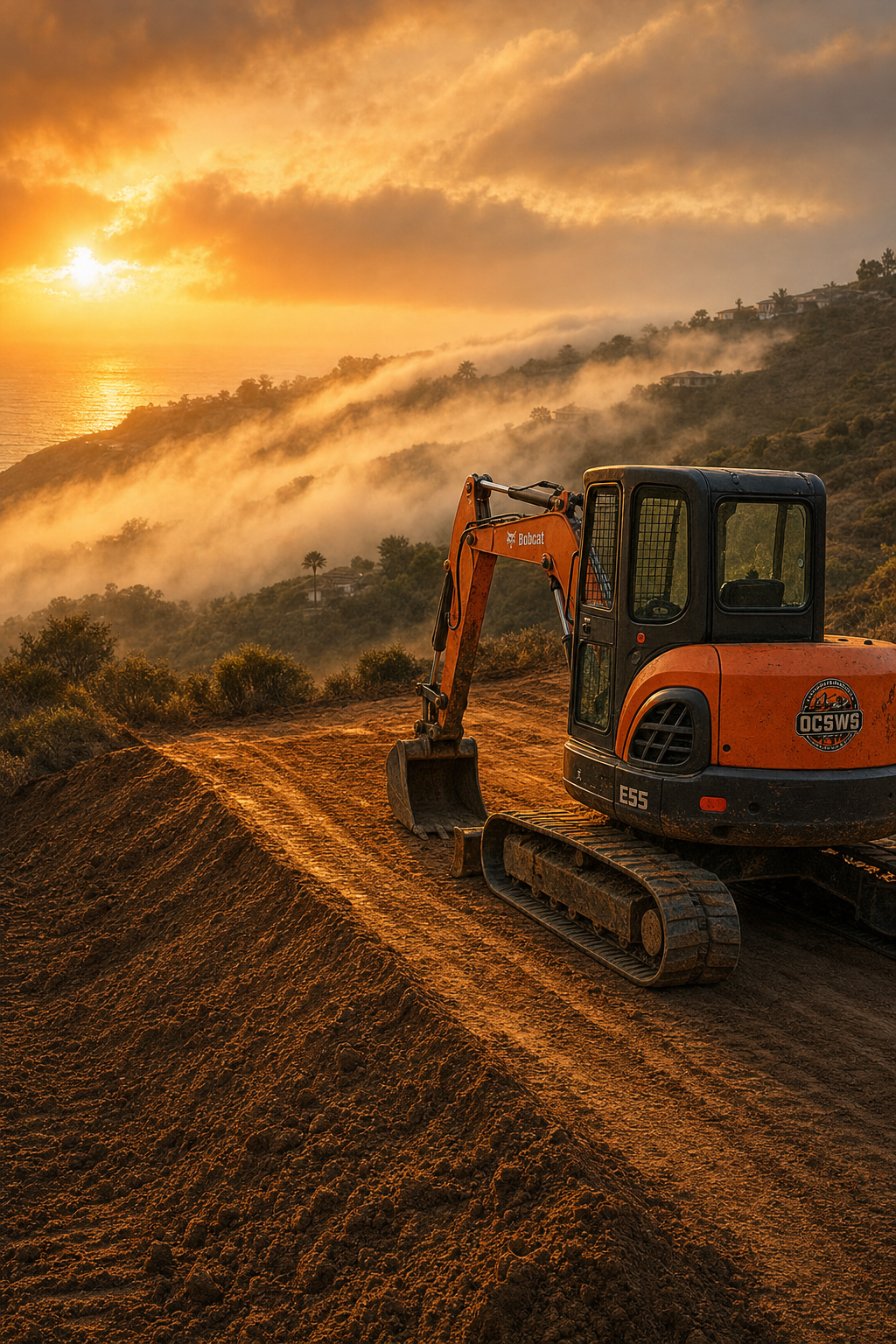
The presence of clay is the most significant hurdle identified in an Orange County soils report site work investigation. In regions such as Laguna Beach, San Clemente, and the Irvine hills, the clay content in the soil often exhibits high linear extensibility. This technical term refers to the soil’s tendency to change volume significantly based on its moisture content. When heavy winter rains saturate the ground, the microscopic, plate-like structures of the clay absorb water and swell. Conversely, during the intense dry periods fueled by Santa Ana winds, the soil loses that moisture and shrinks, leading to deep fissures in the earth.
This expansion and contraction cycle creates immense physical force. The upward pressure exerted by expanding clay can easily exceed several thousand pounds per square foot, which is more than enough to heave a concrete slab, fracture a perimeter foundation, or buckle a masonry retaining wall. In South OC, many structural failures are traced back to site work that failed to account for this movement. If a pad is graded during a dry summer without addressing the clay's potential to swell, the first major rainstorm can destabilize the entire structure.
Building a house on clay dirt is a common reality in California, but it is only viable through proper remediation. The linear extensibility mentioned in your geotechnical report tells us exactly how much movement to expect. To counter this, our team must follow a strict protocol to ensure the foundation remains isolated from these fluctuating forces. This often involves moisture conditioning the soil or replacing it entirely to prevent the jack and settle effect that ruins finishes and compromises structural integrity. To discuss the specific clay challenges on your property, you can contact our Orange County site work team for an expert evaluation of your grading needs.
Remediating Poor Soils: The Overexcavation and Replacement Process
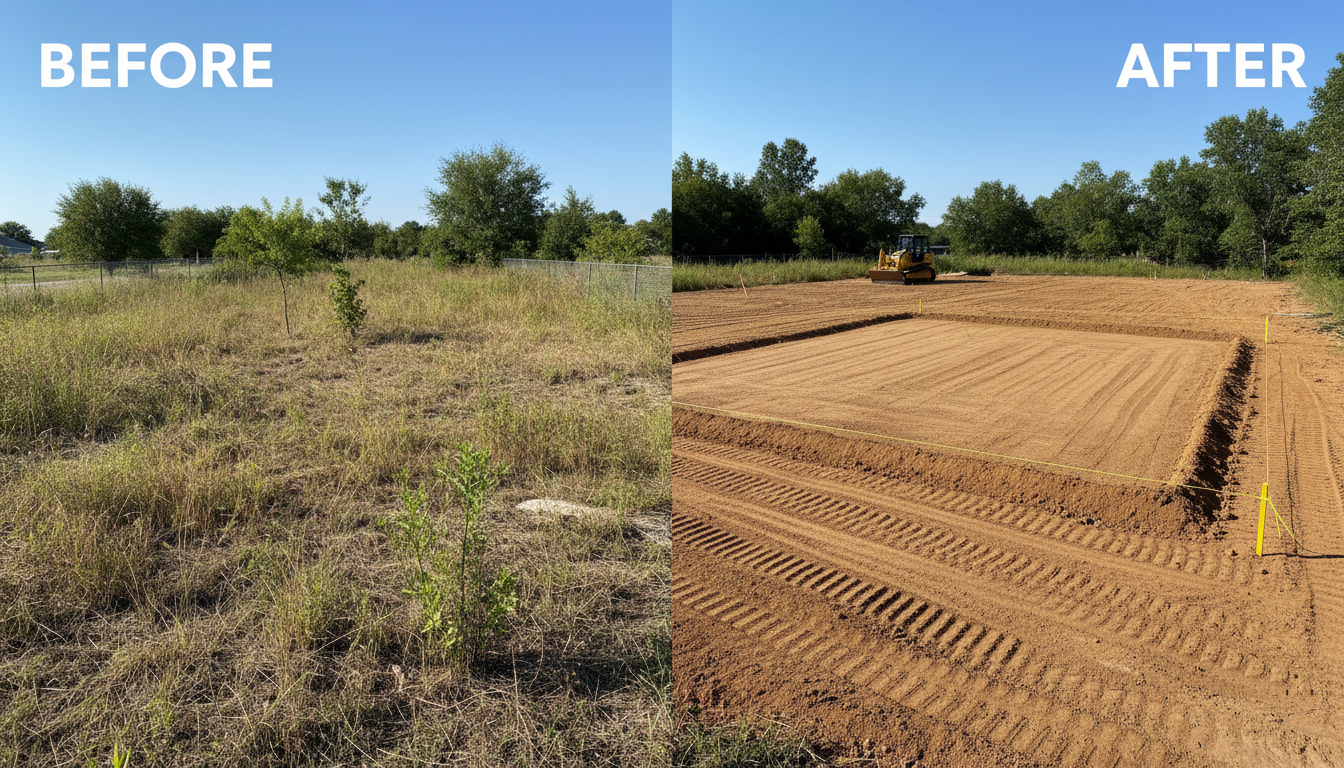
To mitigate the risks identified in an Orange County soils report site work investigation, the most effective way to deal with expansive soils is through the 'Remove and Replace' method. This process is the industry standard for creating a stable, non-yielding building pad. It involves physically removing the problematic native soil and replacing it with a controlled, engineered environment that will not react to seasonal moisture changes.
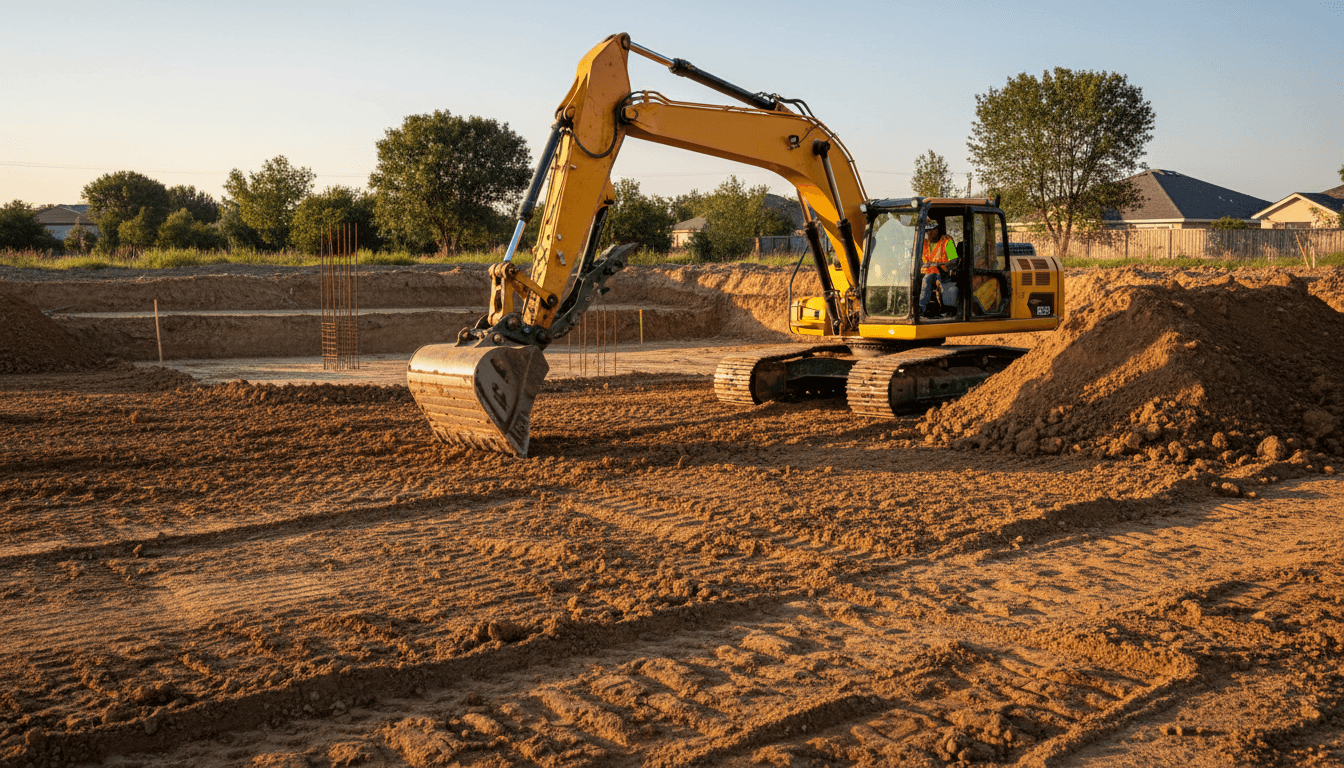
The process begins with stripping and grubbing, where we remove the top layer of vegetation, organic debris, and any oversized rocks. Once the site is cleared, we perform over-excavation. Following the specific depths mandated in the geotechnical report, which commonly range from 3 to 5 feet below the bottom of the proposed footings, our team excavates the native clay. This depth is critical because it creates a thick 'cap' of stable material that buffers the foundation from any deep-seated soil movement. In hillside areas like Laguna Beach, this step may also involve 'benching' into the competent hillside material to prevent the new fill from sliding.
Remediation Phase | Action Taken | Purpose |
|---|---|---|
Stripping | Removal of organics and topsoil. | Prevents decomposition and subsequent settling. |
Over-excavation | Digging 3 to 5 feet below the foundation grade. | Removes the 'active zone' of expansive clay. |
Bottom Processing | Scarifying and moisture conditioning the exposed earth. | Ensures a strong bond between native soil and new fill. |
Backfilling | Placing engineered fill in 6 to 8 inch 'lifts.' | Creates a uniform, high-density structural pad. |
Moisture conditioning is the technical heart of this process. Before we begin backfilling, the exposed bottom of the excavation and the replacement soil must reach a specific moisture percentage, often 2 to 4 percent above the 'optimum' level defined by a laboratory Proctor test. By intentionally wetting the clay to this point, we force it to expand before the house is built. Once we achieve this state, we import non-expansive engineered fill, which is soil with a low Expansion Index (EI). We place this material in thin layers called lifts, using heavy equipment to compact each layer. This meticulous approach ensures that the ground beneath your slab is dense, uniform, and immune to the shrink-swell cycles of the local climate. If your project requires this level of precision, you can contact our Orange County site work team to review your report’s specific remediation requirements.
Compaction Testing and Grading: Turning Recommendations into a Buildable Pad
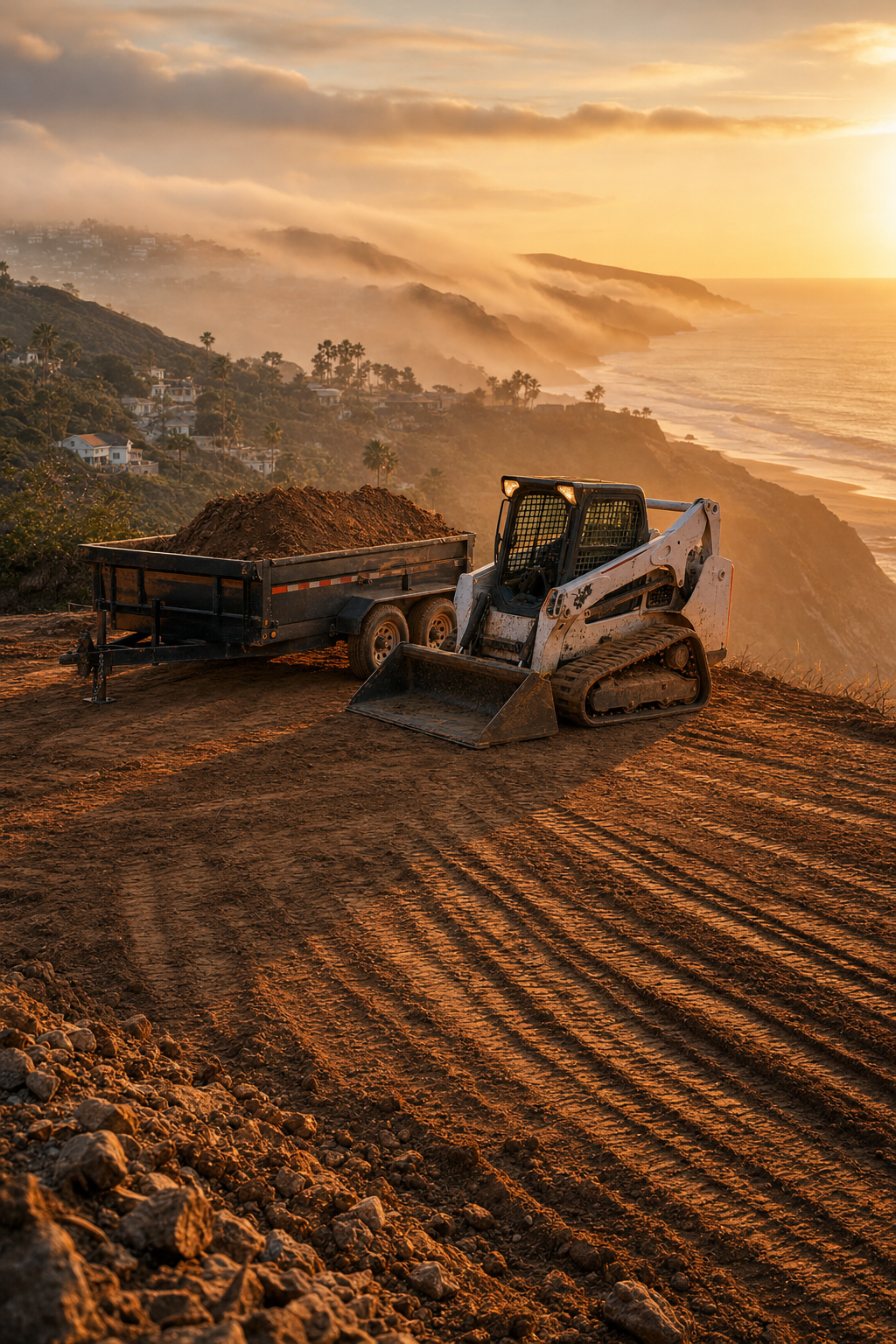
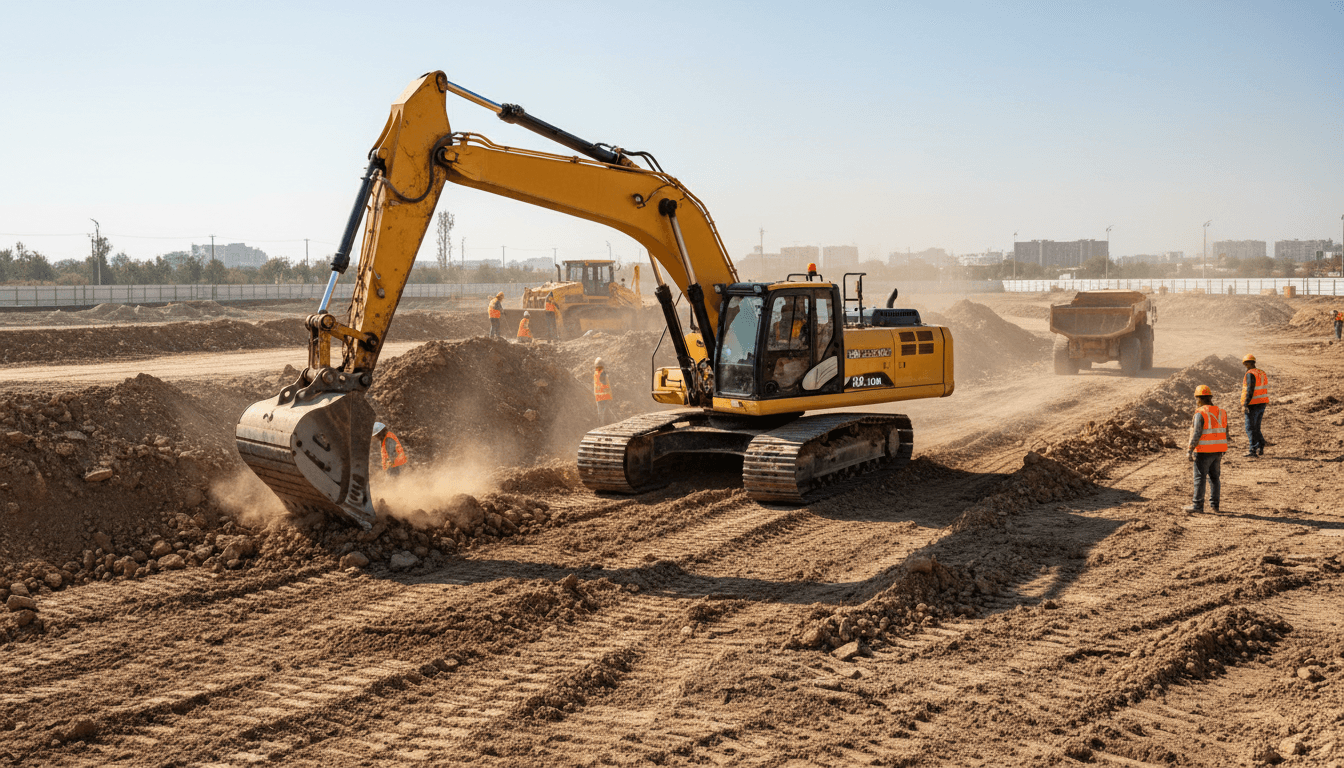
Once the over-excavation is complete, the grading phase begins. Grading of soil is the mechanical process of leveling, sloping, and stabilizing the ground to match the civil engineer's precise design. This step ensures proper drainage away from the structure and a level surface for the foundation footings. As your site work contractor, our role is to translate the technical data from the Orange County soils report site work into a physical, buildable pad using equipment like Bobcats and vibrating rollers.
The process starts with scarification. This involves ripping the upper few inches of the exposed soil to break up large clumps, which allows for uniform moisture conditioning and a better mechanical bond with the next layer of fill. After scarifying, we apply compaction. We place the engineered soil in thin lifts, usually six to eight inches deep, and use mechanical force to remove air pockets. This increases the soil's density and load-bearing strength.
To verify that the ground meets safety standards, a third-party deputy inspector or geotechnical technician performs field compaction tests. They often use a nuclear density gauge to ensure the soil reaches the required density, typically 90 to 95 percent relative compaction compared to a laboratory standard. This objective verification confirms that our comprehensive earthwork and grading solutions have created a pad that will not settle or shift under the weight of the new build. For projects requiring documented density verification, you can contact our Orange County site work team to coordinate with your project’s engineers.
Estimating Costs for Soils Reports and Site Remediation in California
In the Orange County market, budgeting for a geotechnical investigation involves two distinct phases: the report itself and the physical remediation mandated by its findings. For a typical residential project, such as an ADU or a custom home build, a soils report usually costs between $2,000 and $6,000. This fee covers the field drilling, laboratory testing of samples, and the engineering analysis required by local building officials. If the property is located on a steep Laguna Beach hillside or within a known liquefaction zone, costs may lean toward the higher end due to the need for additional borings or slope stability modeling.
Once the investigation is complete, the financial focus shifts to the physical execution of the Orange County soils report site work. Over-excavation and the importation of clean, non-expansive engineered fill represent significant line items in a grading budget. While these processes increase the upfront cost of the earthwork phase, they are essential investments. Properly prepared pads save property owners 10 percent or more in long-term foundation and hardscape repair costs by preventing slab cracking and settlement.
Regarding field verification, a soil compaction test typically costs a few hundred dollars per visit from a third-party technician. These inspections are necessary for documenting that each lift of soil meets the required 90 to 95 percent relative compaction. To get a detailed breakdown for your specific property, contact our Orange County site work team to discuss your project requirements and remediation needs.
Understanding your soils report is the first step toward ensuring your project starts on solid ground. Whether you are dealing with expansive clay or local drainage issues, these findings dictate the long-term success of your buildable pad. If you want expert help navigating these technical requirements, we are available to provide the professional guidance you need. You can learn more about our team and how we translate complex engineering data into a stable foundation. We focus on precision to ensure your site is ready for the next phase.